Iranian Authorities Intensify Crackdown on Protests with Live Fire, Arbitrary Arrests, and Attacks on Hospitals
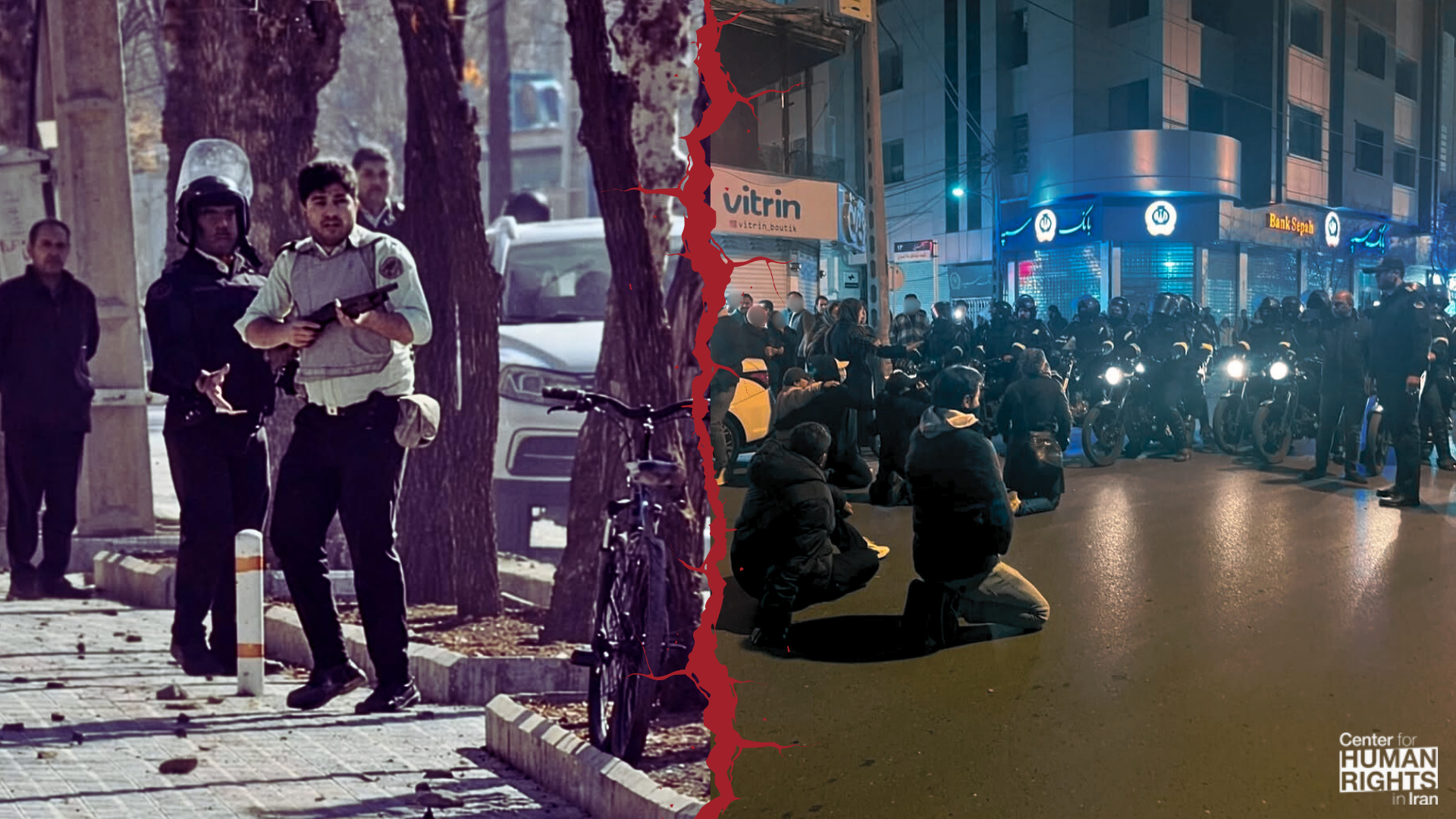
More Than 27 Civilians Killed, including Six Children, Over 2000 Arrested
Authorities’ Crackdown Again Amounts to Crimes Against Humanity
January 6, 2025 — Iranian authorities have sharply escalated their violent crackdown on the nationwide protests that began on December 28, shooting indiscriminately at protesters with live ammunition, killing dozens, including children, arbitrarily arresting thousands, and carrying out violent assaults on hospitals to detain the wounded, actions that amount to crimes against humanity under international law.
According to the Center for Human Rights in Iran’s (CHRI) findings, more than 27 civilians, including six children under the age of 18, have been killed by gunfire from security forces between December 28, 2025, and January 5, 2026. This number is believed to be higher as identities are still being verified.
Dozens have been seriously injured, including a large number of protesters in Malekshahi, Ilam Province, where security forces fired directly at demonstrators. As of January 6, 2026, HRANA had reported that over 34 people had been killed and over 2000 people had been arbitrarily arrested, a number that has been quickly rising.
“Islamic Republic security forces are again gunning down protesters and killing and disappearing children in a systematic effort to crush dissent,” said Hadi Ghaemi, executive director of CHRI.
“The targeting of children, hospitals, and medical personnel represents especially grave violations of international human rights law, adding to the regime’s long list of crimes against humanity,” said Ghaemi.
“Hundreds of families in Iran are still grieving their dead from the state’s massacres during the Woman, Life, Freedom protests; this regime has shown it will slaughter as many civilians as it needs to quiet the streets—the international community must speak out against this carnage,” Ghaemi urged.
CHRI calls on the UN and States worldwide to use all political, diplomatic, and legal channels to pressure the Iranian authorities to stop the use of lethal force against protesters, release all arbitrarily detained protesters, especially children, and immediately end attacks on hospitals and medical personnel.
Live Fire, Mass Casualties, and Violent Hospital Raids
The protests in Iran began on December 28, 2025, and quickly spread to cities and towns across the country, fueled by long-standing grievances over crippling inflation, the government’s profound economic mismanagement, corruption, and repression.
In the first few days of the protests, the state’s response was muted, but this changed after Supreme Leader Ali Khamenei’s speech on January 3, 2026, in which he called protesters “rioters” and said “they must be put in their place.” The Islamic Revolutionary Guard Corps (IRGC), the Law Enforcement Forces, and the Special Police Units have been primarily responsible for the violence against the protests.
CHRI has documented the use of live ammunition against protesters in multiple cities, particularly in smaller towns outside media and public attention.
In Malekshahi County, Ilam Province, on January 3, 2026, IRGC forces violently suppressed peaceful demonstrations, killing at least four people, including at least one child, and injuring many others.
In the aftermath, security forces repeatedly raided Khomeini Hospital in Ilam both on January 3 and January 4, 2026, forcibly entering wards and patient rooms, destroying hospital doors, and attempting to arrest injured protesters and remove the bodies of those killed. These raids were met with resistance from families and hospital staff. Multiple members of the medical staff were reportedly beaten for refusing to cooperate with the arrests.
Videos reviewed by CHRI show security forces deploying tear gas and batons against civilians inside and around the hospital compound and opening fire in the vicinity. These actions severely disrupted medical services and placed the lives of patients— including several hospitalized children transferred to intensive care under unsafe conditions—at serious risk.
Videos received from Sina Hospital in Hasanabad, Tehran, show that on January 6, security forces also fired tear gas inside that medical center as well. At the same time, gunfire was also heard around the hospital.
This is not the first time the Islamic Republic has attacked and/or used hospitals to identify and arrest protesters; indeed, it represents a growing pattern. For example, during the Woman, Life, Freedom protests, the authorities in 2023 brutally attacked hospitals, medical personnel, and wounded protesters in the city of Javanrud, Iran.
“Hospitals are protected spaces, and medical workers are protected persons—there are no exceptions,” Ghaemi said. “By storming hospitals, beating medical staff, and attempting to arrest patients, Iranian authorities are committing grave violations of international humanitarian and human rights law. These acts demand urgent international accountability, not silence.”
Arbitrary Arrests of Hundreds of Children and Forced Confessions
CHRI has received credible reports that hundreds of children under 17 have been arbitrarily and violently arrested in cities, including Harsin, Kermanshah Province, and across Kohgiluyeh and Boyer-Ahmad Province.
The whereabouts of many detained children remain unknown. A significant number were transferred to juvenile detention centers, while others were released after several days. Families have reported intimidation by the authorities and a lack of information regarding their children’s legal status.
At the same time, state media outlets have aired several forced confessions of detained young protesters, such as two teenage girls forced to confess to accusations of being protest leaders in Isfahan, a practice that violates detainees’ due process rights and violates Iran’s obligations under international law, including the Convention on the Rights of the Child.
The Islamic Republic has long engaged in the practice of extracting so-called confessions under torture, and then using those forced confessions to convict, including in death penalty cases.
Threats and Intimidation From the Intelligence Ministry
CHRI has also documented systematic intimidation campaigns aimed at preventing participation in protests. In several smaller cities in Razavi Khorasan and North Khorasan provinces, including Bojnord, Neyshabur, and Sabzevar, individuals previously detained during the 2022 Woman, Life, Freedom protests received calls from unknown numbers linked to the Ministry of Intelligence.
Call recipients were explicitly warned that they would be arrested and imprisoned if they joined the current protests.
Students have also been targeted by universities’ security and intelligence-linked forces, which have contacted students and their families, warning them of arrest, expulsion, or disciplinary action.
Rada Fatehi, a former political prisoner and sister of Ramin Fatehi, who was killed under torture during the Woman, Life, Freedom uprising, said in a video on January 5, 2026, that Iranian intelligence and security agencies have summoned and threatened her family in Sanandaj, Iran, in retaliation for the activism of family members abroad.
“In these threats, it was explicitly declared that if my siblings and I continue our political activities outside Iran, our family inside the country will ‘pay the price.’ My family was also told that there is the possibility of serious harm to silence us.”
Additionally, CHRI has received reports that in small towns across the country, citizens who had begun to distribute leaflets or issue calls encouraging participation in the protests were arrested in their homes, without warrants.
Judiciary Signals Escalation, Including Risk of Executions
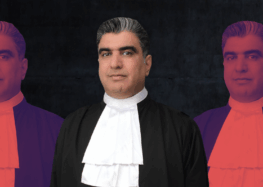
Concerns about further escalation intensified following remarks on January 5, 2026, by Iran’s Judiciary Chief Gholamhossein Mohseni Ejei, who publicly called for a decisive response against protesters “without leniency” and called them “rioters.”
Ejei’s accusations that the protesters were linked to Israel and the U.S. were particularly concerning, given the newly passed law that escalates penalties for alleged cooperation with Israel and the U.S. to capital punishment.
CHRI warns that such statements significantly increase the risk of enforced disappearances, mass arbitrary detentions, and the issuance and execution of harsh sentences, including the death penalty, as seen during previous protest crackdowns.
The use of the death penalty in political cases has increased significantly in Iran, and since the country’s June 2025 war with Israel, the authorities have increasingly alleged collaboration with Israel and espionage charges, which carry the death penalty against protesters.
“Governments worldwide must make clear that any death sentences or executions linked to these protests will constitute crimes under international law and will carry consequences,” said Ghaemi.
Nationwide Protests, Student Mobilization, and Growing Labor Support
Over the past nine days, protests have been reported in at least 27 provinces across Iran. Seventeen universities have also witnessed student protests, despite a heavy security presence and large numbers of arrests.
Unions and civil society groups have issued statements supporting the protests and calling for an end to the Islamic Republic’s rule. The Free Workers’ Union of Iran issued a statement in support of the protests and strike. The Iranian Writers’ Association released a statement urging writers and artists worldwide to stand in solidarity with the Iranian people. The Coordination Council of Iranian Teachers’ Trade Associations in multiple provinces, including the long-established Kurdistan Teachers’ Association, has also publicly backed the protests.
In addition, Haft Tappeh Sugarcane Workers’ Syndicate, Coordination Committee to Help Form Independent Labor Organizations, Khuzestan Retired Workers, and the Union of Retirees Group also issued a joint statement in support of the protests. Six Kurdish Women’s Organizations inside the country also released a joint statement in support of the protesters, calling their demands a continuation of the Women, Life, Freedom uprising.
Meanwhile, bazaar (small shopkeepers) strikes continue in several cities, including Tehran, with images showing many shopkeepers keeping their businesses closed in protest.
On January 2, 2026, 17 prominent political and civil society activists signed a joint statement calling for a peaceful transition away from the Islamic Republic. Among the signatories are imprisoned human rights lawyer Mohammad Najafi and Nobel Peace Prize laureate Narges Mohammadi, who was signed on her behalf by her family, as she is currently being held in solitary confinement at an undisclosed detention center and denied communication with her lawyer and family.
A recent statement by 210 Iranian lawyers—196 of whom are inside Iran, and thus signed the statement at great personal risk—emphasized that the current state crackdown was not an “internal crisis” or “unrest” but rather a situation that bears the full legal characteristics of international crimes.
They stated, “These actions constitute grave and flagrant violations of the right to life, the right to peaceful assembly, and the principles governing the prohibition of the use of lethal force, as enshrined in domestic law and Iran’s international legal obligations. Such acts amount to serious and non-derogable crimes.”
The lawyers said, “We consider the legal pursuit of these violations through national and international mechanisms — including documentation, legal advocacy, and engagement with competent institutions — to be an urgent necessity. We call upon bar associations, legal institutions, and professional bodies to act within their professional responsibilities and not remain indifferent to the widespread violations of the rights of the people of Iran.”
List of people known to be killed between December 28 and January 5. The death toll is believed to be higher and will inevitably increase over the coming days.
- Taha Safari, 15, Azna, Lorestan Province. (Under 18)
- Mostafa Fallahi, 15, Azna, Lorestan Province. (Under 18)
- Mohammadreza Karami, 16, Malekshahi, Ilam Province. (Under 18)
- Mohammad Noori, 17, Qom, Qom Province. (Under 18)
- Reza Ghanbari, 17, Kermanshah, Kermanshah Province. (Under 18)
- Rasul Kadivarian, 17, Kermanshah, Kermanshah Province. (Under 18)
- Reza Moradi Abdolvand, 18, Azna, Lorestan Province.
- Reza Kadivarian, 20, Kermanshah, Kermanshah Province.
- Ahmad Jalil, 21, Lordegan, Chaharmahal and Bakhtiari Province.
- Amirhesam Khodayari-Fard, 22, Kuhdasht, Lorestan Province.
- Amir Mohammad Kouhkan, 26, Niriz, Fars Province.
- Amirhossein Bayati, 26, Hamedan, Hamedan Province.
- Ahmadreza Amani, 28, Azna, Lorestan Province.
- Shayan Asadollahi, 28, Azna, Lorestan Province.
- Sajjad Valamanesh, Lordegan, Chaharmahal and Bakhtiari Province.
- Vahab Ghaedi (Mousavi), Azna, Lorestan Province.
- Khodadad Shirvani, 33, father of two, Marvdasht, in Fars Province.
- Ahad Ebrahimpour Abdoli, 34, Delfan, Lorestan Province.
- Mansour Mokhtari, Marvdasht, Fars Province.
- Erfan Bozorgi, Marvdasht, Fars Province.
- Mohammad Qasem Rousta, Marvdasht, Fars Province.
- Mahdi Emamipour, Malekshahi, Ilam Province.
- Reza Azimzadeh, Malekshahi, Ilam Province.
- Soroush Soltani, Hefsjan, Chaharmahal and Bakhtiari Province.
- Fars (Mohsen) Aghamohammadi, Malekshahi, Ilam Province.
- Dariush Ansari Bakhtiarvand, 37, Fuladshahr, Isfahan Province.
- Hossein Rabiei, Qam, Qam Province
This report was made possible by donations from readers like you. Help us continue our mission by making a tax-deductible donation.