Writers and Scholars Arrested and Held Incommunicado in Iran
Whereabouts Unknown, No Contact with Families or Lawyers
Iranian Authorities’ Attack on Intellectuals Meant to Silence Any Independent Thought
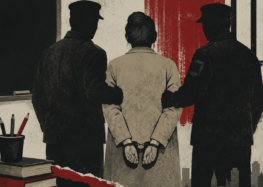
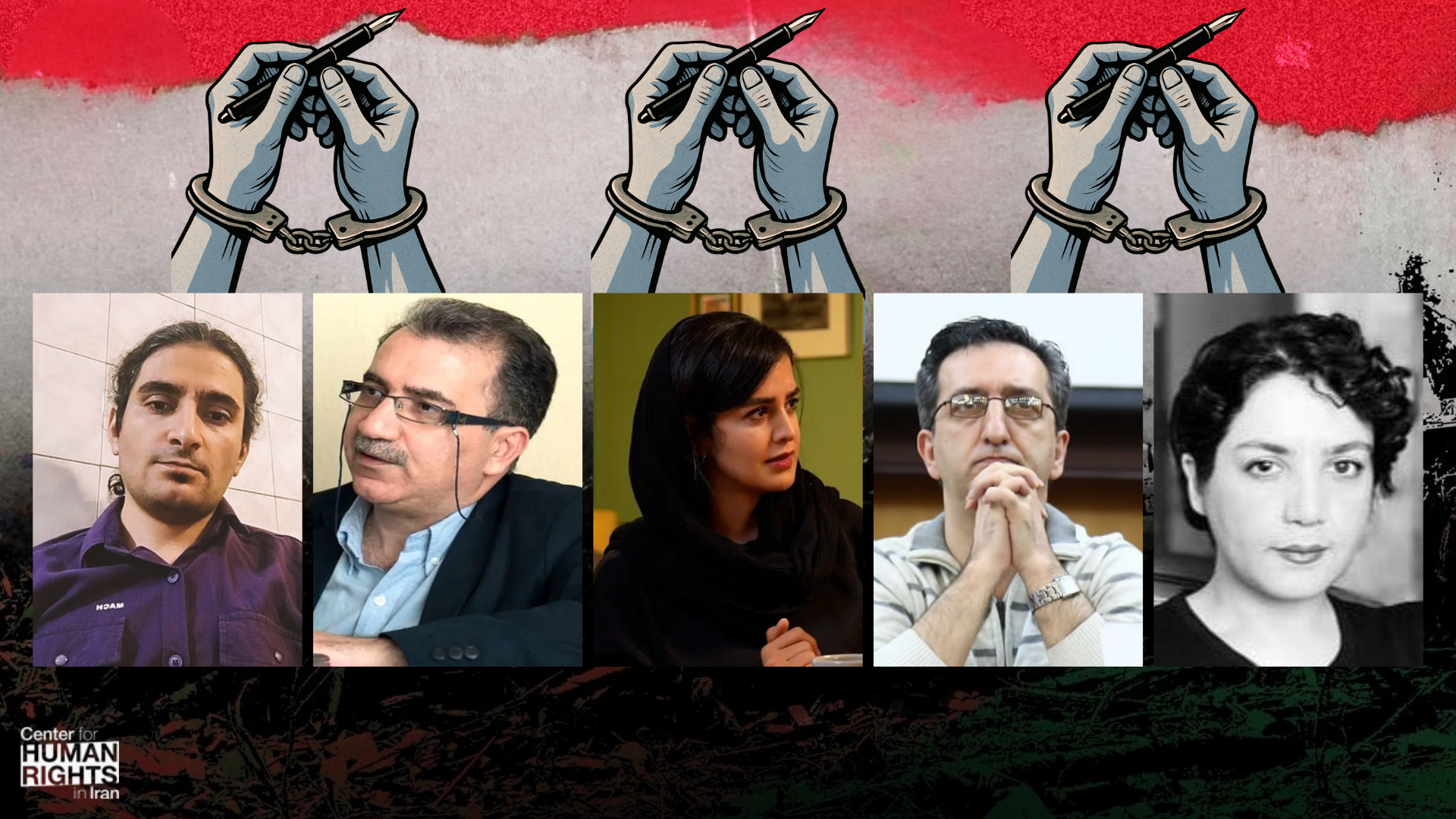
November 6, 2025 — In a coordinated operation targeting members of Iran’s intellectual community, Iranian authorities arbitrarily arrested at least four researchers, translators, and writers in Tehran on November 3, 2025. They are being held without access to lawyers or family, and the authorities have not disclosed the charges against them or their whereabouts, making their arrests a clear case of enforced disappearance under international law.
“In a coordinated campaign, the Islamic Republic has arrested and detained four prominent writers and researchers, with a fifth summoned, in order to banish dissenting voices and terrorize the country’s intellectuals into silence,” said Behnam Daraeizadeh, senior researcher and legal expert at the Center for Human Rights in Iran (CHRI).
“The danger these arrested writers and scholars face is real: the Iranian authorities are increasingly prosecuting individuals on manufactured charges that carry lengthy prison terms or even death sentences; the international community must loudly and with one voice demand their immediate release,” Daraeizadeh said.
The detainees are Shirin Karimi, translator and researcher; Parviz Sedaghat, 63-year-old writer, translator, and editor-in-chief of the Political Economy Critique monthly; Mohammad Maljoo, economist, journalist, and researcher; and Mahsa Asadollahnejad, political sociologist and researcher.
That same day, security forces also raided the home of Heyman Rahimi, a Tehran-based writer and translator, confiscating his electronic devices and books. He was ordered to report for questioning the following day.
CHRI calls on:
- UN bodies, including the High Commissioner for Human Rights, the Special Rapporteurs on Iran and on Freedom of Expression, and UNESCO, to call for the immediate release of all of these detained writers and researchers;
- Governments worldwide to echo this demand and warn the Iranian authorities of increased diplomatic isolation and sanctions for these arbitrary arrests;
- International rights organizations focused on freedom of expression and academic freedom, including, for example, PEN International and Scholars at Risk, to demand the immediate release of these detained writers and scholars;
- Scholars and academics from around the globe to publicly condemn these arrests and call for their immediate and unconditional release.
In 2024, Iran ranked as the world’s second-largest jailer of writers, with 43 imprisoned that year, including 13 women, making Iran the leading jailer of women writers globally.
Lawyer in Iran: “No access to the detaining authority or their place of detention”
A human rights lawyer based in Iran told CHRI:
“The constant and escalating pressure on civil society activists, writers, and critics has made it nearly impossible to provide any support for them. When there’s no access to the detaining authority or their place of detention, following up on their cases becomes extremely difficult.”
The lawyer added:
“None of these individuals had political backgrounds. They quietly pursued their professional and principled work for years, avoiding publicity. The fact that they were targeted shows that security and intelligence agencies are using new and calculated methods to intensify pressure on independent researchers and writers.
“The pattern of mass arrests and summonses of writers, translators, and researchers suggests that the intelligence authorities have devised a multi-stage scenario against them. Even those who work silently and sincerely out of concern for their country and people are not safe from the reach of Iran’s security and judicial apparatus, which monitors them with the strictest surveillance.”
The Recent Detainees
Mahsa Asadollahnejad, born in 1990, holds a PhD in political sociology from Tarbiat Modares University. Her doctoral dissertation examined the formation and consolidation of the Islamic Republic between 1979 and 1989. She has organized several academic study groups and courses at cultural centers in Tehran. On the morning of November 3, she was arrested at her parents’ home after her electronic devices were confiscated.
Shirin Karimi, born in 1983, holds a master’s degree in sociology from the University of Tehran. She has translated works by scholars such as Judith Butler and Asef Bayat, as well as books on philosophy for young readers. At 7:30 a.m. on November 3, 2025, agents raided her home, searched the premises, confiscated books and personal belongings, and took her away. Her family and friends have no information about her whereabouts or condition.
Mohammad Maljoo, 53, is a writer, economist, and university lecturer who has authored and translated numerous works on economics and politics. He was summoned by security agencies on November 3, 2025, and his whereabouts have been unknown since. His family and colleagues remain unaware of his fate.
Parviz Sedaghat, 63, writer, translator, and editor-in-chief of Political Economy Critique, resides in Tehran. He has translated and published multiple works by authors, including David Harvey. On November 3, 2025, security forces raided his home, searched the premises, and confiscated his electronic devices and books.
Heyman Rahimi is an independent writer and translator based in Tehran who has translated and published numerous works on political economy and written for various publications. On the morning of November 3, 2025, security agents raided his home, searching the property and seizing his electronic devices and books.
Following these arrests, the Iranian Sociological Association expressed its concern, stating:
“[T]he news of the summons or detention of a number of sociologists and social science researchers is a cause for deep concern within the country’s academic community. Social sciences in all societies act as the critical conscience of society and assist policymakers in understanding complex social realities. Undermining the professional and psychological security of researchers in this field harms not only the academic community but society as a whole….”
Shirin Ahmadi-Nia, President of the Iranian Sociological Association, told the Ham-Mihan newspaper:
“[These arrests] raise the concern that the space for tolerating scientific criticism is apparently limited. For this reason, others may also think that if they want to write, reflect, and critically analyze society, the economy, or the country’s social, economic, and cultural developments, their ideas and writings might be misinterpreted. In reality, conditions are being created that could limit their work and expose them to accusations.”
Escalating State Assault on Writers and Intellectuals
These recent arrests and summons follow a wave of arrests of writers, publishers, and intellectuals in Iran over the preceding months, in a growing state campaign to stamp out independent thought and dissenting voices.
On October 29, 2025, Faramarz Se-dehi, a poet and member of the Iranian Writers Association, was sentenced to one year in prison on charges of “insulting sacred values” by Branch 104 of the Behbahan Criminal Court.
On October 6, 2025, Ahmad Derakhshan, writer and teacher, was dismissed from public service under Clause “C” of Article 9 of the Administrative Violations Law, on accusations of “unprofessional behavior and posting false and provocative content on hostile networks… supporting Israeli attacks, Mossad agents, and the so-called Z.Z.A. sedition.” The disciplinary board deemed his actions “aligned with the goals of the country’s enemies and socially and security-wise harmful.” In January 2025, Derakhshan had already been sentenced by the Karaj Revolutionary Court to one year in prison and banned from teaching on charges of “propaganda against the state.”
On August 20, 2025, five Tehran-based writers and publishers — Ehsan Rostami, publisher, translator, and bookseller, along with his cousin Ramin Rostami, and three cultural activists, Hassan Tozandehjani, Marjan Ardeshirzadeh, and Nima Mahdizadegan — were also arrested in coordinated raids by security forces.
On April 6, 2025, Peyman (Amin) Farahavar, a poet from Gilan Province, was handed a death sentence by the Revolutionary Court in Rasht on alleged charges of “rebellion” and “waging war against God” following a closed-door trial without legal representation. Farahavar, 37, wrote both poetry and short stories that were often critical of state policies, especially environmental policies. He was arrested on August 17, 2024, and was subjected to psychological and physical torture during detention.
This report was made possible by donations from readers like you. Help us continue our mission by making a tax-deductible donation.