As Executions Surge in Iran, Prisoners Risk Their Lives to Protest the State’s Killings
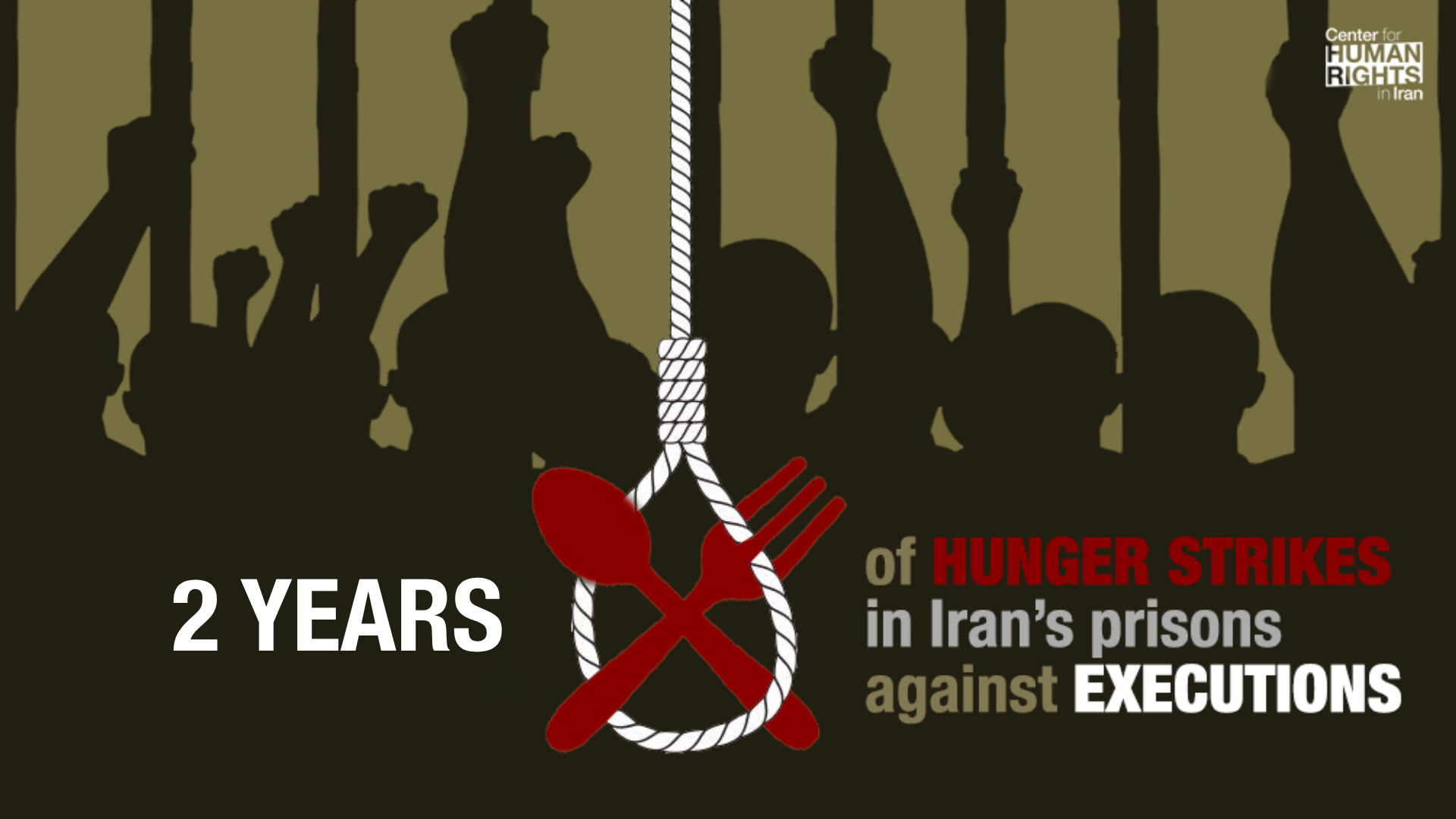
For more than two years, prisoners have staged weekly hunger strikes against one of the world’s deadliest execution sprees—despite facing execution, torture, and retaliation
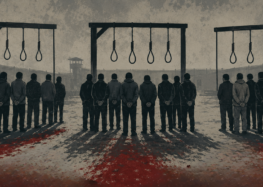
June 8, 2026 — As Iranian authorities carry out executions at a pace unmatched in decades, death row prisoners and political detainees across the country have sustained an extraordinary act of resistance: a weekly hunger strike against the death penalty that has continued for more than 120 consecutive weeks and spread to 56 prisons across the country.
For more than two years, prisoners across Iran have staged these weekly hunger strikes in protest against the state’s escalating and unlawful use of the death penalty. This campaign of resistance, by Iran’s most vulnerable people against the Islamic Republic’s most inhumane state practice, is known as “No to Execution Tuesdays.”
The persistence of the movement is remarkable not only because of its duration, but because of the risks faced by those participating. Many of these prisoners are at risk of execution. Others face solitary confinement, abuse, or additional punishment for speaking out. Yet they have continued their protests through waves of escalating state repression, nationwide protests, the state massacre of civilians, war, and the surging executions of fellow prisoners, sometimes mourning the hanging of participants in the campaign while continuing the strike itself.
The prisoners themselves made a conscious decision from the outset to reject distinctions between political prisoners, ordinary criminal defendants, drug defendants, qisas cases, and others facing execution, instead putting the spotlight where it should be—that all executions in Iran are carried out unlawfully, after sham prosecutions and unfair trials.
At a moment when executions in Iran have reached alarming levels and political hangings are rapidly increasing, these prisoners have sustained one of the most visible and enduring campaigns against the death penalty inside Iran.
“Dear people, help us. We do not deserve death.”
The “No To Execution Tuesdays” campaign began in January 2024, after a small group of death row prisoners in Ghezel Hesar Prison, in the city of Karaj, just northwest of Tehran, watched several of their cellmates taken away and executed within a matter of weeks. Facing the same fate themselves, they decided to act.
In a letter, these prisoners announced the campaign, originally named “Black Tuesdays,” and stressed their intention to advocate for all those sentenced to death, saying:
“Among us are drug-related defendants, qisas (retribution) cases, as well as political and ideological prisoners—all are on death row.
“Our demand is that all prisoners sentenced to death be supported, regardless of political or non-political charges, because all of us have been subjected to unjust trials and are being deprived of the right to life. Perhaps, with your help, these executions can be stopped. By any means possible, be our voice and the voice of our families.
“We do not deserve death, and we were not born criminals or inherently guilty.”
These prisoners wrote that they’re keeping their names anonymous, fearing that their execution might be expedited.
“You know that every week, some of us are hanged in Ghezel Hesar Prison. Whenever one of us is taken to solitary confinement until the sentence is carried out, each and every one of us—and our families—experience the moment of execution, moment by moment, as if we ourselves are dying.
“We chose Tuesday because often it is the last day our cellmates are alive before being transferred to solitary confinement for execution.
“Dear people, help us.”
More Than 2100 Hanged in 2025: The Deadliest Year for Executions in Decades
The Islamic Republic of Iran is the leading per capita executioner in the world. In absolute numbers, it is second only to China.
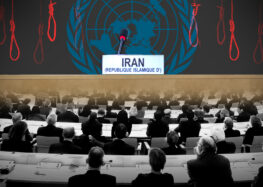
Executions in the Islamic Republic violate every single international legal standard on the use of the death penalty. They are carried out for religious and political “crimes” and for drug offenses that are all impermissible under international law, and they are routinely handed down following grossly unfair trials, with defendants denied access to independent legal counsel and convicted solely on the basis of forced “confessions” that were extracted under torture.
In 2025, Iranian authorities executed at least 2,159 people, the highest figure recorded in Iran by Amnesty International since 1981, and more than double the number of executions in 2024.
Highlights of the 2025 execution numbers:
- 45 executions on political charges such as “enmity against God” and “corruption on earth,” while two protesters were hanged for participating in the 2022 Woman, Life, Freedom protests.
- Executions surged after the 12-day war with Israel and the U.S. in June 2025.
- 46% of the executions were for drug-related offenses, which do not meet international thresholds that allow the death penalty only for the “most serious” crimes.
- 61 women were among those executed, many for killing abusive husbands they were forced to marry as child brides.
- At least one juvenile offender was executed for an alleged crime committed as a child, while two others may also have been under 18 at the time of the alleged offense.
These figures represent only documented executions. With more than 90% of executions not announced by the Iranian authorities and independent human rights monitoring severely restricted inside the country, the true number is likely significantly higher.
Executions Continue into 2026 with a Surge in Political Hangings
So far in 2026, hundreds have been hanged on various charges. Due to the Iranian authorities’ shutdown of the internet for most of the year, as well as the practice of unreported executions, the true number of executions so far this year is not yet known.
In particular, political executions have surged to levels not seen since the 1980s in Iran. Since the US-Israeli unlawful attacks on Iran began on February 28, 2026, Iranian authorities have dramatically escalated the use of the death penalty, with at least 40 prisoners, including 19 protesters, hanged on politically-motivated charges so far this year.
Amnesty International reported on May 21, 2026, that at least 78 protesters and political prisoners sentenced to death are at risk of execution. Among them are at least 41 people arrested in relation to the January 2026 protests.
Indeed, the expedited nature of these fast-tracked death penalty trials is an especially disturbing new trend. Iranian protesters arrested in 2026 are being interrogated, prosecuted, and convicted, their death sentences upheld by the Supreme Court, and hanged, all within a matter of months, in proceedings that lack even the most basic due process guarantees.
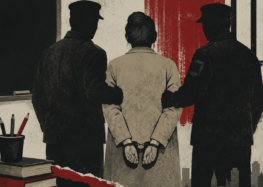
Most were held incommunicado for weeks while undergoing interrogations marked by torture and coercion, denied access to independent legal counsel, convicted on the basis of “confessions” extracted under torture and pressure in Revolutionary Courts, and, in some cases, secretly executed without prior notice to their families.
Authorities have repeatedly invoked “wartime conditions” to justify these fast-tracked prosecutions and death sentences. Vaguely defined and manufactured “national security” and “espionage” charges are being increasingly used to criminalize dissent and secure verdicts that carry the death penalty.
CHRI urges government leaders from around the world to:
- Pressure Iranian authorities to immediately halt all executions and call for a moratorium on the use of the death penalty in Iran, with clear consequences for inaction.
- Demand the cessation of prosecution and immediate release of all individuals detained for peaceful protest or political expression.
- Prioritize human rights issues and executions in all negotiations and diplomatic engagements with Iranian authorities.
- Loudly voice support for these brave prisoners and their hunger strike campaign.
A Collection of Weekly Letters by Prisoners of the “No To Execution Tuesdays” Campaign: A Record of Extraordinary Moral and Political Courage
For over two years, prisoners across Iran participating in the “No To Execution Tuesdays” campaign have called on the international community to help them stop the Iranian government’s systematic killing machine, but the surge in executions has been met with international inaction.
To honor their resilience and resistance, amplify their voices, and echo their call for urgent international action to address these state killings, CHRI has translated a collection of their statements issued in 2025. The pages that follow are drawn from these statements. Together, they form a rare chronicle of resistance from inside Iran’s prisons and a record of opposition to one of the world’s most severe execution crises.
The prisoners’ letters are below, in chronological order, starting with the most recent statement from 2026.
The 56 prisons participating in the weekly hunger strikes so far are: Evin Prison (women’s and men’s wards), Ghezel Hesar Prison (Units 2, 3, and 4), Karaj Central Prison, Fardis Prison (Karaj), Greater Tehran Prison, Qarchak Prison, Khorin Prison (Varamin), Chubindar Prison (Qazvin), Ahar Prison, Arak Prison, Langerud Prison (Qom), Khorramabad Prison, Borujerd Prison, Yasuj Prison, Asadabad Prison (Isfahan), Dastgerd Prison (Isfahan), Sheiban Prison (Ahvaz), Sepidar Prison (Ahvaz) (women’s and men’s wards), Nezam Prison (Shiraz), Adelabad Prison (Shiraz) (women’s and men’s wards), Firouzabad Prison (Fars Province), Dehdasht Prison, Zahedan Prison (women’s and men’s wards), Borazjan Prison, Ramhormoz Prison, Behbahan Prison, Bam Prison, Yazd Prison (women’s and men’s wards), Kahnoj Prison, Tabas Prison, Birjand Central Prison, Mashhad Prison, Gorgan Prison, Sabzevar Prison, Gonbad-e Kavus Prison, Qaemshahr Prison, Rasht Prison (men’s and women’s wards), Rudsar Prison, Havigh Prison (Talesh), Azbaram Prison (Lahijan), Dizelabad Prison (Kermanshah), Ardabil Prison, Tabriz Prison, Urmia Prison, Salmas Prison, Khoy Prison, Naqadeh Prison, Miandoab Prison, Mahabad Prison, Bukan Prison, Saqqez Prison, Baneh Prison, Marivan Prison, Sanandaj Prison, Kamyaran Prison, and Ilam Prison.
June 2, 2026 – Week 123 of Strikes Across 56 Prisons
“The government—trapped in intractable crises—continues its reliance on repression and executions in order to prevent an explosion of public anger and the spark of any uprising or mass protest.”
As is evident, the country’s economic situation is deteriorating day by day, and the government—trapped in intractable crises—continues its reliance on repression and executions in order to prevent an explosion of public anger and the spark of any uprising or mass protest. In its own media, it pre-emptively attributes the anticipated uprising to foreign countries in order to justify the repression and killing of civilians. This has been the regime’s pattern in response to every uprising, including the events of last January [2026].
Unfortunately, in the past week, two Kurdish Iranian brothers from the Yarsan community, Mojtaba and Meysam Vaisi, lost their lives as a result of an attack by the Revolutionary Guards on their hideout. They had been pursued by security forces during the January uprising and were forced into hiding.
Recently, the notorious Ministry of Intelligence has also summoned and arrested many families of political prisoners and opponents of the death penalty, subjecting them to threats, insults, and inducements in an attempt to force them into silence.
Yesterday, as well, two political prisoners from the January 2024 uprising, named Ashkan Maleki and Mehrdad Mohammadinia, were executed in Qezel Hesar Prison and joined the ranks of those who have sacrificed their lives for freedom.
This week, the death sentence of political prisoner Zahra Tabari, held in Lakan Prison in Rasht, was reaffirmed. Two political prisoners from Bukan named Raouf Sheikh Maroofi and Mohammad Faraji were also sentenced to death. In addition, death sentences were issued by Branch 26 under Judge Afshari for Benyamin Naqdi, one of those arrested during the 2024 uprising, as well as for two imprisoned brothers named Hassan and Hossein Amiri. All of these individuals, along with many other prisoners whose names have not been published, are at serious risk of execution.
We, the members of the “No to Execution Tuesdays” campaign, once again call on all prisoners across the country, the noble and aware people of Iran, and the awakened global conscience to raise their voices in protest against the extrajudicial and barbaric executions carried out by Iran’s dictatorial regime—executions issued and implemented without fair trial guarantees. We also call on international human rights organizations to take effective action to prevent further killing of prisoners.
Week 123
Tuesday 12 Khordad 1405 / June 2, 2026
May 26, 2026 – Week 122 of Strikes Across 56 Prisons
“Within the ‘No to Executions Tuesdays’ campaign as well, resilient women prisoners across Iran have consistently raised their voices in defense of freedom and the right to life.”
The wave of political executions in Iran continues unabated. Since last week, two political prisoners and Kurdish compatriots, Ramin Zaleh and Karim Maroufpour, along with another young man, Abbas Akbari Feyzabadi, one of the protesters from the December protests, have been ruthlessly executed. Another prisoner, Mojtaba Kian, was executed on espionage charges—an accusation that, as is often the case in Iran, resulted in a death sentence in the absence of fair trial guarantees.
According to information received, at least 72 people have been executed since the beginning of the Iranian year, more than 25 of whom were political or security-related prisoners. Beyond these cases, dozens—if not hundreds—of other unnamed prisoners across Iran remain under sentence of death.
In the past week, the death sentence of political prisoner Manouchehr Fallah, held in Lakan Prison in Rasht, was reaffirmed after a previous reversal. The death sentence of Ruhollah Karki in Sheiban Prison, Ahvaz, was also upheld. In addition, the death sentences of political prisoners Milad Armoon, Navid Najjaran, Mehdi Imani, and Seyed Mohammad-Mehdi Hosseini—defendants in the so-called “Ekbatan Township” case—have been confirmed, placing their lives in grave danger.
In the face of these executions, participants in the “No to Executions Tuesdays” campaign have maintained their resistance for 122 consecutive weeks. Among them are the women prisoners in Evin Prison, who chant slogans every Tuesday in protest against executions. In retaliation, prison authorities have barred them from family visits and deprived them of telephone contact with their loved ones.
Contemporary Iranian history is filled with courageous women who sacrificed—even their lives—for freedom, equality, and social change. In recent years, women have been among the leading forces in the major uprisings of December 2017, November 2019, the “Woman, Life, Freedom” uprising of 2022, and the protests of January 2026. The justice-seeking movement is also filled with women who have stood firmly against executions and played a significant role in advancing the movement to abolish the death penalty.
Within the “No to Executions Tuesdays” campaign as well, resilient women prisoners across Iran have consistently raised their voices in defense of freedom and the right to life. The authorities cannot tolerate even these voices, as misogyny has been one of the regime’s foundational pillars since its inception.
Over the past week, UN High Commissioner for Human Rights Volker Türk, Amnesty International, and numerous other human rights organizations have condemned the escalating wave of executions in Iran and called for their immediate halt. Likewise, members of the European Parliament adopted a resolution condemning Iran’s executions and targeted repression, urging stronger international pressure on the government and calling on their respective states to condition any political engagement with Iran on an end to executions.
We, the members of the “No to Executions Tuesdays” campaign, once again call upon international human rights bodies and all people of conscience to take effective action to prevent the continuation of these inhumane executions and to stand with the people of Iran in their demand for freedom, justice, and the abolition of the death penalty
Week 122
Tuesday, 5 Khordad 1405 / May 26, 2026
May 19, 2026 – Week 121 of Strikes Across 56 Prisons
“We have repeatedly stated that the death penalty, regardless of the charge involved…is the regime’s most important instrument of repression.”
For more than two months, Iran’s authoritarian rulers have effectively occupied city streets through their loyalists and affiliated forces, publicly conducting weapons training and using children in these gatherings in an apparent effort to normalize violence and repression against citizens and protesters.
Over the past week, the ruling authorities executed political prisoner Abdoljalil Shahbakhsh, a Baluch citizen, in Zahedan Prison. In another criminal act, they executed Mohammad Abbasi, one of those arrested during the January uprising, on charges related to participation in the protests. This comes while his daughter, Fatemeh Abbasi, has been sentenced to 25 years in prison and is currently incarcerated in Evin Prison.
Terrified of its own downfall, the ruling dictatorship uses death sentences and executions for one purpose above all: to spread fear throughout society. Alongside political prisoners, young people accused of non-political offenses are being executed on a near-daily basis.
We have repeatedly stated that the death penalty, regardless of the charge involved, is not merely the implementation of an unjust judicial sentence that deprives a human being of the right to life. It is the regime’s most important instrument of repression and state killing—one deeply rooted in the political, class-based, and ideological foundations of the system of Velayat-e Faqih. It is employed to instill fear among the population and force the oppressed into submission. Yet this is a futile illusion.
If the authorities are hanging young people one after another today, it is because they know these young men and women have experienced class discrimination firsthand and understand the systemic corruption and plunder carried out by those in power. Executions are intended to intimidate, but the regime fails to recognize that such violence does not extinguish resistance—it plants the seeds of awareness, resilience, and future uprisings.
We believe these executions must not be met with resignation. The movement against the death penalty is a necessary step toward justice, freedom, and the elimination of all forms of discrimination and oppression in a future Iran.
Open and practical opposition to the death penalty is a crucial measure of commitment and a true test of those who claim to struggle for freedom and justice today.
As part of the broader movement against executions, we in the “No to Executions Tuesdays” campaign call on all political, human rights, labor, and civil society activists to strengthen their unity in efforts to halt executions. We also call on workers, teachers, students, and retirees—who have consistently raised their voices against the death penalty in public spaces across the country—to help bring our message to the attention of the international community and people of conscience worldwide.
With hope for a free Iran, free from repression and executions, and in protest against the issuance and implementation of death sentences in Iran, participants in the “No to Executions Tuesdays” campaign are holding a hunger strike on Tuesday, May 19, 2026, marking the campaign’s 121st consecutive week, across 56 prisons throughout the country.
Week 121
Tuesday, 29 Ordibehesht 1405 / May 19, 2026
May 12, 2026 – Week 120 of Strikes Across 56 Prisons
“True justice is not born in execution sheds; it flourishes in awakened hearts, through education, and in fair courts of law.”
In the final days of the Iranian year 1404, as the people of Iran had risen in pursuit of fundamental political change, the ruling dictatorship managed to temporarily intensify its repression of society by exploiting the cover of an external war.
Under the shadow of that war, the authorities have executed 23 political and security-related prisoners since the beginning of 1405. Beyond the executions themselves, the authorities have subjected families to further suffering and torment by withholding the bodies of many executed political prisoners. Among them are six members of the “No to Executions Tuesdays” campaign—Vahid Bani Amerian, Pouya Ghobadi, Babak Alipour, Akbar (Shahrokh) Daneshvarkar, Mohammad Taghavi, and Abolhassan Montazer—whose bodies have still not been returned to their families, despite forty days having passed since their executions.
On April 18, 2026, Azam Daneshvarkar and Akram Daneshvarkar, the sisters of Shahrokh Daneshvarkar, were arrested by security forces and taken to an undisclosed location after visiting the coroner’s office and judicial authorities to seek the return of their brother’s body.
This inhumane practice constitutes a clear case of enforced disappearance, a tactic with a long history under this government over recent months and years.
As part of this continuing campaign of repression, the rulers of the Velayat-e Faqih system last week executed three political prisoners connected to the January uprising—Ebrahim Dolatabadi, Mehdi Rasouli, and Mohammadreza Miri—in Vakilabad Prison in Mashhad. In the campaign’s statement issued on May 5, we had already warned of the imminent execution of these three prisoners, along with several others.
Yesterday, another prisoner, Erfan Shakourzadeh, was executed in Ghezel Hesar Prison on espionage charges.
At present, many political prisoners—particularly those detained in recent months—face a serious risk of execution. These include Amir Mohammad Zare, Mohammadreza Abdollahpour in Ghezel Hesar Prison, and Ali Pishevarzadeh in Lakan Prison in Rasht. Also at risk are Baluch political prisoners Adham Narouei, Farshid Hassanzahi, Hossein Shahouzehi, Nasimeh Eslamzahi, and Soleiman Shahbakhsh, all of whom have been prosecuted through opaque and fundamentally unfair judicial proceedings.
In recent days, at least 100 detainees from the uprising have been transferred to Ward 37 of Unit 3 in Ghezel Hesar Prison. They are being held in severely overcrowded conditions and face shortages of basic necessities. Most are also facing serious charges, placing their lives at significant risk.
According to state media reports, the authoritarian government has confiscated the property of dozens of protesting citizens. Through these various forms of repression—including a wave of unprecedented executions—the authorities seek to create an atmosphere of fear and intimidation in society in the hope of prolonging their rule. Yet the resilience and resistance shown by the people of Iran and its courageous youth, both in the streets and in prisons, have demonstrated that this government is destined to fall, and that freedom and equality are closer than ever.
The “No to Executions Tuesdays” campaign stands in solidarity with the steadfastness of the people of Iran and will continue its struggle with full determination until the abolition of the death penalty and the liberation of Iran. The campaign has now become a symbol of resistance.
Every day of the “No to Executions Tuesdays” campaign is a day that keeps the collective conscience alive. These are days that break the deadly silence and carry the cry of “life” to the world.
We, the members of this campaign, believe that true justice is not born in execution sheds; rather, it flourishes in awakened hearts, through education, and in fair courts of law.
The “No to Executions Tuesdays” campaign is observing a hunger strike on Tuesday, May 12, 2026, marking its 120th week, across 56 prisons throughout Iran.
Week 120
Tuesday, 22 Ordibehesht 1405 / May 12, 2026
May 5, 2026 – Week 119 of Strikes Across 56 Prisons
“Repression and executions cannot remedy the crisis of a government that has lost its legitimacy in the eyes of its people.”
Last week, Ejei, the head of the judiciary—which is under the influence of the Ministry of Intelligence (VAJA), the IRGC Intelligence Organization, and the National Intelligence Coordination Council—attacked opponents of the death penalty and threatened young people and government critics with further executions. In doing so, he escalated the repression of protesters and, in practice, contributed to the continued execution of prisoners.
As resistance to these medieval death sentences continues, several activists affiliated with the ‘No to Executions Tuesdays’ campaign in the women’s ward of Evin Prison have been denied family visits and telephone contact after chanting ‘No to Executions’ and ‘Death to the Dictator’ during the prison yard period last Tuesday.
It is clear to all that policies of repression, imprisonment, and execution cannot prevent the people from rising up against the ruling authorities. Repression and executions cannot remedy the crisis of a government that has lost its legitimacy in the eyes of its people.
We, the members of the ‘No to Executions Tuesdays’ campaign, call on all people of conscience, opponents of the death penalty, human rights organizations, and the international community to take immediate and effective action to save the lives of political and non-political prisoners in Iran.
Week 119
Tuesday, 15 Ordibehesht 1405 / May 5, 2026
April 28, 2026 – Week 118 of Strikes Across 56 Prisons
“The illegitimate system of Velayat-e Faqih…has demonstrated that it views the people—not any foreign country—as its principal enemy.”
In its 118th week, the ‘No to Execution Tuesdays’ campaign expresses solidarity with the families of those recently executed and pays tribute to all those who have lost their lives in the struggle for freedom and equality.
The ‘No to Execution Tuesdays’ campaign has recently learned that in various prisons, political prisoners and those recently detained are being subjected without restraint to beatings, torture, humiliation, and degrading treatment. Torturers attempt to demean prisoners by shaving their heads, using verbal abuse, and subjecting them to insults. This disgraceful and inhumane behavior becomes even more severe when prisoners are taken to the gallows.
We are aware that directives issued by senior officials of the ruling religious dictatorship, under what they describe as a ‘war footing,’ have given the judiciary even greater latitude to violate the rights of those arrested during the January protests and the recent war. In practice, this means disregarding all of their legal rights and issuing harsh sentences without fair or impartial judicial proceedings.
The illegitimate system of Velayat-e Faqih, fearful of a popular uprising and public protests, has effectively occupied city streets, spread fear and intimidation throughout society, and carried out daily executions in prisons. In doing so, it has demonstrated that it views the people—not any foreign country—as its principal enemy. It is therefore vital and necessary, during these tense and decisive days, that freedom-loving people in Iran and all advocates of the ‘No to Execution’ movement do not remain silent in the face of state repression. They must be the voice of prisoners and those sentenced to death.
Amid the internet blackout in Iran, the international community, human rights organizations, and relevant institutions must pay even greater attention to the ongoing repression and executions, exert pressure on the Iranian government by every possible means, and urge the UN Fact-Finding Mission to take serious action toward visiting detention centers, prisoners, and prisons in Iran.”
Week 118
Tuesday, 8 Ordibehesht 1405 / April 28, 2026
April 21, 2026 – Week 117 of Strikes Across 56 Prisons
“As war and its consequences cast a shadow over Iran and public attention is diverted, the illegitimate ruling authorities are resorting to systematic executions to spread fear and prevent uprising and revolution.”
After 52 days of digital and internet shutdown and a period of isolation and lack of information—now partially lifted—we write this statement to the honorable people of Iran.
We are holding the 117th week of the ‘No to Execution’ campaign, while just yesterday, the murderous authorities ruling Iran executed two more political prisoners, Hamed Validi and Mohammad Masoumsahai.
The executionary regime, worried about public anger and emotional reaction to these executions, is making desperate efforts to accuse these prisoners and other recent detainees and those executed of espionage and links to Israel, in order to justify its executions under wartime conditions. However, these baseless accusations against courageous men and women who have no goal other than equality, freedom, and the independence of Iran and its people—and who have sacrificed everything for this cause—only intensify public outrage.
The regime, frightened and shaken by the prospect of the Iranian people’s uprising, has so far refused to return the bodies of any of these victims of the struggle for freedom and equality to their families, thereby subjecting them to psychological torture.
The No to Execution Tuesdays campaign expresses its sincere solidarity with the families of these executed prisoners—families who have never grown weary and who, week after week, in both cold and heat, have stood with this campaign and chanted ‘No to Execution,’ a demand of the Iranian people.
In the month of Farvardin alone, the oppressive and desperate system of Velayat-e Faqih sent at least 12 people—each of them political prisoners—to the gallows, thereby taking revenge on political detainees.
Now, as war and its consequences cast a shadow over Iran and public attention is diverted, the illegitimate ruling authorities are resorting to systematic executions to spread fear and prevent uprising and revolution. Many protesters from the January uprising are currently being held in solitary confinement and in the regime’s dungeons, in complete isolation. According to reports, in Unit 3, Ward 35 of Ghezel Hesar alone, dozens are held in solitary confinement, most of them young people whose lives are in grave danger.
The No to Execution Tuesdays campaign calls on all human rights organizations and international bodies to act urgently to save the lives of political prisoners under death sentences and demands serious and practical pressure on the Iranian government.
We call on all human rights, labor, civil, and political activists—and anyone opposed to the death penalty—not to be intimidated under the conditions of repression in which the regime has taken the streets hostage and imposed a de facto state of martial control. They must protest these crackdowns and the long lines of executions in every possible way. Without a doubt, the future belongs to those who have paid the price of freedom.
Week 117
Tuesday, 1 Ordibehesht 1405 / April 21, 2026
April 7, 2026 – Week 115 of Strikes Across 56 Prisons
No statement due to the internet shutdown.
March 31, 2026 – Week 114 of Strikes Across 56 Prisons
No statement due to the internet shutdown.
March 24, 2026 – Week 113 of Strikes Across 56 Prisons
“We hope that 1405 [the new Persian year] will be the year of Iran’s freedom—an Iran without torture and executions.”
The No to Execution Tuesdays campaign extends its congratulations on Eid al-Fitr and the Iranian New Year (Nowruz 1405) to the people of Iran, and in particular to the families of those killed in the January uprising, as well as to all the fallen ‘freedom fighters’ of the past year who were massacred by the authoritarian and repressive system of Velayat-e Faqih.
We also extend our sincere appreciation and gratitude to all individuals, professional associations of teachers, retirees, and workers, families of death row prisoners, independent media outlets, and all those who have given voice to prisoners sentenced to death. We hope that 1405 will be the year of Iran’s freedom—an Iran without torture and executions.
In the past year alone, the executionary regime has hanged more than 2,650 of our fellow citizens across the country. In a cruel act on the eve of Nowruz, it executed three courageous young men—Mehdi Ghasemi, Saeed Davoodi, and Saleh Mohammadi—who had been arrested during the January protests in Qom, and it also hanged another prisoner named Kourosh Keyvani in Karaj Central Prison on charges of espionage.
We, the members of the No to Execution Tuesdays campaign, while condemning these arbitrary and criminal executions carried out to spread fear and intimidation in society, call on the United Nations, different countries, and human rights organizations to exert pressure on the Iranian government to ensure at least the minimum rights of prisoners are respected.
This is especially urgent for prisoners who have been recently arrested and are, amid internet shutdowns and media silence, subjected to torture and at risk of death sentences. We also demand the release of political prisoners. This is particularly critical given that, under conditions of bombardment, prisoners’ lives are at even greater risk, and many suffer from a lack of food and medical care. In the past week alone, dozens of prisoners in Chabahar Prison were killed or injured by prison officials after protesting the lack of food supplies.
It should be noted that in the past two weeks, the campaign’s statements (weeks 111 and 112) were not published due to communication blackouts.
Week 113
Tuesday, 4 Farvardin 1404 / March 24, 2026
March 17, 2026 – Week 112 of Strikes Across Prisons
No statement due to the internet shutdown.
March 10, 2026 – Week 111 of Strikes Across Prisons
No statement due to the internet shutdown.
March 3, 2026 – Week 110 of Strikes Across 56 Prisons
“Iran’s freedom will be achieved by the people, with their own unity and empathy, and not by foreign forces.”
The No to Execution Tuesdays campaign considers the death of Iran’s dictator Ali Khamenei, the perpetrator responsible for the killing and execution of tens of thousands of Iranian people, to be the beginning of the end of the vile system of Velayat-e Faqih and the gateway to democracy.
In the current difficult wartime conditions imposed on our country by the authoritarian regime, we prisoners consider ourselves alongside the general public and share in their pain and suffering.
We believe that Iran, despite all its ups and downs, is ultimately moving toward a bright future and will never return to the past or to dictatorial systems. The freedom of Iran will be achieved by its people through their own unity and solidarity, not through foreign intervention.
The number of executions in the month of Esfand has so far surpassed 65. In recent days, the death sentence of another detainee from the January uprising, Mohammadreza Majidi Asl, was issued in Tehran on charges of “enmity against God (moharebeh),” and two Kurdish compatriot prisoners from the 1401 uprising—Mohammad Faraji and Rauf Sheikh-Ma’rufi—have been sentenced to death.
The death sentence of another political prisoner, Peyman Farahavar, held in Rasht’s Lakan Prison, has been confirmed for the second time by the regime’s Supreme Court, placing his life at greater risk than ever before.
At the same time, many other detainees remain under pressure and torture and are at risk of receiving inhumane death sentences and heavy punishments.
The No to Execution Tuesdays campaign once again draws the attention of the international community and human rights organizations to the situation of prisoners, especially political prisoners sentenced to death, and calls for their release. The regime’s shameful and entirely criminal record must be referred to the United Nations Security Council.
Week 110
Tuesday, 12 Esfand 1404 / March 3, 2026
February 24, 2026 – Week 109 of Strikes Across 56 Prisons
“We, the members of the No to Execution Tuesdays campaign, in solidarity with the people of Iran and the families of those killed, express our support for them”
The memorial ceremonies marking the 40th day after the deaths of those killed in the January uprising, held in various parts of the country, have become a symbol of the continuation of the uprising and public solidarity. These gatherings, accompanied by anti-government slogans and the rejection of dictatorship, showed that the memory and names of the victims of repression have become a source of inspiration for achieving the overthrow of the system and for establishing justice, freedom, and equality.
We, the members of the No to Execution Tuesdays campaign, in solidarity with the people of Iran and the families of those killed, express our support for them and salute the students from universities including Sharif, Tehran, Amirkabir, Art, and National University, as well as the University of Mashhad—students who courageously stand against repression on campuses.
We call on the public to continue supporting and accompanying these fighting and revolutionary students and to preserve the university as a bastion of resistance against all forms of dictatorship and fundamentalism. We also warn against the ongoing repression of students.
In recent days, the executionary regime has been holding rushed trials and fabricating cases against those arrested in the recent movement. While they are deprived of the right to choose their own lawyers and to defend themselves, and are subjected to inhuman levels of torture, several of them have been charged with the baseless accusation of “enmity against God (moharebeh)” and face death sentences. Among them are Mohammad Amin Bigleri, 19, sentenced to death by Judge Salavati in Branch 15 of the regime’s so-called Revolutionary Court in Tehran, and Mohammad Abbasi, 55, also sentenced to death by the same branch. In addition, Abdollah Perki, who had been arrested a few days earlier by intelligence forces in Mehrestan County, died under suspicious circumstances in detention.
As part of this ongoing repression, the death sentence of Mehrab Abdollahzadeh, a detainee from the 2021 uprising held in Urmia Prison, has been confirmed, and his life is in grave danger.
The authoritarian system of Velayat-e Faqih executed more than 350 people in the month of Bahman alone, a fivefold increase compared to the same month last year. In the early days of Esfand as well, 33 prisoners have been executed so far.
The No to Execution Tuesdays campaign calls on the international community, human rights organizations, and all awakened consciences to become the voice of imprisoned people and the people of Iran, and to not allow the lives of the country’s youth to be taken by criminal oppressors. We call on the families of detainees to widely share information about the situation of their imprisoned loved ones. Raise your voices—this is the only way to confront the pressure of this dictatorial regime.
Week 109
Tuesday, 5 Esfand 1404 / February 24, 2026
February 17, 2026 – Week 108 of Strikes Across 56 Prisons
“This level of crime once again reminds us how horrific and extensive the crimes against humanity and the secret killings of the 1980s and 1988 in prisons were.
On the 40th day commemorating those killed in the January uprising, and with the deepest condolences to the families and to the courageous people who, at the memorial ceremonies for their loved ones, honor the memory of those martyrs with strong determination—transforming mourning into resolve to continue the path until victory—the members of the No to Execution Tuesdays campaign also declare their unwavering solidarity and support for the uprising of the people of Iran, as well as for the families of the victims.
Documents, videos, and images that have gradually been released in recent days, revealing parts of the major crime committed during January by the oppressive regime, confirm the ominous statement of Khamenei that “the God of today is the same as the God of the 1980s.” This level of crime once again reminds us how horrific and extensive the crimes against humanity and the secret killings of the 1980s and 1988 in prisons were—crimes that were hidden from cameras and whose full dimensions have still not been fully uncovered.
Yes, tens of thousands of detainees from the recent protests are currently under pressure and torture, and plans are being made to issue severe prison sentences and death penalties against them. We call on all international bodies to take immediate action to save these prisoners. At the same time, since the beginning of Bahman, more than 300 prisoners, including three women, have been hanged.
According to published reports, Saleh Mohammadi, an 18-year-old wrestler arrested during the Dey protests, is now facing a death sentence in Qom Prison, and his life is in serious danger.
Members of the No to Execution Tuesdays campaign call on the Iranian public—especially the families of detainees—not to remain silent, to share news and names of their loved ones, and to become their voice.
Week 108
Tuesday, 28 Bahman 1404 / February 17, 2026
February 10, 2026 – Week 107 of Strikes Across 56 Prisons
“Fellow citizens, in such circumstances, silence is not an option. The only option and the only path to salvation is protest and outcry.”
Based on information and reports received, during the proud uprising of January, the repressive forces of the Velayat-e Faqih system, in addition to killing thousands of innocent people, arrested tens of thousands of Iranian citizens and youth, and subjected many of them to physical and psychological pressure in order to extract forced confessions.
According to these reports, in an effort to intensify an atmosphere of repression and public intimidation, the executionary regime has also arrested a number of lawyers, doctors, and healthcare workers—reflecting its growing fear of the courageous uprising of the people in last Dey.
In the first three weeks of Bahman month alone, the authoritarian ruling system has executed more than 207 people, including two women. In addition to hundreds and thousands of unnamed detainees who are at risk of receiving medieval death sentences, in recent days the Kurdish political prisoner Naser Bakrzadeh has been sentenced to death for the third time and is now in serious danger of execution.
Hereby, we call on the brave and courageous people of Iran to become the voice of detainees and political prisoners, and we ask the families of detainees to raise their voices of protest against oppression, injustice, and widespread and extrajudicial arrests, and to support their loved ones.
Yes—fellow citizens, in such circumstances, silence is not an option. The only option and the only path to salvation is protest and outcry. In this critical situation, we express our hope for an Iran that is free and equal, free from violence and executions, and where the “right to determine one’s own destiny” lies with the people.
Week 107
Tuesday, 21 Bahman 1404 / February 10, 2026
February 3, 2026 – Week 106 of Strikes Across 56 Prisons
“The authoritarian regime is carrying out executions in an unrestrained manner.”
More than three weeks after the brutal massacre of people in neighborhoods and streets across Iran, and the arrest of tens of thousands of defenseless citizens, large segments of Iranian society still remain completely unaware of the fate and condition of their loved ones. These actions by the repressive government constitute state killings and enforced disappearances, and the main responsibility lies with the Supreme Leader (Vali-ye Faqih).
Many detainees are being secretly tried without the right to a fair trial and are at risk of severe sentences, including execution. Security agencies have threatened many independent lawyers, telling them they are not allowed to take on the defense of those arrested during the January uprising.
We, the members of the “No to Execution Tuesdays” campaign, call on all families of detainees and those killed to raise their voices and publicize the names of their loved ones. We also call on all honorable people and human rights, labor, civil, and political activists to amplify the voices of recent prisoners and detainees more than ever.
The authoritarian regime is carrying out executions in an unrestrained manner, having executed 123 people in the month of Bahman alone, and more than 2,350 people since the beginning of the year 1404 to date.
The protest against the rights of the Iranian people and the thousands of innocent girls, boys, and children whose blood was unjustly spilled by the bullets and axes of the ruling religious fascist suppressors has ultimately led to the designation of the main perpetrator of these crimes, the Islamic Revolutionary Guard Corps (IRGC), being placed on the European Union’s terrorist list—an important step in the struggle of the Iranian people. This is not only the demand of the members of this campaign and all political prisoners, but also a long-standing demand of all freedom-seeking and equality-seeking people of Iran.
Week 106
Tuesday 14 Bahman 1404 / February 3, 2026
January 26, 2026 – Week 105 of Strikes Across 56 Prisons
“This uprising terrified the government so much that it carried out a brutal massacre, revealing its fascist nature in the clearest possible way in Iran and the world.”
On the eve of entering the third year of the “No to Execution Tuesdays” campaign, we extend our deepest condolences to the families of those who lost their lives on the path to freedom and to the brave people of Iran.
We send thousands of greetings to the victims of the uprising of January, who shook the foundations of the fascist ruling system. We also salute the heroic people of Iran who, in this nationwide uprising, wrote another golden chapter in the history of Iran’s struggle for freedom.
This uprising terrified the government so much that it carried out a brutal massacre, revealing its fascist nature in the clearest possible way in Iran and the world. Today, thanks to those unjustly shed bloods, not only the people of Iran but the world has been in turmoil, and global condemnation of this regime has reached its peak—so much so that Ms. Mai Sato, the UN Special Rapporteur, has called the killings carried out by the government a “crime against humanity” and has called for the prosecution of the leaders of the Velayat-e Faqih system. The European Parliament and the UN Human Rights Council have also taken unprecedented positions against these crimes.
During this period, the repression and execution apparatus of the state executed more than 355 people in Dey (Dec 2025 – Jan 2026) alone. In the first days of Bahman, more than 50 prisoners, including two ideological prisoners, Amanj Karvanchi and Arsalan Sheikhi, were also executed. Thus, the government has not only failed to stop executions but has expanded the wave of killing and executions into the streets, hospitals, detention centers, and even people’s homes.
Reports from various prisons indicate the transfer of street detainees and even injured individuals to different prison facilities:
- Newly constructed buildings and wards in Sheiban Prison in Ahvaz, originally intended to reduce overcrowding, have been allocated as quarantine areas for hundreds of new detainees.
- In Central Karaj Prison, various halls have been emptied and allocated to new arrests.
- In Qezelhesar Prison, halls have been cleared and new prisoners, along with some detainees transferred from Greater Tehran Prison, have been moved there to make room for new detainees.
- Detention centers such as Moghadad are filled with detained youth.
Therefore, we, the members of the “No to Execution Tuesdays” campaign, warn against any harsh sentences issued against those arrested in the recent protests, as well as against their harassment, abuse, and killing.
Warning, warning!
Given the lack of official disclosure of the names of the dead, detainees, and injured, it is said that the government intends to kill many detainees and injured individuals and transfer them to morgues such as Kahrizak, and then present them as those killed in the streets.
Week 105
Tuesday, 7 Bahman 1404 / January 26, 2026
January 6, 2026 – Week 102 of Strikes Across 55 Prisons
“Neither direct shooting at young people, nor the arrest of students, nor torture and forced confessions from protesters can silence the voice of justice.”
We are in the 102nd week of the “No to Execution Tuesdays” campaign and at the beginning of the Gregorian year 2026, during which the execution regime in the past year [2025] has hanged more than 2,200 of our fellow citizens, including 19 political and ideological prisoners. In this week as well, political prisoner Seyed Mohammad Mousavi from Shadegan, held in Sheiban Prison in Ahvaz, has been sentenced to death and has been added to the list of dozens of other political prisoners whose lives are in danger.
Since the beginning of January, the ruling religious fascist government in Iran has also executed 167 people, including one woman.
This week, we are on strike while the people of Iran, in protest against the catastrophic economic and political situation, have taken to protests, gatherings, and strikes for the tenth consecutive day, with their main demand being the change of this authoritarian regime.
A regime that for 47 years has oppressed and violated the lives and dignity of its people. We, the members of this campaign, while honoring the memory of those who lost their lives in this nationwide uprising, declare our solidarity with the brave and freedom-seeking people and stand with them until the end. Neither direct shooting at young people, nor the arrest of students, nor torture and forced confessions from protesters can silence the voice of justice. Undoubtedly, the end of this struggle—after years of oppression and dictatorship—will be the realization of freedom, equality, and democracy for all Iranians.
Week 102
Tuesday, 16 Dey 1404 / January 6, 2026
December 30, 2025 – Week 101 of Strikes Across 55 Prisons
“As Jesus Christ said: ‘Do not be afraid of those who kill the body but cannot kill the soul.’”
The “No to Execution Tuesdays” campaign extends its greetings on the birth of Jesus Christ and the New Year to all Christians and wishes freedom and liberation for all our fellow citizens who are suffering under the repression and oppression of the religious dictatorship ruling our country. As Jesus Christ said: “Do not be afraid of those who kill the body but cannot kill the soul.”
We enter the 101st Tuesday of “No to Execution” at a time when Tehran’s bazaar merchants have, since Sunday, launched strikes and protests against the government’s oppression. These protests have expanded significantly and spread to some other cities as well.
In these critical days, the execution regime, in order to prevent the escalation of popular uprisings, has intensified its repression and executions. In recent days, death sentences have been communicated to two Kurdish political prisoners, Mehrab Abdollahzadeh in Urmia Prison and Younes Bakhshi in Mahabad Prison. Since the beginning of Dey (December), more than 96 people, including one female prisoner in Vakilabad Prison in Mashhad, have been executed.
The “No to Execution Tuesdays” campaign, while expressing gratitude and appreciation to all families and supporters who backed the campaign during its 100th week, calls for greater support for the “No to Execution” movement in order to slow and further weaken the blade of repression and executions and to help create the conditions for the abolition of this inhumane punishment.
Week 101
Tuesday, 9 Dey 1404 / December 30, 2025
December 23, 2025 – Week 100 of Strikes Across 55 Prisons
“One hundred weeks of relentless struggle against the machinery of killing and the gallows”
With greetings on Yalda Night to all fellow citizens and to all imprisoned members of the “No to Execution Tuesdays” campaign, as well as to all prisoners sentenced to death, and with the hope that the death penalty will be abolished in a free and prosperous Iran.
The “No to Execution Tuesdays” campaign, in its 100th week, despite many ups and downs, moments of courage, and the most painful nights marked by the execution of our comrades and cellmates, continues its path with determination.
One hundred weeks of “No to Execution”
One hundred weeks of relentless struggle against the machinery of killing and the gallows
One hundred weeks of standing against cruelty and brutality
One hundred weeks of breaking the aura of the gallows and prisons
One hundred weeks of calls for steadfastness by the families of prisoners
One hundred weeks of resistance against a dictatorship that seeks to silence every voice of protest through executions and firing squads and impose itself on society. A regime that, according to the 72nd resolution of the United Nations and recent adopted measures, has in 2025 alone executed more than 2,000 people (more than twice the number in 2024), aiming at intimidation and repression. This campaign has continued without interruption and will continue until the abolition of this inhumane punishment.
We have learned that, coinciding with the 100th week of the “No to Execution Tuesdays” campaign, the women’s ward of Yazd Prison has also announced its joining. We extend greetings and gratitude to these dear ones and hope that other prisons across the country will join this campaign in the future, and that we will one day reach a point where the “No to Execution” movement spreads nationwide and the ground is prepared for the abolition of the inhumane death penalty.
The number of executions in the month of Azar has reached approximately 357 people.
This wave of killings and executions of prisoners reflects the extremely critical situation of a regime that, amid an intractable spiral of political, social, and economic crises that has made ordinary daily life impossible for people, has resorted to killing prisoners. In its fundamentally flawed assessment of Iranian society, it seeks through such brutality and executions of the country’s youth to pre-empt protests; however, this unchecked savagery no longer solves—and will not solve—any of the regime’s problems.
Week 100
Tuesday, 2 Dey 1404 / December 23, 2025
December 16, 2025 – Week 99 of Strikes Across 55 Prisons
“A collective effort from within prisons to defend the ‘right to life’ and to resist the policy of death.”
This week, the “No to Execution Tuesdays” campaign is being held simultaneously with the International Day of “Reconciliation,” a day that symbolizes the end of violence in the world. Yet in Iran, the authoritarian regime continues at a frightening pace to replace justice and dialogue with the gallows.
Reconciliation is not possible without truth and justice, and execution is the negation of justice and the absolute denial of any possibility of social reconciliation.
This campaign now continues, without fatigue, into its 99th week across 55 prisons in the country—a collective effort from within prisons to defend the “right to life” and to resist the policy of death.
The oppressive government ruling Iran has continued its execution trend intensely over the past week, executing at least 67 people, and since the beginning of Azar, has sent nearly 271 people to the gallows.
These executions are carried out without fair trials, without effective access to independent lawyers, and in complete media silence—a process that reflects the institutionalization of execution as a tool of political and social repression.
This week, Ramin Zala, a political prisoner held in Naqadeh Prison, was sentenced to death by Branch 1 of the Revolutionary Court of Mahabad on charges of “baghy” (armed rebellion).
Also in the past week, death sentences for six political prisoners held in Qezelhesar Prison and members of the “No to Execution Tuesdays” campaign—Babak Alipour, Pouya Ghobadi, Vahid Bani-amearian, Akbar (Shahrokh) Daneshvarkar, Mohammad Taghavi, and Abolhasan Montazer—were once again issued by Branch 26 of the Revolutionary Court in Tehran.
Ehsan Rastami, a well-known figure in the book and publishing sector, was charged with “baghy” on 20 Azar 1404 and transferred to solitary confinement in Evin Prison, an action that increases the risk of intensified pressure and a potential death sentence.
In continuation of these crackdowns, the government arrested several participants at the memorial ceremony for the late Khosrow Alikordi. This act is part of the same policy of societal suppression and intimidation.
The “No to Execution Tuesdays” campaign, while condemning these crackdowns and the accelerating executions by the executionist authorities, calls on the honorable people of Iran, awakened consciences, and international human rights organizations to be the voice of prisoners sentenced to death, to republish and follow up on their cases, and to provide practical and media support to their families.
Week 99
Tuesday, 25 Azar 1404 / December 16, 2025
December 9, 2025 – Week 98 of Strikes Across 55 Prisons
“The issue of execution in Iran is not a form of punishment, but an organized crime and a systematic violation of the right to life.”
This week, one of the most committed human rights lawyers, Khosrow Alikordi, a companion of the “No to Execution Tuesdays” campaign, who defended those arrested during the nationwide protests of 2022 and was a refuge for families seeking justice, passed away under suspicious circumstances. We extend our sincere condolences on this major loss to the community of human rights lawyers, to all those seeking justice, and to his family, friends, and colleagues.
Today, the issue of execution in Iran is not a form of punishment, but an organized crime and a systematic violation of the right to life.
In recent days, political prisoner Karim Khajasteh in Lakan Prison in Rasht was formally notified of a death sentence. According to published data, 95 people, including 2 women, were executed this week alone; and in the first 17 days of Azar, more than 200 executions have been recorded. The sole purpose of these actions is to suppress society and block popular uprisings and movements.
Week 98
Tuesday, 18 Azar 1404 / December 9, 2025
December 2, 2025 – Week 97 of Strikes Across 55 Prisons
“Universities have remained at the forefront and beating heart of the struggle against dictatorship.”
We begin the 97th week of the “No to Execution Tuesdays” campaign on the eve of December 7 (Student Day). Since 16 Azar 1332 (December 7, 1953), universities have remained at the forefront and beating heart of the struggle against dictatorship.
On this day, we honor the memory of all those who have lost their lives in the path of freedom, especially students who have been victims of enforced disappearance, including Saeed Zeinali, who disappeared following the attack on the Tehran University dormitories in 1999 and whose fate remains unknown to this day.
Saeed Zeinali is one example of hundreds of students and citizens who have fallen victim to authoritarian rulers, inflicting profound suffering on their families and grieving mothers. Yet repression, imprisonment, and executions have not succeeded in stopping students from pursuing the struggle for freedom. Even now, universities remain targets of authoritarian repression. This time, political prisoner Ehsan Faridi, a 23-year-old student, faces the threat of a death sentence because of his advocacy for freedom, and his life is in danger.
Over the past week, we witnessed a further escalation in executions. During the first ten days of Azar alone, nearly 100 prisoners fell victim to the gallows of the ruling dictatorship, including two women. One execution was carried out in public in an effort to spread fear among the population.
As a result, the number of executions since the beginning of the year 1404 has reached 1,564, an unprecedented figure over the past three decades. This alarming trend has sparked growing international condemnation of Iran’s criminal death sentences.
In light of this widespread wave of executions, it is expected that political activists, student movements, and all people of conscience will stand in solidarity with prisoners sentenced to death and with families seeking justice. They must raise the voice of “No to Executions” by every possible means, so that the principal instrument of repression is taken away from the system of Velayat-e Faqih and the path toward freedom and popular sovereignty can be opened.
Week 97
Tuesday, 11 Azar 1404 / December 2, 2025
November 25, 2025 – Week 96 of Strikes Across 55 Prisons
“This is a protest that requires broad support from the public and the international community.”
The 96th week of the “No to Execution Tuesdays” campaign arrives at a time when Iran’s repressive apparatus, in an unprecedented effort to ensure its survival, has intensified the execution of prisoners. The expansion of executions, the absence of fair trials, and the systematic use of executions as a tool to instill fear and terror constitute a clear violation of fundamental human rights and a flagrant example of crimes against humanity.
This week, Birjand Central Prison has also joined the 54 other prisons whose inmates are conveying the message of “No to Execution” from behind prison walls to society.
In this week, the adoption of the 72nd United Nations resolution condemning human rights violations in Iran recognized two decisive legal facts:
- Recognition of the 1988 massacre and expression of concern about its repetition
- Condemnation of the unprecedented wave of executions and the government’s use of execution as a tool of intimidation and repression
Despite this, the government does not stop executions and killings. The issuing of a death sentence for Mohammadmehdi Soleimani—one of those arrested during the 2022 uprising—is not an exception, but a consistent pattern of eliminating protesters and a hallmark of a flawed and politicized judicial process. Only in the month of Aban, 311 executions were carried out, an unprecedented figure since the 1988 massacre; additionally, 59 people have been executed since last week, and 1,479 people have been executed since the beginning of the Iranian year 1404.
Families of prisoners sentenced to death, despite threats, summonses, arrests, and security pressure, stand in the streets week after week defending the lives of their loved ones. This is a protest that requires broad support from the public and the international community.
Week 96
Tuesday, 4 Azar 1404 / November 25, 2025
November 18, 2025 – Week 95 of Strikes Across 54 Prisons
“We, the people, are the only support and shield for prisoners against the gallows.”
In this week of the “No to Execution Tuesdays” campaign, we once again reaffirm our commitment to standing against the machinery of repression and state killing, and we commemorate the victims of the November 2019 uprising—more than 1,500 women, men, and young people who sacrificed their lives on the path to freedom—oppressed individuals who refused humiliation and rose up against injustice and tyranny. We insist on continuing their path until the complete abolition of executions and the realization of freedom and equality. As long as oppression and injustice persist, November continues.
We enter the 95th week of this campaign at a time when the confirmation of death sentences for three political prisoners in Sheiban Prison in Ahvaz (Alireza Mardasi, Farshad Etemadi-Far, and Masoud Jamei) once again exposes the depth of brutality and the normalization of judicial-security violence against protesters and citizens.
In the past week, one prisoner was executed in a medieval public execution, and the number of executions since the beginning of Aban has exceeded 250—a shocking figure that reflects the catastrophic scale of crime and repression in Iran.
The “No to Execution Tuesdays” campaign, which until today has reflected the voices of families, activists, and prisoners sentenced to death in 54 different prisons across Iran, once again emphasizes: We, the people, are the only support and shield for prisoners against the gallows.
We call on all freedom-seeking people of Iran, in every city, neighborhood, and with every possible means, not to remain silent in the face of this wave of executions, and to raise their voices of protest in every form and at every level against the implementation of death sentences.
We must support the families who, week after week, stand in front of prisons and judicial institutions, with courage and grief but also hope, protesting the execution of their loved ones. We reiterate that only through solidarity and collective protest can this machinery of killing be stopped.
Week 95
Tuesday, 27 Aban 1404 / November 18, 2025
November 11, 2025 – Week 94 of Strikes Across 54 Prisons
“Decades of repression, discrimination, and killing have not been able to extinguish the people’s will for liberation and freedom.”
On the eve of the anniversary of the 2019 November uprising, we begin by honoring the memory of those who were killed by the authoritarian regime and laid to rest in blood and violence.
From the rise of the Velayat-e Faqih dictatorship in 1979, to the November 2019 uprising, to the nationwide uprising of 2022, and up to today, the people of Iran have continued to move along a costly path toward freedom and human dignity. Decades of repression, discrimination, and killing have not been able to extinguish the people’s will for liberation and freedom.
In these very days, Reza Abdali, a political prisoner and an Arab compatriot from Ahvaz, is facing a death sentence. We demand the immediate cancellation of this sentence and an end to the cycle of death in Iran’s prisons.
In other news, on Monday, two security-related prisoners sentenced to death, Ehsan Afrashtih and Mehdi Farid, were beaten and transferred from Ward 7 of Evin Prison to an unknown location. Although political prisoners tried to prevent the transfer, there are fears that their sentences may be carried out.
At a time when the voice of protest is answered with imprisonment, torture, and execution, the social impact of unrestrained repression among the most deprived segments of society sometimes manifests in the painful form of self-immolation—an act of protest born out of despair.
In the past week, we learned of the death of Kourosh Kheiri, a driver for the Khorramabad Department of Education, who set himself on fire in protest against his dismissal from work. We also received the heartbreaking news of the self-immolation of Ahmad Baladi, an Ahvazi student who took this action after the destruction of his kiosk in protest against injustice. These incidents are painful examples of the silent scream of people who, under the weight of pressure and humiliation, are left with nothing but their own lives to protest with.
A government that seeks to silence dissent through executions and repression has, in these tense and critical days in Iran, dramatically escalated executions. Since the beginning of Aban this year, 165 people have been executed; in the past week alone, 72 people, including one woman, were executed; and on the 12th and 13th of Aban alone, 29 people were hanged.
Official figures show that since the beginning of 1404 (Iranian calendar year), more than 1,313 executions have taken place in Iran—a horrifying number that reflects the normalization of death under conditions of injustice.
The “No to Execution Tuesdays” campaign reiterates that no government can silence the voice of truth, justice, and freedom through executions. It calls on all awakened consciences to turn the cry of “No to Execution” into a powerful wave in every city and street, because silence and inaction mean the taking of innocent and defenseless lives in the prisons of the ruling, bloodthirsty authoritarian system.
With the support of the people of Iran, prisoners stand firm against the machinery of fear and terror. In the 94th week of the strike, the men’s ward of Zahedan Prison has also joined the “No to Execution Tuesdays” campaign.
Week 94
Tuesday, 20 Aban 1404 / November 11, 2025
November 4, 2025 – Week 93 of Strikes Across 54 Prisons
“Carrying out execution sentences is a betrayal of the Quran,”
We begin the 93rd week of the campaign at a time when the execution machine of the theocratic fascist government is moving at full speed without brakes. Following a one-week strike by prisoners in Unit 2 of Qezel Hesar Prison, executions—particularly in other prisons across the country—continue at a rapid pace. So much so that in just the first 12 days of Aban, at least 76 prisoners have been executed.
In response, the “No to Execution” slogan is being heard from different parts of the country. Last week, retirees in Kermanshah also chanted “No to execution” in their protests. They shouted: “Carrying out execution sentences is a betrayal of the Quran,” “Iran without executions,” and “Death sentences and security crackdowns must be abolished!”
Last week, the UN Special Rapporteur on the situation of human rights in Iran, Ms. Mai Sato, and the head of the Independent International Fact-Finding Mission, Ms. Sara Hossain, addressed the Third Committee of the UN General Assembly, pointing to widespread violations of the right to life in Iran and to secret executions, of which only 8 percent are reported through official sources.
Members of the “No to Execution Tuesdays” campaign, active in 54 different prisons, continue to stand firmly against executions and call on all prisoners—especially those sentenced to death—not to remain silent in the face of these unjust rulings. They also call on families and the people of Iran not to allow these killings to continue in silence, and to confront this state crime by publicizing the names of those sentenced to death and by raising the “No to Execution” slogan in every possible form in streets and neighborhoods across cities.
Week 93
Tuesday, 13 Aban 1404 / November 4, 2025
October 28, 2025 – Week 92 of Strikes Across 54 Prisons
“Execution is a criminal instrument used to sustain authoritarian governments.”
As we mark the 92nd week of the “No to Execution Tuesdays” campaign, Iran’s repressive and execution-driven government has recorded 283 executions in Mehr 1404 alone, adding another stain to its grim human rights record. Mehr was the bloodiest month in recent decades, during which seven political prisoners, seven women, and two juvenile offenders were executed.
Since last Tuesday alone, 59 executions, including those of two women, have been recorded. This wave of executions has coincided with the issuance and confirmation of new death sentences against political prisoners, including Kurdish political prisoner Kaveh Abdollahzadeh and Zahra Tabari in Lakan Prison in Rasht, as well as the Supreme Court’s reaffirmation of the death sentences of Manouchehr Fallah and Ehsan Faridi.
Last week, Evin Prison authorities and security forces attempted to remove Ehsan Afrashteh from the prison for the implementation of his death sentence. The move was met with resistance from fellow prisoners, but there remains an imminent risk that he may be transferred for execution at any moment.
These ruthless sentences are a clear attempt to spread fear throughout society and silence the Iranian people’s demands for freedom. For more than 46 years, this authoritarian government has driven the country and its people toward destruction through corruption, plunder of public resources, and repression. Today, it continues to rely on executions as a tool of survival.
Yet in the face of this machinery of death and intimidation, the people continue to resist. Borujerd and Ilam prisons have now joined the growing number of prisons that keep the flame of protest alive in the darkness. By joining the “No to Execution Tuesdays” campaign, they amplify the voice of resistance beyond prison walls and to the world.
This week, the courageous families of prisoners sentenced to death also gathered outside the Iranian Parliament, chanting “No to Execution” and demonstrating that no power can extinguish the desire for freedom and the right to life in this land.
We, the members of this campaign, once again declare:
- Execution is a criminal instrument used to sustain authoritarian governments.
- No religious or political justification can legitimize the deprivation of a human being’s right to life.
- Every execution is a new wound inflicted upon society and a sign of the failure of law, human dignity, and justice.
We call for:
- The immediate halt of all executions;
- The annulment of all death sentences;
- Unrestricted access for international human rights organizations to prisons and prisoners in Iran.
Week 92
Tuesday, 6 Aban 1404 / October 28, 2025
October 21, 2025 – Week 91 of Strikes Across 52 Prisons
“Failing to act in the face of the crimes of this blatant dictatorship amounts, in practice, to complicity.”
The “No to Execution Tuesdays” campaign enters its 91st week as prisoners in Unit 2 of Qezel Hesar Prison, after a week-long hunger strike under the slogan “No to Execution,” stood against mass executions and government repression and succeeded in securing the return of six fellow prisoners who had been transferred to solitary confinement for execution.
For each of these prisoners, participating in this widespread strike was, in effect, an act of walking toward death. Given their resistance, this medieval regime could have accelerated the execution of any one of them in retaliation.
In support of them, their families gathered on Sunday, October 19, outside the regime’s parliament building and raised their voices against the government’s repressive policies and use of executions.
These acts represent a cry of resistance against a government that displays contempt for human life and carries out mass executions with alarming brutality. In the past week alone, 59 people—including two women and one juvenile offender—were executed. During the month of Mehr, 232 prisoners were executed. As a result, the total number of executions carried out in the current year (1404) has surpassed 1,087.
In this same context, last Saturday the government of executions and repression hanged a prisoner in Qom Prison on allegations of ties to hostile foreign states—a charge widely used by the authorities.
Fearful of uprising and revolution, the execution-driven regime seeks through ruthless repression to silence the voices of protest and popular unrest across Iran. But this is a futile illusion. The prisoners sentenced to death in Qezel Hesar and their families have demonstrated that they have nothing left to lose and are determined to overturn both the gallows and the structures of despotism that sustain them.
The “No to Execution Tuesdays” campaign salutes the prisoners of Unit 2 of Qezel Hesar for their courageous stand and calls on the international community and human rights organizations to take concrete and effective action to halt the ongoing killing of prisoners and to amplify the demands for justice of those sentenced to death.
Such measures should include severing relations with this anti-human government and establishing investigative mechanisms to examine the role of Iranian officials in torture and mass killings.
Failing to act in the face of the crimes of this blatant dictatorship amounts, in practice, to complicity.
Until executions are completely abolished, we will continue to stand firm through the “No to Execution Tuesdays” campaign. We will continue to be the voice of prisoners and their families, and we continue to place our hopes in the support of the people of Iran—in every street, neighborhood, and city, and in whatever form that support may take.
Week 91
Tuesday, 29 Mehr 1404 / October 21, 2025
October 14, 2025 – Week 90 of Strikes Across 52 Prisons
“No to executions—for anyone!”
We sincerely thank all our courageous and freedom-loving compatriots who participated in the broad campaign marking the World Day Against the Death Penalty and made their opposition to executions resonate across Iran. This powerful participation, unwavering support, and continued solidarity have given us invaluable strength and encouragement to continue our struggle for an Iran free from the death penalty.
The “No to Execution Tuesdays” campaign continues to rely on this support so that this humanitarian and justice-seeking message may reach awakened consciences and the international community ever more clearly: “No to executions—for anyone!”
As worsening pressures and inhumane conditions persist throughout Iran’s prisons, we witnessed the transfer of political and ideological women prisoners from Qarchak Prison to Evin Prison.
These women, following the tragic death of their fellow prisoner Somayeh Rashidi and widespread protests against the inhumane conditions in Qarchak, now find themselves in Evin Prison deprived of even basic facilities and heating equipment, living under extremely difficult conditions. This inhumane situation, which is not limited to Evin Prison, is yet another example of the torture of prisoners and the flagrant violation of human rights.
Although these prisoners have escaped the hell of Qarchak, hundreds of women—including women sentenced to death—remain imprisoned in this torture facility. Qarchak, like other prison hellholes, must be shut down, and those responsible for their human rights violations must be held accountable.
In the latest example of unjust sentencing, the death sentence of Ehsan Faridi, a political prisoner and student detained in Tabriz Prison, was upheld several days ago. This decision, issued without due process, is intended to spread fear among young people and students. It constitutes a violation of human rights and human dignity and must be strongly condemned.
As part of the ongoing campaign of intimidation, we also witnessed the issuance of death sentences against three prisoners of conscience: Nasimeh Eslamzehi, Arsalan Sheikhi (her husband), and Amanj Karvanchi. These sentences symbolize the injustice embedded in the authoritarian judicial system and strengthen our resolve to continue raising our voices against widespread and ruthless executions.
Under these circumstances, and coinciding with the World Day Against the Death Penalty, prisoners participating in the “No to Execution Tuesdays” campaign in Qezel Hesar Prison expressed their outrage and rejection of these cruel and inhumane sentences by chanting slogans against the death penalty.
Amid the recent wave of executions—particularly in Qezel Hesar Prison—on Monday, 21 Mehr, after a number of prisoners from Unit 2 were transferred to solitary confinement for execution, prisoners in the unit, more than 1,500 of whom are themselves under sentence of death, staged a sit-in protest, returned their prison meals, and demanded the return of their fellow inmates.
We call on other prisoners to follow the example set by the prisoners of Qezel Hesar and oppose the execution of their fellow inmates. We also urge opponents of the death penalty outside prison walls to take more decisive steps to stop the execution machine and not leave the families of those sentenced to death alone.
Reports from prisons across the country indicate that in just the first 20 days of Mehr this year, 162 prisoners were executed. By this date—only six months and twenty days into the year 1404—more than 1,000 people had been hanged. These shocking figures have deeply wounded the conscience of both Iranian society and the international community and demand urgent and serious global action to halt this criminal trend.
Week 90
Tuesday, 22 Mehr 1404 / October 14, 2025
October 7, 2025 – Week 89 of Strikes Across 52 Prisons
“We all know that in Iran, execution is not merely a punishment; it is a tool of intimidation used to instill fear in a society living under increasingly explosive conditions.”
We begin the 89th week of the “No to Execution Tuesdays” campaign on the eve of the World Day Against the Death Penalty, at a time when the international community is striving for the complete abolition of capital punishment—or at the very least, a significant reduction in its use. In Iran, however, the death penalty has neither been abolished nor reduced. Instead, the ruling establishment continues to set new records in brutality and executions with each passing day.
On Saturday, 12 Mehr, six political prisoners from Iran’s Arab minority—Ali Mojdam, Mohammadreza Moghaddam, Moein Khanfari, Habib Deris, Adnan Ghabishavi, and Seyed Salem Mousavi—were executed. On the same day, Kurdish political prisoner Saman Mohammadi Khiyareh was also executed. In addition, the death sentence of political prisoner Mohammad Javad Vafaei-Sani was upheld by the Supreme Court for the third time.
The number of executions over the past year—from 1 October 2024 to today—has reached 1,695. Since the beginning of the Iranian year 1404, 957 people have been executed in just six and a half months. We must acknowledge that many executions go unreported, and the real figures are likely far higher. These numbers represent only part of the crimes committed by this execution-driven regime.
According to a recent report by Amnesty International, by the end of December 2024, 113 countries had completely abolished the death penalty in law, while a total of 145 countries had either abolished it in law or ceased carrying out executions in practice. In Iran, however, the shadow of death grows larger every day.
We all know that in Iran, execution is not merely a punishment; it is a tool of intimidation used to instill fear in a society living under increasingly explosive conditions. In the eyes of the authorities, every act of protest and every protester must be cowed through executions and imprisonment. This is why “No to Execution” has become a rallying cry for teachers, retirees, workers, students, and other protesters across the country.
In conclusion, we extend our congratulations to all teachers on World Teachers’ Day and honor the memory of Samad Behrangi and Farzad Kamangar—teachers who taught the lessons of freedom and equality in Iran’s history and ultimately sacrificed their lives for those ideals.
We, in the “No to Execution Tuesdays” campaign, emphasize that the death penalty brings neither justice nor deterrence; it merely institutionalizes violence. We call on all people of conscience, civil society activists, writers, artists, teachers, retirees, and workers to raise their voices more loudly against executions so that this regime’s primary instrument of repression and intimidation is taken from its hands. Only then can the path toward justice and freedom be opened.
Week 89
Tuesday, 15 Mehr 1404 / October 7, 2025
September 30, 2025 – Week 88 of Strikes Across 52 Prisons
“Our voice is a cry of solidarity with all prisoners trapped in the grip of injustice and oppression.”
This week, we once again stand with profound sorrow and deep solidarity in remembrance of Somayeh Rashidi, a political prisoner who lost her life due to the denial of adequate medical care. Her tragic death is part of a broader policy of subjecting prisoners to prolonged suffering and serves as a stark warning about the condition of sick prisoners in Iran’s prisons—individuals who are deprived of even the most basic human rights. Members of the “No to Execution Tuesdays” campaign extend their heartfelt condolences to her family and loved ones.
At the same time, the execution of Bahman Choubi Asl on espionage charges following an opaque judicial process on 29 September, the issuance of death sentences against political prisoners Hamed Validi and Nima Shahi by the Revolutionary Court in Karaj, and the Supreme Court’s confirmation of the death sentence of Peyman Farahavar all point to the continuation of a deeply troubling pattern of repression and violence against the people of Iran and its prisoners. These unjust sentences are a clear violation of human rights and serve as instruments of repression that must be halted immediately.
In this context, the recent statement by Ms. Mai Sato, the UN Special Rapporteur on the situation of human rights in Iran, regarding the widespread violations of prisoners’ rights has once again drawn international attention to the dire conditions in Iranian prisons. The execution of 46 people in the past week, 190 executions during the month of Shahrivar alone—the highest monthly figure in the past 35 years—and a total of 871 executions in the first six months of 1404 present a horrifying picture of systematic and ruthless human rights violations.
The “No to Execution Tuesdays” campaign condemns these crimes and once again calls for the immediate suspension of all executions and an end to this inhumane practice. Our voice is a cry of solidarity with all prisoners trapped in the grip of injustice and oppression.
As always, while expressing our gratitude to supporters of the campaign around the world, we emphasize that the machinery of execution can be stopped through solidarity and collective action. Every act of protest against a death sentence is a step toward ending this unjust practice. We call on all opponents of the death penalty to raise their voices against these inhumane sentences.
Week 88
8 Mehr 1404 / September 30, 2025
September 23, 2025 – Week 87 of Strikes Across 52 Prisons
“Life is a fundamental right of every human being, and execution is an unjustifiable act of violence against that right.”
The 87th week of the “No to Execution Tuesdays” campaign takes place at a time when the shadow of fear and repression weighs more heavily than ever on the people of Iran. In recent months, we have witnessed an unprecedented rise in executions. Since 25 Shahrivar, at least 46 people have been executed, including two women and six Baluch compatriots. During the month of Shahrivar alone, 186 executions, including seven women, were reported.
Among these cases, the brutal execution of Babak Shahbazi, another member of the “No to Execution Tuesdays” campaign, on the anniversary of the 2022 popular uprising and without a final visit with his family, stands as a grim symbol of the regime’s inhumane conduct and disregard for human rights. The removal of Babak Shahbazi from his prison ward for the purpose of carrying out his execution in secret prompted protests and a sit-in by his fellow prisoners in Qezel Hesar Prison.
A government that on the one hand speaks of “pardoning” prisoners, while on the other hand increases the number of executions week after week, lays bare its true, anti-human character.
This year, with the reopening of schools, conscious and progressive teachers and students once again stand at the forefront of the struggle for freedom and equality. Iran’s youth are the nightmare of this regime, and in every school and university there are activists determined to continue turning educational institutions into centers of resistance and voices against the inhumane death sentences imposed on their fellow citizens.
The “No to Execution Tuesdays” campaign calls out to the freedom-loving people of Iran and to all defenders of human rights: silence in the face of these violent and anti-human policies is not an option. Our voices must be louder than repression and injustice. Every week, every Tuesday, we rise in memory of the victims of execution, in pursuit of justice, and in defense of life.
Life is a fundamental right of every human being, and execution is an unjustifiable act of violence against that right.
Week 87
Tuesday, 1 Mehr 1404 / September 23, 2025
September 16, 2025 – Week 86 of Strikes Across 52 Prisons
“We declare that we will not relent until the death penalty is completely abolished and genuine justice is established in Iran.”
As we mark the anniversary of the nationwide protests of 2022—the day that shook the foundations of the ruling system of Velayat-e Faqih—we honor the memory of Jina (Mahsa) Amini and all those who lost their lives in that historic and transformative movement.
It was an uprising that the authoritarian government appeared able to suppress only through live fire against young people and women, and by deliberately targeting protesters’ eyes. Yet resistance continues in the streets and neighborhoods across the country.
The regime was so terrified by the uprising that it had little choice but to reveal its inhumane nature. Following the 2022 popular movement, it dramatically intensified its use of the death penalty. Over the past three years alone, more than 3,175 people have been put to death by hanging, including 49 political and ideological prisoners and 95 women. In the past week alone, at least 34 prisoners have been executed, while more than 126 people have been hanged since the beginning of Shahrivar. These figures increasingly expose the scale of the human rights catastrophe in Iran and place a greater responsibility on the international community and all advocates of freedom to support the struggle against these ruthless executions.
We also wish to honor the memory of Navid Afkari, who was executed on 12 September 2020 and sacrificed his life in the cause of freedom and justice. The sacrifices made during the protests of December 2017, November 2019, and the 2022 uprising demonstrated that the people of Iran will never surrender to repression and injustice.
The “No to Execution Tuesdays” campaign strongly condemns the death sentence issued against Pejman Tobreh Rizi on the fabricated charge of “spreading corruption on earth” (efsad-e fel-arz), as well as the death sentence imposed on Kurdish prisoner Naser Bakrzadeh on security-related charges. We call on all human rights defenders and members of society to oppose these unlawful and unjust sentences.
As members of the “No to Execution Tuesdays” campaign, we also express our solidarity with the people and oppressed miners of Saqqez and with the family of Mohammad Rashidi, who was killed last night by the regime’s repressive forces. We declare that we will not relent until the death penalty is completely abolished and genuine justice is established in Iran. Every week, we will raise our voice for justice and the defense of human rights and human dignity with even greater determination.
Week 86
25 Shahrivar 1404 / September 16, 2025
September 9, 2025 – Week 85 of Strikes Across 52 Prisons
“No to executions. No to dictatorship and repression. Yes to justice and popular sovereignty.”
With hearts filled with sorrow, we once again witness unjust executions that not only violate the human and legal rights of prisoners but also wound the conscience of society.
The cruel and inhumane execution of Mehran Bahramian, a political prisoner in the city of Semirom, not only deprived an individual of the right to life but also ignited anger and protest among his family and the honorable people of the city. The dignified strike by Semirom’s shopkeepers and justice-seeking residents is proof that our people will not remain silent in the face of these crimes and will continue their struggle until their rights are secured.
In another criminal act, the ruling religious dictatorship secretly executed two Sunni prisoners of conscience, Eskandar Bazmandegan and Mohammad Kashefi, in Adelabad Prison in Shiraz.
Disturbing figures indicate that since the beginning of Shahrivar (August 23, 2025), 92 prisoners, including four women, have been executed. In the past week alone, the executioner-state has taken the lives of 46 people. According to available statistics, 756 people have been executed since the beginning of the Iranian year 1404 (March 2025). Of these, 100 executions were carried out in Ghezel Hesar Prison, meaning that more than 13 percent of all executions have taken place in that prison alone.
According to reports received, a group of prisoners in Sabzevar Prison has announced that, in protest against the government’s wave of executions, they will join the “No to Execution Tuesdays” campaign starting this week and will participate in a hunger strike every Tuesday.
The members of the “No to Execution Tuesdays” campaign declare with all their strength that:
Execution is a tool for the blatant violation of human rights and the suppression of freedoms.
They demand the immediate and complete halt of executions throughout the country.
The voice of this campaign is a voice of solidarity with and support for all victims of Iran’s inhumane policies. Until justice, freedom, and respect for human rights and human dignity are realized, this voice will continue to spread throughout the prisons. We call on all honorable and freedom-loving people to follow the example of the justice-seeking families and the people of Semirom by raising the banner of “No to Executions” in every city and on every street.
Life is a fundamental right of every human being, and no government has the right to take it away. In honor of the blood that has been shed and the families who are immersed in grief and mourning, we must raise our voices and say:
No to executions. No to dictatorship and repression. Yes to justice and popular sovereignty.
Week 85
Tuesday, 18 Shahrivar 1404 / September 9, 2025
September 2, 2025 – Week 84 of Strikes Across 51 Prisons
“The place of the victims of these injustices is not in the soil of oblivion, but in the hearts of every free Iranian”
We are approaching the 40th day since the cowardly execution of Mehdi Hosseini and Behrooz Ehsani, two political prisoners who were executed and whose families and friends, even after 36 days, still have no information about the location of their burial. This inhumane practice, which amounts to enforced disappearance and the ongoing psychological torture of the victims’ families, is part of a persistent pattern of human rights violations against bereaved families in Iran.
The widespread and brutal executions carried out every week in our country, with a concerning figure of 39 executions, including 2 women prisoners in the past week and 704 executions in the current Iranian year 1404, are not only a clear violation of fundamental human rights, but also demonstrate the violent repression of the population and the government’s attempt to maintain power through intimidation and the silencing of voices calling for freedom and justice.
Despite all this, we believe that the place of the victims of these injustices is not in the soil of oblivion, but in the hearts of every free Iranian. Their blood continues to flow in the veins of the youth, and their path remains a beacon of hope for a future without executions and violence.
With the joining of a group of prisoners in Langarud Prison in Qom in Week 84 to the “No to Execution Tuesdays” campaign, the number of participating prisons has increased to 51, reflecting the widespread resistance of prisoners and society against executions.
The “No to Execution Tuesdays” campaign is determined to become the voice of the families of the victims, prisoners, and all freedom-seeking people, calling for the complete abolition of death sentences in Iran and for the guarantee of respect for human rights and justice.
In conclusion, the campaign extends its sincere condolences to the family of one of its companions and supporters, Mr. Vali Daneshvarkar, father of political prisoner Shahrokh Daneshvarkar, who had an active presence in gatherings.
Week 84
Tuesday, 11 Shahrivar 1404 / September 2, 2025
August 26, 2025 – Week 83 of Strikes Across 50 Prisons
“The executionary state seeks to plunge society into fear through humiliation and the normalization of violence.”
In Iran under the rule of the Velayat-e Faqih system, the execution machine continues to claim lives mercilessly. Only in the month of Mordad, 166 people were hanged; and in the past week, 31 of our fellow citizens, including one woman, were executed, with two of the victims in Kordkuy and Birem (Larestan) publicly hanged. The executionary state seeks to plunge society into fear through humiliation and the normalization of violence.
According to received reports, a group of prisoners in Dehdasht Prison joined the “No to Execution Tuesdays” campaign in Week 83. The addition of Dehdasht Prison to the list of this campaign is a reminder of the painful reality that no part of Iran is safe from the shadow of executions.
At the same time, we look with anger at another shocking report: the conversion of Section 41 of Behesht-e Zahra cemetery (a section that is a reminder of thousands of political prisoners of the 1980s and the unforgettable crimes of those years) into a parking lot. This action is not only a shameful attempt to erase collective memory and the traces of state crimes, but also a clear disrespect toward the victims and their families—an act that has also been condemned by Amnesty International.
The “No to Execution Tuesdays” campaign once again declares:
Execution is not a solution;
Execution is a blatant violation of the right to life;
Execution is a tool to create fear and entrench political repression.
The campaign calls on all international organizations, human rights defenders, and all awakened consciences to stand against this cycle of death and to amplify the Iranian people’s protest against executions.
Week 83
Tuesday, 4 Shahrivar 1404 / August 26, 2025
August 19, 2025 – Week 82 of Strikes Across 49 Prisons
“The campaign calls on all compatriots not to leave the families of prisoners—especially those sentenced to death—alone in these difficult circumstances.”
In its 82nd week, the “No to Execution Tuesdays” campaign once again brings the voices of protest from prisoners and their families to the wider society. The continued lack of information about five political prisoners sentenced to death and members of the campaign (Vahid Bani Amirian, Pouya Ghobadi, Babak Ali-Pour, Mohammad Taghavi, and Akbar (Shahrokh) Daneshvarkar), as well as one security-related death row prisoner, Babak Shahbazi, is a clear indication of grave human rights violations and increasing pressure on prisoners’ lives.
The confirmation of the death sentence of political prisoner Sharifeh Mohammadi by the Supreme Court once again exposes the absence of justice and the cruelty of the judiciary of the executionary regime—a repressive system that has completely lost its legitimacy in society.
Execution statistics point to a humanitarian catastrophe. Only between 1 and 27 Mordad, 136 people were executed, and in the current Iranian year (1404), 627 people have been hanged so far. These numbers are not merely statistics; they represent lives and families who have been plunged into grief and suffering.
Members of the “No to Execution Tuesdays” campaign strongly condemn this wave of executions and the intensified pressure on prisoners. While expressing gratitude for the courage and resilience of justice-seeking families who have gathered outside prisons and other locations to amplify the voices of prisoners, the campaign calls on all compatriots not to leave the families of prisoners—especially those sentenced to death—alone in these difficult circumstances.
The campaign calls on the public to use every available means and tool to express their opposition to unjust rulings and the policy of executions in the country, and to show their human solidarity against this systematic violence through all possible forms, including gatherings and support for the families of those sentenced.
Members of the “No to Execution Tuesdays” campaign will be on hunger strike on Tuesday, 19 August 2025, in Week 82, in the following 49 prisons:
Week 82
Tuesday, 28 Mordad 1404 / August 19, 2025
August 12, 2025 – Week 81 of Strikes Across 49 Prisons
“Only through collective uprising, resistance, courage, and a loud unified voice can this cycle of death be ended.”
Amid an escalation of executions and repression in Iran, and following the transfer of political prisoners from Greater Tehran Prison to Evin Prison, we are witnessing the sudden abduction and relocation of five political prisoners previously sentenced to death—Vahid Bani Amirian, Pouya Ghobadi, Babak Ali-Pour, Akbar (Shahrokh) Daneshvarkar, and Mohammad Taghavi—to Ghezel Hesar Prison. This development has been strongly condemned by Amnesty International.
In addition, two security-related prisoners, Babak Shahbazi and Omid Tabari-Moghaddam, were also transferred to Ghezel Hesar Prison following beatings. These repressive actions are part of an intensifying crackdown on political prisoners and an unprecedented increase in the implementation of death sentences in the country.
According to reports, a Baluch political prisoner named Amer Parki Baluchzehi has been moved to solitary confinement in Zahedan Prison for execution, and his life is in imminent danger. Only on 15 Mordad, 20 people were hanged. Even more alarming, since the beginning of Mordad, more than 110 people have been executed in Iran.
However, in the face of this wave of executions, resistance by prisoners and the public continues. Brave shopkeepers and residents of the city of Semirom shut down their markets and shops in protest against death sentences issued for two brothers, Fazel and Mehran Bahramian, making their voices heard.
We call on all families of prisoners sentenced to death:
- Do not keep the issuance of death sentences for your children or relatives hidden; publicize them widely.
- Raise your voices against these inhumane sentences by gathering in public places.
The “No to Execution Tuesdays” campaign calls on all people in Iran and around the world to stand with these families and, with every available means and tool, rise against the machinery of execution in Iran. Only through collective uprising, resistance, courage, and a loud unified voice can this cycle of death be ended.
Week 81
Tuesday, 12 August 2025
August 5, 2025 – Week 80 of Strikes Across 48 Prisons
“We believe that the purpose of intensifying executions, repression, amputations, and continuous violence is nothing other than instilling fear and silencing society.”
We begin the 80th week of the “No to Execution Tuesdays” campaign while, since last week, at least 30 prisoners—including two women—have been executed, and one execution has also been carried out in public. The cycle of violence and executions continues without pause.
Last week also saw an extremely brutal and inhumane act: the amputation of fingers of three prisoners in Urmia Prison. Amnesty International strongly condemned this act, describing it as part of the judiciary’s role as a “cog in the machinery of torture.” The UN Special Rapporteur, Ms. Mai Sato, called it an “inhumane and degrading” act.
We begin this 80th week while the fate of several members of the campaign in Unit 4 of Ghezel Hesar Prison remains unknown. On 4 Mordad, they were severely beaten during a violent raid by prison guards and security forces and transferred to solitary confinement in the secure ward of Unit 3. Some were returned to the ward after five days, but the political ward remains under strict security control, fully sealed, and equipped with multiple surveillance cameras.
We have no information about the fate of five individuals: Lokman Aminpour, Hamzeh Savari, Reza Salmanzadeh, Sepehr Emamjomeh, and Mostafa Ramazani. Zartosht Ahmadi Ragheb has again been transferred to the secure ward. The situation of Saeed Masouri is extremely concerning; we only know that Zahedan Prison refused to accept him, and he is currently being held in solitary confinement in the special ward of Unit 1 of Ghezel Hesar Prison in a severe state of uncertainty.
We, the members of the “No to Execution Tuesdays” campaign, while condemning the brutal attack on prisoners and their torture, salute the resilience and resistance of our comrades under sentence of death. We also express our gratitude to all those who have reflected and continue to reflect the suffering of prisoners.
We believe that the purpose of intensifying executions, repression, amputations, and continuous violence is nothing other than instilling fear and silencing society—a society that, since the Constitutional Revolution of 1906, has longed for justice and freedom, and has insisted on human dignity and the right to determine its own destiny, paying for it every day through imprisonment, execution, and torture.
We once again call on all awakened and freedom-seeking consciences—inside the country and internationally—to amplify the cry of “No to Execution” by actively supporting the “No to Execution Tuesdays” campaign, and to expand this movement with all available means despite the efforts of the government and its overt and covert supporters.
Week 80
Tuesday 5 August 2025 / August 5, 2025
July 29, 2025 – Week 79 of Strikes Across 48 Prisons
“Ensure that the blood of the hanged is not forgotten and that the voices of the campaign’s founders are not silenced in secrecy and isolation.”
Despite a brutal attack on the heart of the “No to Execution Tuesdays” campaign in Ghezel Hesar Prison, the campaign continues with resilience and cohesion.
The ruling authorities, unable to resolve internal and external crises, have increasingly turned their weapons against the people. In this context, on Sunday, 5 Mordad, the execution regime hanged two members of this campaign, political prisoners Behrooz Ehsani and Mehdi Hosseini, in Ghezel Hesar Prison, in an unfair process, without prior notice and without a final visit with their families.
Prior to this, on Saturday, 4 Mordad, following an order by Ghezel Hesar Prison director Allahkaram Azizi and his deputies Hassan Ghobadi and Ismail Farajnejad, more than 100 armed prison guards and intelligence forces stormed the political prisoners’ hall in Unit 4 of the prison. The officers transferred all political prisoners in this unit to solitary confinement in Unit 3’s secure ward, handcuffed, shackled, and with bags over their heads. Following this attack, Saeed Masouri, one of the initial signatories of the “No to Execution Tuesdays” campaign call, was transferred into exile to Zahedan Prison.
In response to this criminal act, resilient prisoners in Qarchak and Greater Tehran Prison raised their voices and held ceremonies, reaffirming their commitment to stopping executions.
Also, last week, political prisoner Yaghoub Darakhshan, previously arrested on charges of “propaganda against the system,” was sentenced to death in Lakan Prison in Rasht. At least 20 people were executed in prisons across the country last week. Furthermore, during the one-year presidency of Pezeshkian, the number of executions has reached at least 1,477 people—higher than previous years and significantly higher than during the Raisi administration.
Gholamhossein Mohseni Ejei, head of the judiciary, openly announced an intensification of repression in his recent press conference. He stated that more than 2,000 people were arrested only during the “12-day war.”
We, the members of the campaign, believe that the aim of this continuous violence by the ruling system is to create fear and silence a society that, despite all pressures, continues to insist on its rightful demand for justice, freedom, human dignity, and the right to self-determination.
We, the members of the “No to Execution Tuesdays” campaign in 48 prisons across the country, condemn the inhumane and unjust repression and executions of prisoners. We call on all awakened consciences and freedom-seeking people, both inside the country and internationally, to raise the voice of “No to Execution” louder than ever by actively supporting this campaign, and to place the expansion of this movement on their agenda despite the government’s efforts.
We express our deep concern over the situation of the political prisoners who are members of the campaign and played a crucial role in its formation, and who have been transferred to unknown locations. We urge everyone not to leave the families of executed prisoners and campaign members alone. The lives of political prisoners in Ghezel Hesar and other prisons across Iran are in serious danger.
We call on prisoners to, inspired by the resistance of prisoners and women in Qarchak and Greater Tehran Prison, hold ceremonies and ensure that the blood of the hanged is not forgotten and that the voices of the campaign’s founders are not silenced in secrecy and isolation.
The key to victory for freedom and equality, and for pushing back tyranny and reaction, lies in collective unity and solidarity.
Week 79
Tuesday 7 Mordad 1404 / July 29, 2025
July 22, 2025 – Week 78 of Strikes Across 48 Prisons
“Our voice is the cry of ‘No to Execution’—a voice that will grow louder every Tuesday until the day executions in Iran are permanently stopped.”
The executionary government has once again launched a wave of repression and violence against society, particularly political prisoners. According to published reports, at least 71 executions were carried out in the month of Tir—sentences that were implemented without fair trials and based on forced confessions, sending individuals to the gallows.
Alongside this wave of executions, extensive pressure has been intensified on political activists and imprisoned members of the “No to Execution Tuesdays” campaign. Threats, torture, exile, arrests, summoning of family members of campaign participants, and deprivation of basic rights are only part of this systematic repression against the voice of protest in society.
On the other hand, the government exposes its true anti-people nature through the use of direct gunfire against civilians. The shooting of a young child, Raha Sheikhi, is only a small example of these crimes.
The aim of these continuous acts of violence is to instill fear and silence a society that, despite all pressure, continues to insist on its rightful demands for justice, freedom, human dignity, and the right to self-determination.
Members of the “No to Execution Tuesdays” campaign fully condemn this violent, inhumane, and unjust wave of executions and repression against prisoners. Execution is not justice; it is a tool of intimidation. We reiterate that no human life should be taken by governments, especially in conditions where due process does not exist and the fundamental rights of defendants are systematically and openly violated.
Our voice is the cry of “No to Execution”—a voice that will grow louder every Tuesday until the day executions in Iran are permanently stopped.
Week 78
Tuesday, 31 Tir 1404 / July 22, 2025
July 15, 2025 – Week 77 of Strikes Across 48 Prisons
“We strongly urge everyone not to leave the families of death row prisoners and truth-seekers alone.”
In this week of the campaign, the voice of protest against executions and state killings in the prisons of the Velayat-e Faqih system continues to grow louder.
In the latest reports, political prisoners Farshad Etemadi-Far, Masoud Jamali, and Alireza Mardasi have each been issued two death sentences by Branch 1 of the so-called Revolutionary Court in Ahvaz. In addition, in recent days, three Arab political–religious prisoners sentenced to death—Ali Mojadam, Moein Khonafri, and Mohammadreza Moghaddam—have been transferred to solitary confinement in Ahvaz and are now at serious risk of execution. The complete lack of information about their situation has further heightened the concerns of their families.
The uncertainty surrounding these three prisoners, along with dozens of others, significantly increases the risk of “enforced disappearance,” a practice that has been widely witnessed in the past.
Ms. Mai Sato, the UN Special Rapporteur on human rights in Iran, has expressed concern about the situation of the three Arab prisoners in Ahvaz and has once again sounded the international alarm over the escalating wave of repression in Iran. These warnings must be turned into a global demand for an immediate halt to executions.
At the same time, the request for judicial review (retrial) of Mehdi Hosseini and Behrooz Ehsani, two political prisoners sentenced to death, has been rejected for the fourth time. Their case has been marked by serious legal ambiguities, and authorities have previously cited the “classified” nature of the file to deny their lawyers access—an act in clear violation of the law.
Executions have once again accelerated in the month of Tir. Only in this month so far, at least 44 people, including one woman, have been executed. Two of them were hanged in public in the cities of Miandoab and Bukan—meaning that on average, two executions have taken place every day, and these are only the ones that have been publicly reported. These scenes of public executions are acts of intimidation and displays of power by a regime facing deep crises, which has turned public executions into a tool for suppressing public anger and uprisings.
According to received reports, as part of the continued expansion of the popular “No to Execution” movement, a group of prisoners in Yazd Prison has joined the “No to Execution Tuesdays” campaign, making it the 48th prison to join. This reflects a growing awareness and determination to resist the regime’s medieval machinery of death.
Families of death row prisoners and truth-seekers, despite increasing security pressure, continue to stand alongside the “No to Execution Tuesdays” campaign every week to save the lives of their loved ones. The campaign condemns these pressures on bereaved families and calls on freedom-seeking people across Iran to disrupt the scenes of public executions staged by the authorities and turn them into spaces of resistance and exposure.
People of Iran, your voice and protest can expose the criminal face of this inhumane system and keep the voices of the victims alive. We strongly urge everyone not to leave the families of death row prisoners and truth-seekers alone. Our strength lies in unity and solidarity, and together we will undoubtedly sweep away the machinery of repression and execution.
Week 77
Tuesday, 24 Tir 1404 / July 15, 2025
July 8, 2025 – Week 76 of Strikes Across 47 Prisons
“The campaign calls on the international community, human rights organizations, and all free and aware citizens not to remain indifferent to the fate of dual-national prisoners.”
First, we consider it necessary, on the eve of the anniversary of the student uprising of Tir 1378 (July 1999), to honor the memory of those who lost their lives in that uprising. Although it was brutally suppressed, it became a precursor to protests that continued in later years—in 2009, 2017, 2019, and 2022—and will continue until freedom and the restoration of people’s right to determine their own destiny are achieved.
Members of the “No to Execution Tuesdays” campaign express their deep concern and growing anger over the recent wave of executions and intensified security repression across the country. Since the beginning of Tir, at least 24 people have been executed in Iran, and the total number of executions since the start of the Iranian year 1404 has reached 428. These alarming figures represent only a portion of the systematic and gross human rights violations in Iran.
In addition to the new wave of executions, this week has also witnessed further cases of repression and lethal violence against civilians, including the killing of two young men in Hamedan by security forces and an armed attack on women in the village of Gonich in Khash county, which resulted in the deaths of two women. These are clear examples of the misogynistic nature of the government and its fear of popular protests, as well as its attempts to intimidate society.
In this regard, Ms. Mai Sato, the UN Special Rapporteur on the situation of human rights in Iran, issued a strong warning on 3 July 2025 regarding the Iranian government’s abuse of regional tensions to suppress ethnic and religious minorities and political dissidents. She emphasized the need to protect the fundamental rights of all citizens under international law and accused the Iranian government of continuing systematic repression.
Members of the “No to Execution Tuesdays” campaign also strongly condemn the issuance of death sentences for five Kurdish political prisoners—Rozgar Bigzadeh Babamiri, Pejman Soltani, Soran Qasemi, Kaveh Salehi, and Tayfour Salimi Babamiri—who were arrested during the 2022 uprising. These inhumane sentences were issued without fair trial, and collectively they have been sentenced to death 12 times.
The campaign calls on the international community, human rights organizations, and all free and aware citizens not to remain indifferent to the fate of dual-national prisoners such as Ahmadreza Djalali, who was abducted in an inhumane manner by security forces during the night of the bombing of Evin Prison, and who, after years of imprisonment, now faces imminent execution. It urges everyone not to succumb to government intimidation and to stand firmly in defense of the “right to life” of all citizens and prisoners on death row.
The campaign also calls on all human rights institutions and activists to increase pressure for transparency regarding prisoners’ conditions, to demand access to prisons, and to meet with political prisoners, ensuring that their voices are not silenced behind bars. Testimonies from political prisoners transferred to Greater Tehran and Qarchak prisons reveal only a small part of the inhumane conditions prevailing in the country’s prisons. If conditions in the capital are as such, it is clear what atrocities are occurring in other prisons, especially against ordinary and unknown prisoners.
We demand the immediate abolition of all death sentences in Iran and believe that the people of Iran, alongside other oppressed nations, will continue this path of resistance until victory and liberation are achieved.
Members of the “No to Execution Tuesdays” campaign will be on hunger strike on Tuesday, 8 July 2025, in Week 76, in the following 47 prisons:
Week 77
Tuesday, 17 Tir 1404 / July 8, 2025
July 1, 2025 – Week 75 of Strikes Across 47 Prisons
“A repressive and illegitimate government that sacrifices the ‘right to life’ of its citizens to preserve its own survival.”
The corrupt and repressive government continues arbitrary executions and systematic repression in order to confront uprisings and popular protests. In just the first four days of Tir, at least 17 prisoners—including one woman—were executed. Since the beginning of the Iranian year 1404, at least 424 people have been hanged. Last week alone, 18 prisoners were executed—an alarming and unprecedented figure in recent years.
The recent approval of a bill by the regime’s rubber-stamp parliament aimed at expanding repression and intensifying executions, particularly against dissidents and political prisoners, alongside the rising trend of carrying out death sentences, reflects an explosive society and a repressive and illegitimate government that sacrifices the “right to life” of its citizens to preserve its own survival.
On Wednesday last week, the Velayat-e Faqih system executed three Kurdish porters—Azad Shojaei, Edris Ali, and Rasoul Ahmad Mohammad—in a non-transparent and unjust process on charges of espionage.
In recent weeks, there has also been a widespread wave of arrests in various cities on vague political and security charges, raising serious concerns about the fate of detainees. There is fear that many of them may face severe charges and be deprived of their right to a fair trial.
In this situation, the lives of political prisoners sentenced to death are in even greater danger. We, members of this campaign, together with the people of Iran, demand the abolition of the death penalty and the release of all political and ideological prisoners.
The “No to Execution Tuesdays” campaign calls on the international community, human rights organizations, and all awakened consciences to be the voice of prisoners on death row. It must be remembered that the authoritarian government not only failed to ensure the safety of prisoners during times of war and bombardment, but is now, after the end of the crisis, seeking revenge against both the people and prisoners. We also call on the families of prisoners—especially those whose loved ones have recently been arrested—not to remain silent, to publish their names, and to demand their unconditional release.
It should be noted that following the closure of Evin Prison and the transfer of prisoners to Greater Tehran and Qarchak prisons, Qarchak Prison will henceforth replace Evin Prison in the list of strike-participating prisons in the campaign.
Week 75
Tuesday, 10 Tir 1404 / July 1, 2025
June 24, 2025 – Week 74 of Strikes Across 47 Prisons
“We call for an immediate ceasefire and the release of all prisoners, including political and ideological detainees.”
In Week 73, during the “No to Execution Tuesdays” hunger strike, we stated that war and executions are two sides of the same coin of state killing and repression, and warned that prisoners’ lives were in danger and that executions could increase. Although the internet was cut off by the authorities, according to published reports, our prediction has unfortunately proven correct.
Israel, in its wave of attacks and bombardments, did not even spare Evin Prison, striking prisoners who are trapped under an authoritarian regime. As of now, there is no precise information about the extent of damage or casualties. However, according to reports, all general wards of the prison—including the women’s ward and wards 4, 7, and 8—have been severely damaged, and prisoners in the general wards are under siege by prison guards, without water or food, and in extremely alarming conditions. They are being urgently pressured by the prison director and repressive forces to be transferred immediately to Greater Tehran Prison.
In addition, political prisoners held in security wards 209 (under the Ministry of Intelligence) and Ward 2-A (under the IRGC Intelligence) have been transferred to an unknown location. Unfortunately, some prisoners in the women’s ward and wards 7, 8, and 4 have been injured.
In recent days, despite the critical wartime conditions, the execution machine has continued to claim lives without pause. In Khordad alone, at least 140 people were executed, including five women. Over the past week, death sentences were issued against two political prisoners, Mohammad Darvish Naroui and Yasin Kabdani, on baseless charges of “moharebeh” (enmity against God) and “baghi” (armed rebellion), without fair trial. The death sentences of two prisoners accused of espionage, Majid Mesbahi and Mohammad Amin Mahdavi Shayesteh, were also carried out. Dozens of others have been arrested in various cities in conditions of complete uncertainty and may, in a wartime situation, face unfair trials and executions.
The aerial attack on a prison and the endangerment of defenseless prisoners constitutes a clear violation of all international and human rights standards. The “No to Execution Tuesdays” campaign strongly condemns attacks on civilian facilities, including hospitals and prisons. At the same time, the responsibility to protect prisoners lies with the authorities; however, instead of safeguarding them, we are witnessing an expansion of repressive actions by the Velayat-e Faqih government against prisoners. We call for an immediate ceasefire and the release of all prisoners, including political and ideological detainees.
The “No to Execution Tuesdays” campaign calls on all opponents of war and executions not to allow more lives to be lost or executed under the dark shadow of war. We urge all international and human rights bodies to exert pressure on all parties to stop the war.
We express our deep concern about the situation of prisoners held in prisons, especially Evin Prison and those on death row, whose conditions and transfer destinations remain unknown. We strongly condemn the forced, sudden, and repressive transfer of defenseless prisoners under security measures.
Given the wartime situation, prisoners’ lives are in grave danger, and we call on the public to demand their release by all possible means. In particular, we urge people not to leave prisoners alone in this critical situation and to gather in front of prisons in support.
Week 74
Tuesday, 3 Tir 1404 / June 24, 2025
June 17, 2025 – Week 73 of Strikes Across 47 Prisons
“War and executions are two sides of the same coin, both stripping human beings of their right to life.”
People in Iran have become entangled in a war that they neither desired nor wanted.
War and executions are two sides of the same coin, both stripping human beings of their right to life. We express our solidarity with all civilian victims who have lost their lives, and we emphasize collective solidarity in these exceptional circumstances imposed upon us by two war-mongering regimes.
Despite the exceptional and critical conditions resulting from the war, the machinery of death and killing does not pause for a moment, and the authoritarian government continues to execute citizens. Since the beginning of Khordad, at least 126 people have been executed, and only on 20 Khordad, 12 prisoners were sent to the gallows.
Also, on Monday 26 Khordad, security prisoner Esmaeil Fekri was secretly hanged in Ghezel Hesar Prison on espionage charges, without any public awareness. This shocking execution statistic is not merely a number; it is a painful account of lives taken through injustice.
Most of these executions take place without transparency, without fair judicial process, and in media silence. Many of the victims are from marginalized communities, followers of other religions and faiths, and political prisoners—people whose only “crime” has been demanding justice, freedom, or struggling to survive.
One of them was political prisoner Mojtaba Korkour, who was arrested during the 2022 uprising and, after about two and a half years of imprisonment and torture, was tragically executed last week.
We, members of the “No to Execution Tuesdays” campaign, once again emphasize in Week 73:
Execution is not a punishment; execution is a crime. We strongly condemn all death sentences, regardless of the charges, and stand in resistance against them. These executions are state killings. We will never forget the victims, we will not remain silent, and we will not step back.
We draw the attention of the public and the international community to this critical moment of war, in which the lives of many political and social prisoners are in grave danger—similar to what occurred last night in Dizelabad Prison in Kermanshah, which was both targeted in bombardment and subjected to a deadly attack by prison security forces. In such conditions, public presence and solidarity are more important than ever. You, the aware and free people, are the only support and voice of us prisoners.
The release of all political and ideological prisoners and the immediate abolition of all death sentences must become a public demand, because the lives of political prisoners and those on death row are in serious danger, and there is a fear that the authorities, as in the past, will take prisoners to slaughter in order to intensify repression and intimidation.
Week 73
Tuesday, 27 Khordad 1404 / June 17, 2025
June 10, 2025 – Week 72 of Strikes Across 47 Prisons
“Death sentences against several Afghan citizens have been carried out more frequently—helpless prisoners with no voice to defend themselves.”
The executionary regime in Iran continues, as in previous weeks, to accelerate the implementation of death sentences. Unfortunately, since the beginning of Khordad alone, more than 95 people have been executed. On 12 Khordad, 16 individuals lost their lives, eight of them in Ghezel Hesar Prison.
On the other hand, the authoritarian rulers, unable to respond to major economic and livelihood crises, have in the past year attempted to suppress public demands through repression and executions. These crackdowns have also increasingly affected Afghan nationals residing in Iran. In recent months, death sentences against several Afghan citizens have been carried out more frequently—helpless prisoners with no voice to defend themselves, whom the execution machine has also deprived of their right to life.
The “No to Execution Tuesdays” campaign strongly condemns this new wave of repression and executions and calls for a serious response from human rights organizations and the international community against these crimes.
In this week’s campaign, we once again emphasize our principled, legal, and ethical opposition to the death penalty. This opposition is based on established principles of international law, states’ human rights obligations, and the inherent dignity of the human being.
“The death penalty violates the right to life”—a fundamental right explicitly recognized in Article 3 of the Universal Declaration of Human Rights and Article 6 of the International Covenant on Civil and Political Rights (ICCPR). No emergency situation or cultural, political, or security justification can legitimize such punishment.
According to international human rights standards, including interpretations by the UN Human Rights Committee, even countries that have not abolished the death penalty must restrict it to the “most serious crimes” and ensure full respect for fair trial guarantees. However, under the authoritarian rule of the Velayat-e Faqih system, most defendants are tried without access to independent legal counsel, under pressure to confess, and in opaque judicial processes—a clear case of extrajudicial execution.
The death penalty, especially when used as a tool to suppress protests, intimidate society, or exert political control, not only violates the principle of proportionality between crime and punishment, but is also a clear sign of the collapse of justice.
In light of these realities, we, members of this campaign, express deep concern over the continuation and expansion of unjust death sentences in Iran, and call for the immediate suspension of all such sentences. We also call on all awakened consciences to take practical steps against them in any possible form and to join the “No to Execution” campaign.
We believe that defending the right to life is a collective and transnational responsibility, and that as long as the rope of execution remains part of Iran’s judicial system, the foundations of freedom and justice will not be established, nor will many crimes come to an end.
It should also be noted that, according to published reports, a group of prisoners in Ahar Prison, in protest against the escalating wave of executions, announced that they have joined the “No to Execution Tuesdays” campaign since the previous week and will henceforth participate in the weekly hunger strike alongside campaign members.
Week 72
Tuesday, 20 Khordad 1404 / June 10, 2025
June 3, 2025 – Week 71 of Strikes Across 46 Prisons
“History has shown that the fall of such dictatorial regimes is inevitable.”
The “No to Execution Tuesdays” campaign expresses its support for the strike by hardworking truck drivers, who have now entered their twelfth day of strike, and salutes them. It calls on other oppressed sectors of society to join the drivers’ strike and support them in every possible way.
In the current situation, where we are witnessing daily tragic events and disasters across the country, the regime of killing and executions continues to carry out mass executions in its prisons in complete secrecy. By mocking international laws and instrumentalizing religion to justify these state crimes, it seeks to suppress public demands for justice and popular uprisings. However, history has shown that the fall of such dictatorial regimes is inevitable.
Since the beginning of Khordad (May–June), at least 67 prisoners, including 3 women, have been executed, with an average of 7 executions per day. Only on 7 Khordad, 20 prisoners were executed with extreme brutality.
We must not forget that this level of use of the inhumane death penalty is accompanied by widespread violations of the right to a fair trial. In this context, on Wednesday 7 Khordad, Pedram Madani was executed in Qezelhesar Prison on charges of espionage in complete media silence. In addition, the Supreme Court has rejected the request for retrial of Mohammadamin Mohammadi-Shayesteh, who had previously been sentenced to death by Salavati, the “judge of death,” on espionage charges. He is now in serious danger of execution.
The “No to Execution Tuesdays” campaign advises the families of prisoners sentenced to death to urgently publicize the status of their loved ones’ cases and bring them to the attention of the public in Iran and human rights organizations. Through such awareness-raising, we can help stop and disable the machinery of killing and executions, and we must not fall for the tricks or threats of intelligence agents and interrogators, so that the government cannot secretly execute prisoners and trample on their right to life through state killings.
With respect and gratitude to the families of prisoners who have been raising the cry of “No to Execution” across the country for weeks and supporting this campaign, we once again call on the public—especially the families of death row prisoners—to support the “No to Execution Tuesdays” campaign in every possible way and not leave protesting and grieving families alone.
The voice of “No to Execution” must resonate in every city and street, because this government causes grief for families across the country every day. Our strength lies in our unity and solidarity.
According to reports received by the campaign, a group of prisoners in Firouzabad Prison in Fars Province joined the “No to Execution Tuesdays” campaign in Week Seventy-One starting from 13 Khordad, and will continue to participate in the hunger strike every Tuesday.
Week 71
Tuesday, 13 Khordad 1404 / June 3, 2025
March 27, 2025 – Week 70 of Strikes Across 45 Prisons
“The ruling authoritarian system is systematically violating the ‘right to life’ of ethnic and religious minorities and others, sending Baloch, Kurdish, Arab, and other ideological prisoners to the gallows.”
With deep sorrow and regret, the taking of prisoners’ lives in the prisons of the ruling authoritarian system has not only continued but the scale of this “madness of state killing of incarcerated citizens” is still increasing.
In the month of Ordibehesht (April–May), the repressive apparatus of the Velayat-e Faqih system sent around 170 imprisoned compatriots to the execution yards and gallows—an unprecedented and horrifying figure showing that, on average, two prisoners are executed every nine hours. Unfortunately, about 19% of these executions relate to oppressed Baloch compatriots, who are subjected to compounded discrimination and injustice.
The “No to Execution Tuesdays” campaign respectfully calls on all human rights advocates and those who aspire to a free and equal Iran to stand with the victims of injustice in these difficult days and years. The ruling authoritarian system, through violations of fair trial standards and widespread implementation of death sentences, is systematically violating the “right to life” of ethnic and religious minorities and others, sending Baloch, Kurdish, Arab, and other ideological prisoners to the gallows.
It is imperative that those concerned about Iran—especially those with access to international platforms—amplify the Iranian people’s cry of “No to Execution” and expose the government’s “madness of killing,” as this inhumane treatment of minorities and citizens constitutes a clear case of “crimes against humanity” and a gross violation of human rights.
It is entirely clear that every death sentence in Iran is political in nature, not merely the punishment of an individual accused, because every accused person is a victim of the corrupt and dysfunctional ruling structure. At the same time, there is no fair judicial process within the government’s judicial and security system. The main purpose of these executions is to create fear and terror in society and to prevent popular uprisings; as national crises deepen, repression and executions have also increased.
Therefore, silence is not an option; we must raise our voices and stand against this injustice. As has been the case for weeks, families of political prisoners sentenced to death, along with young people and freedom-seeking citizens, have gathered in front of prisons across the country and in various cities around the world, chanting “No to Execution” and supporting the campaign.
In this regard, in a creative act of solidarity, women prisoners who are members of this campaign in Evin Prison gather every Tuesday simultaneously with family protests and chant “No to Execution.” This solidarity between inside and outside prison is commendable, and it is necessary for the slogan “No to Execution” to resonate in the streets and in protest gatherings of various social groups.
We are pleased to announce that this week, a group of prisoners in Fardis Karaj Prison, in protest against the wave of executions, have expressed solidarity with the “No to Execution Tuesdays” campaign and will join the hunger strike.
Week 70
Tuesday 6 Khordad 1404 / March 27, 2025
March 20, 2025 – Week 69 of Strikes Across 44 Prisons
“We sincerely thank all individuals, institutions, parties, and civil and human rights organizations that participated in this popular movement.”
At a time when the country is facing systemic corruption and the dysfunction of an authoritarian structure that has disrupted citizens’ lives and deprived them of the most basic necessities such as water and electricity, the issuance and implementation of inhumane death sentences has not only continued but has also increased under the clear will of the ruling authorities.
This government consistently refuses to provide accurate statistics on the number of prisoners and executions. However, according to reports received by the campaign, more than 129 people—including four women—have been executed since the beginning of Ordibehesht (April–May). Only in the past week, the death sentences of 25 prisoners were carried out, including two juvenile offenders who were executed in Malayer and Adelabad Shiraz prisons—acts carried out without regard for public opinion or international human rights organizations, and which deprived them of their “right to life.”
In response to this violence and systematic violation of the “right to life,” we are witnessing increasing protests by families of prisoners sentenced to death, as well as broad support from young people in various cities for this campaign. These efforts have taken diverse and creative forms of public solidarity.
We, the members of the campaign, salute all supporters of “No to Execution” and call on all people—especially young people—to raise their voices against this inhumane punishment in every street and neighborhood and to support this movement in every possible way. We call on all opponents of the death penalty to stand alongside the families of the victims and not leave them alone in their protests.
In the past week, through the initiative of fellow citizens inside and outside the country, widespread solidarity with the “No to Execution Tuesdays” campaign has taken shape. We sincerely thank all individuals, institutions, parties, and civil and human rights organizations that participated in this popular movement.
It has also been reported that a group of prisoners in Mahabad, Bukan, and Yasuj prisons have announced their accession to the campaign starting this week and will join the hunger strike every Tuesday. With the addition of these three prisons, the number of participating prisons in the campaign has increased to forty-four.
Week 69
Tuesday, 20 Ordibehesht 1404 / March 20, 2025
March 13, 2025 – Week 68 of Strikes Across 41 Prisons
“In every corner of this country, the flag of opposition to executions must be raised and the voice of protest must be amplified.”
According to published reports, the issuance and implementation of death sentences by the courts of the Velayat-e Faqih regime continues without interruption. Since the beginning of Ordibehesht (April–May), more than 96 prisoners, including one woman, have been executed—meaning that on average at least four people are hanged every day.
In recent days, Amin (Peyman) Farahavar Gisavandani, a poet and political prisoner from Gilan, has been sentenced to death on charges of “baghi (armed rebellion) and moharebeh (enmity against God)” by Judge Ahmad Darvish-Goftar. In addition, Ehsan Fardi, a student at the University of Tabriz, has also been sentenced to death by Branch 2 of the Revolutionary Court of Tabriz on charges of “moharebeh.” It should be noted that these inhumane sentences were issued without the prisoners having access to a lawyer of their choice.
We expect human rights organizations and opponents of the death penalty to expose the judges involved in issuing such rulings and to file complaints against them with independent human rights bodies.
At a time when the government is unable to resolve its internal and external crises, the pace of executions has increased. Confronting the death penalty in such conditions is an urgent and undeniable necessity. In every corner of this country, the flag of opposition to executions must be raised and the voice of protest must be amplified. This criminal government must not be allowed to take citizens’ lives so easily. Freedom is the right of a nation that has paid a heavy price for democracy, equality, and liberty over decades.
The “No to Execution Tuesdays” campaign, while honoring the memory of Barzan Mohammadi, a former political prisoner and supporter of this campaign who tragically lost his life in an accident, extends its condolences to his family and all members and supporters of the campaign.
Week 68
Tuesday, 13 Ordibehesht 1404 / March 13, 2025
March 6, 2025 – Week 67 of Strikes Across 41 Prisons
“Azim Farkhond is the first victim of the ‘No to Execution’ movement since the start of the campaign.”
In the past week, the execution and repression apparatus of the government hanged 29 prisoners. On 10 Ordibehesht, 15 prisoners were executed, and on 14 Ordibehesht, 9 prisoners were executed. As a result, since the beginning of the year, 154 people have been executed.
In a brutal act, the ruling authorities killed a citizen named Azim Farkhond by firing live ammunition at him while he was participating, along with a group of people in Dezful, in a protest gathering against the execution of two prisoners. According to the “Tuesdays Against Execution” campaign, he is the first victim of the “#No_to_Execution” movement since the start of the campaign. We honor his memory and emphasize that as long as this government remains in power, it will not refrain from executions at any cost.
The “Tuesdays Against Execution” campaign warns that in the current situation, where the Iranian government is facing internal and international deadlocks, it is using executions as its primary tool of repression to prevent the formation of protest movements and an uprising by the exhausted population.
Therefore, it is necessary for international human rights institutions and organizations to compel their governments to make relations with the Iranian government conditional on the abolition of executions, because the instrument of execution in the hands of this regime is more dangerous than any weapon. On the other hand, we continue to call on all segments of society to stand united in any possible way against executions.
Week 67
Tuesday, 16 Ordibehesht 1404 / March 6, 2025
April 29, 2025 – Week 66 of Strikes Across 41 Prisons
“For many years, however, the working class, teachers, and all laborers have been subjected to repression and discrimination by the ruling authorities for demanding their rights.”
The 66th week of the “Tuesdays Against Execution” campaign coincided with the heartbreaking news of the deaths of dozens of people and the injury of more than a thousand others in the devastating explosion in Bandar Abbas. We extend our condolences to the families of all the victims. It is clear to the people of Iran that the main perpetrators of this disaster—whose full human and material toll has still not been disclosed—are the oppressive authorities and the Islamic Revolutionary Guard Corps, which has consistently been involved in weapons production, including missiles and nuclear-related activities, and in fueling war.
On the eve of International Workers’ Day and National Teachers’ Day, members of the “Tuesdays Against Execution” campaign extend their congratulations to all people of Iran, especially workers, laborers, and both employed and retired teachers. For many years, however, the working class, teachers, and all laborers have been subjected to repression and discrimination by the ruling authorities for demanding their rights, and have been imprisoned and even sentenced to death.
We also take this opportunity to appreciate all workers, teachers, retirees, artists, writers, and poets who in recent days have stood against executions in various forms. We hope that “No to Execution” becomes a public demand and that, as before, the slogan “No to Execution” continues to echo in gatherings and protests.
The wave of executions in recent weeks, particularly of political prisoners, has raised serious concern over the lives of those sentenced to death. Since the beginning of Ordibehesht alone, 35 people have been executed, including one woman and two political-prisoner detainees. Rostam Zeyn al-Din from Zahedan and Hamid Hosseinnejad Heydaranlu were brutally executed, and even Mr. Heydaranlu’s body was not handed over to his family. These actions constitute a clear violation of human rights and reflect the government’s fear of a popular uprising.
On Wednesday last week, for the second time, the request for judicial review of two political prisoners sentenced to death—Mehdi Hassani and Behrouz Ehsani—was rejected by the regime’s Supreme Court, placing them at imminent risk of execution.
According to reports, another prisoner named Mohsen Langarneshin, who had been sentenced to death on charges of espionage, has now been transferred to solitary confinement, raising concerns about the imminent execution of his sentence as well.
Today, thousands of prisoners convicted of various charges remain under death sentences, with the risk of execution at any moment. In protest against these medieval sentences, a group of prisoners in Sanandaj Prison announced in a letter that, starting Tuesday, 29 April 2025 they have joined the “Tuesdays Against Execution” campaign and will begin a hunger strike alongside other prisons across the country to make their protest heard internationally.
Week 66
Tuesday, 9 Ordibehesht 1404 / April 29, 2025
April 22, 2025 – Week 65 of Strikes Across 40 Prisons
“This scale of killings and executions in Iran demonstrates the regime’s deep fear of social uprisings and protests.”
The criminal execution of political prisoner Hamid Hosseinnejad Heydaranlu and the issuance of a death sentence against political prisoner Pejman Soltani
The execution-oriented and authoritarian regime of Iran intensifies repression against the people whenever it reaches a deadlock. The sharp edge of this repression is usually directed at defenseless prisoners who are subjected to inhumane death sentences that take their lives.
The execution of Hamid Hosseinnejad Heydaranlu, a 40-year-old political prisoner and father of three, who was arrested in Farvardin 1402 (March–April 2023) and severely tortured, is considered one of the regime’s inhumane actions against the people of Iran. Under intense torture, he was forced to make self-incriminating confessions and sign documents that had already been prepared by interrogators.
Since the beginning of the current year, at least 88 people—including 5 women, 7 political prisoners, and 2 juvenile offenders—have been executed. This figure represents a multiple increase compared to last year and reflects a society on the brink of explosion.
In recent days, Pejman Soltani, a political prisoner from Bukan who was arrested during the 2022 protests, has also been sentenced to death. This scale of killings and executions in Iran demonstrates the regime’s deep fear of social uprisings and protests. It is a serious warning to the international community and human rights organizations not to remain silent in the face of this regime and to take effective action against these inhumane executions.
The “Tuesdays Against Execution” campaign informs the public that, starting this week, a group of prisoners in Beheban Prison have also joined the campaign in protest against death sentences and will join other prisoners every Tuesday in a hunger strike.
Week 65
Tuesday, 2 Ordibehesht 1404 / April 22, 2025
April 15, 2025 – Week 64 of Strikes Across 40 Prisons
“A juvenile offender known only as Behdad was executed in Gonbad Kavus Prison, despite being under the age of legal responsibility at the time of the alleged offense.”
The regime of the ruling Velayat-e Faqih, now trapped in a quagmire of domestic and international crises, has intensified executions in its usual pattern to prevent popular uprisings. As a result, only on 19 and 20 Farvardin, 11 and 18 prisoners were executed respectively.
Among them, five political-religious prisoners—Malek Ali Fadaeinasab, Farhad Shakeri, Taj Mohammad Khormaly, Abdulrahman Gargij, and Abdulhakim Azim Gargij—were executed in Vakilabad Prison in Mashhad after 10 years of imprisonment and torture.
In addition, on the morning of Monday, 25 Farvardin, a 22-year-old Baluch prisoner named Ali Dehkhani, who had been arrested in Aban 1401 (October–November 2022) during nationwide protests following the killing of nearly 100 people in the “Bloody Friday” of Zahedan and Khash, was executed in Zahedan Central Prison on charges of killing four government agents in Bampur, without access to a fair trial.
Furthermore, a juvenile offender known only as Behdad was executed in Gonbad Kavus Prison, despite being under the age of legal responsibility at the time of the alleged offense.
From 19 to 25 Farvardin, the number of executed Baluch prisoners reportedly reached at least 18. The scale of these gross human rights violations in Iran, witnessed daily, is a serious warning to society, human rights defenders, and international organizations that any inaction or disregard toward this authoritarian government results in the loss of more lives of oppressed people and prisoners.
The “Tuesdays Against Execution” campaign, which this week expanded to 40 prisons with the addition of women prisoners in Zahedan and Azbaram Lahijan prisons, continues to resist and stand against the inhumane death penalty with all its capacity. It calls on all international human rights and political organizations to be the voice of the people and prisoners in Iran, as dozens of political and ideological prisoners and thousands of prisoners with ordinary charges remain under death sentences, deprived of even the minimum right to a fair trial.
Week 64
Tuesday, 26 Farvardin 1404 / April 15, 2025
April 8, 2025 – Week 63 of Strikes Across 38 Prisons
“The Islamic Republic, indifferent to internal and international pressure and protests, continues its cycle of repression and issuing death sentences.”
With the end of the Nowruz holidays—during which executions had relatively decreased—we are once again witnessing a sharp rise in the issuance and implementation of death sentences.
In recent days, a large number of prisoners have been transferred to quarantine wards for execution. For example, on Monday, at least 10 prisoners in Qezel Hesar Prison were moved to the “secure ward,” indicating the imminent risk of their execution.
Simultaneously with this escalation of repression, the UN Human Rights Council, at the end of its 58th session in Geneva, adopted a resolution condemning widespread human rights violations in Iran and extended the mandates of the “Special Rapporteur” and the “Independent International Fact-Finding Mission” for another year. The resolution expanded the Fact-Finding Mission’s mandate beyond the 2022 uprising to include other crimes by the authorities and the collection of evidence for the prosecution of responsible officials.
Also this week, the European Parliament issued a resolution condemning the wave of executions in Iran and the confirmation of death sentences for Mehdi Hassani and Behrouz Ehsani, and once again called for the release of all political and ideological prisoners and for the designation of the Islamic Revolutionary Guard Corps as a terrorist organization by the European Union.
Nevertheless, the Islamic Republic, indifferent to internal and international pressure and protests, continues its cycle of repression and issuing death sentences. For instance, the request for judicial review of Pakhshan Azizi, a Kurdish political prisoner, has been rejected for the second time by the Supreme Court, increasing the risk of her execution. Likewise, Karim Khoshghesteh, another political prisoner in Lakan Prison in Rasht, has been charged with “baghi,” which could pave the way for a death sentence.
We, the members of the “Tuesdays Against Execution” campaign, while expressing deep concern over the increasing threats of execution against political and ideological prisoners, strongly condemn these sentences and warn against the expanding use of the death penalty against prisoners with non-political charges. We also, while appreciating international support, call on the global community to condition any continued relations or dealings with the Islamic Republic on the complete abolition of the death penalty.
Week 63
Tuesday, 19 Farvardin 1404 / April 8, 2025
April 1, 2025 – Week 62 of Strikes Across 38 Prisons
“We warn about the possibility of executions resuming after the end of the holidays, especially for those whose unjust sentences have been confirmed.”
The regime of the Velayat-e Faqih has not halted the inhumane punishment of execution even during Nowruz holidays and the month of Ramadan. In recent days, a number of prisoners have fallen victim to the Iranian authorities’ insatiable appetite for executions and repression.
In this period, the death sentence of political prisoner Hamid Hosseinnejad Heydaranlu, from Chaldoran, who has been charged with “baghi” (armed rebellion), has been confirmed by the regime’s Supreme Court and was formally communicated to him on 4 Farvardin. His risk of execution is therefore extremely serious, and it is urgent that we raise the voices of this prisoner and others on death row.
We warn about the possibility of executions resuming after the end of the holidays, especially for those whose unjust sentences have been confirmed. The case of Varisheh Moradi is currently before the Supreme Court. We demand the immediate cancellation of her death sentence by the Supreme Court, as this ruling is not a judicial decision but a premeditated state killing, and we express deep concern over its confirmation and that of other prisoners, and we will resist it.
The “Tuesdays Against Execution” campaign, while expressing its abhorrence of brutal executions and inhumane death sentences regardless of the charges, calls for the abolition of the death penalty in Iran.
As in recent weeks, we have witnessed gatherings of families of death row prisoners outside Lakan Prison in Rasht, Evin Prison, Saqqez, and in the city of Sanandaj, in solidarity with these families we call on all freedom-seeking people and families of prisoners sentenced to death to hold protest gatherings in public spaces, in front of prisons, or elsewhere, demanding the abolition of this inhumane punishment. This is a natural, legitimate, and rational right of families and all free individuals and citizens to protest against unjust death sentences.
Week 62
12 Farvardin 1404 / April 1, 2025
March 25, 2025 – Week 61 of Strikes Across 38 Prisons
“It should be noted that approximately 85 percent of the executions in 1403 were carried out during the presidency of Masoud Pezeshkian.”
In the first week of 1404, the “Tuesdays Against Execution” campaign announced the statistics of the Iranian authorities’ brutal executions in 1403 as follows: more than 1,150 prisoners sentenced to death were executed during the year, including 38 women. Among them were 135 Baluch citizens and 104 Kurdish citizens. In addition, 5 political and ideological prisoners were executed, and 8 prisoners were hanged in public in a medieval manner.
It should be noted that approximately 85 percent of the executions in 1403 were carried out during the presidency of Masoud Pezeshkian. This demonstrates that the factions within this system show no difference when it comes to the killing and execution of people in Iran.
We, the members of the “Tuesdays Against Execution” campaign, stand united and with full strength against the inhumane death penalty. We call on all political parties, organizations, civil and professional associations, human rights defenders, and all those concerned with the “right to life and human rights” who oppose executions to take more practical and effective action against the death penalty in the new year. We hope that 1404 will mark the end of repression and executions and the beginning of freedom for Iran.
Week 61
Tuesday, 5 Farvardin 1404 / March 25, 2025
March 18, 2025 – Week 60 of Strikes Across 38 Prisons
“Today, we have risen up against executions in 38 different prisons in an effort to take a small step toward saving the lives of thousands of prisoners sentenced to death.”
As the New Year (Nowruz) approaches, the “No to Execution Tuesdays” campaign extends its greetings to the people of Iran and our fellow compatriots around the world. On the occasion of the national celebration of Chaharshanbe Suri, we hope that the people’s resistance against tyranny and executions in Iran will burn ever brighter, like the flames of the year’s final Wednesday fire festival, and that an end will come to darkness, executions, killings, and violence.
The ruling religious dictatorship executed at least 116 people in Esfand alone. In another horrifying statistic, it brutally executed 1,148 prisoners during the year 1403, setting yet another shameful record.
In another inhumane act, on 13 March 2025 (23 Esfand), a citizen named Heydar Mohammadi (Hassanvand) was killed under torture by security officers at the Nahavand Criminal Investigation Detention Center (Agahi Detention Center).
Amid these continuing acts of repression, political prisoner Hatem Ozdemir, who is currently sentenced to death in Urmia Central Prison, has had his request for judicial review rejected by the Supreme Court. His execution could be carried out at any moment.
Despite immense pressure, the “No to Execution Tuesdays” campaign has now passed through its second Nowruz while continuing to resist repression and executions. The campaign hopes to confront death sentences with even greater strength and determination in 1404.
All forms of support we received over the past year have been invaluable. We thank political parties, civil society organizations, professional associations, and human rights groups both inside and outside the country. We are also grateful to workers, teachers, nurses, retirees, writers, artists, justice-seeking families, students, and all those who, directly or indirectly and in whatever form, have opposed executions and supported this campaign.
Today, we have risen up against executions in 38 different prisons in an effort to take a small step toward saving the lives of thousands of prisoners sentenced to death. The prisons of this system are filled with inmates who may be executed in the coming year. From Ghezel Hesar to Sheiban, and from Tabriz Central Prison to Vakilabad, Adelabad, Zahedan, Sanandaj, and Urmia, one can trace crimes that will become reality unless serious action is taken.
For example, of approximately 130 women prisoners in Lakan Prison, 14 have been sentenced to death, and the cases of two of them have already been referred to the sentence implementation office. Lakan Prison is only one example among dozens of prisons across the country.
Accordingly, we call on all prisoners throughout Iran and everyone who seeks freedom and justice to join and support this campaign.
Week 60
Tuesday, 28 Esfand 1403 / March 18, 2025
March 11, 2025 – Week 59 of Strikes Across 38 Prisons
“Amid the flood of daily news, it is essential that we continue to draw attention to the plight of those on death row and take a firm stand against their executions.”
The “No to Execution Tuesdays” campaign extends its congratulations on March 8, International Women’s Day, to women around the world, especially to the resilient and courageous women of this land who have endured profound discrimination for centuries and who, over the past 46 years under a misogynistic religious fascist regime, have risen up to demand their most basic human rights. The campaign also honors the memory of the thousands of women who have lost their lives in the struggle for freedom.
The authoritarian government in Iran continues to advance its machinery of execution without pause. Since the beginning of Esfand, nearly 100 people have been executed, including 28 executions carried out on 1 March (11 Esfand) alone.
This week, coinciding with International Women’s Day, a group of prisoners in the women’s ward of Sepidar Prison in Ahvaz announced in a statement that they are joining the “No to Execution Tuesdays” campaign in protest against the widespread use of the death penalty in Iran and are calling for the abolition of capital punishment.
While expressing gratitude to all prisoners who have joined this anti-execution campaign thus far, the campaign once again calls on all prisoners, as well as all people of conscience, political activists, human rights defenders, civil society activists, and labor advocates, to stand against executions in Iran and to be the voice of every individual sentenced to death.
We must all remember that thousands of prisoners convicted of ordinary crimes, as well as dozens of political and ideological prisoners, are currently under sentence of death. These prisoners and their cellmates live each day under the shadow of the gallows and the noose, knowing that at any moment their right to life may be violated by the machinery of repression of the religious dictatorship. Therefore, amid the flood of daily news, it is essential that we continue to draw attention to the plight of those on death row and take a firm stand against their executions.
Week 59
Tuesday, 21 Esfand 1403 / March 11, 2025
March 4, 2025 – Week 58 of Strikes Across 38 Prisons
“Through repression, torture, and executions, it seeks only to postpone its inevitable demise.”
The authoritarian regime ruling Iran has executed 85 people in just the first two weeks of Esfand. In the past week alone, at least 53 people were executed, including 24 Kurdish and Baluch compatriots. One individual was also brutally hanged in public in the city of Esfarayen.
These barbaric executions, carried out on the eve of Nowruz and causing hundreds of our fellow citizens to mourn, clearly demonstrate that this medieval regime has no objective other than spreading fear throughout society. Through repression, torture, and executions, it seeks only to postpone its inevitable demise.
In response to this state violence against the defenseless people of Iran, many compatriots and freedom-loving individuals across Iran and around the world, together with committed prisoners in various prisons, have joined the “No to Execution” campaign in Iran and condemned these criminal executions.
Last week, a group of prisoners in Miandoab Prison in East Azerbaijan Province announced that, in protest against death sentences, they would join the “No to Execution Tuesdays” campaign and begin a hunger strike starting on Tuesday, 14 Esfand 1403.
Once again, and more urgently than ever, we call upon the conscience of the world to take stronger and more immediate action to stop this machinery of killing.
Week 58
Tuesday, 14 Esfand 1403 / March 4, 2025
February 26, 2025 – Week 57 of Strikes Across 37 Prisons
“The deaths of ill prisoners due to the denial of timely medical treatment amount to nothing less than systematic killing.”
Following the conclusion of the government’s official ceremonies in Bahman, the ruling Velayat-e Faqih regime has once again intensified the implementation of death sentences. In just the first two days of Esfand, 17 prisoners were executed, including 10 who were hanged in Ghezel Hesar Prison.
The killing of prisoners is not carried out solely through executions. Tragically, during the past week, three prisoners died in Urmia Prison, Lajevardi Prison in Iranshahr, and Dehdasht Prison as a result of the lack of adequate medical care. This situation continues to endanger the lives of many other prisoners. The deaths of ill prisoners due to the denial of timely medical treatment amount to nothing less than systematic killing.
Amid the escalation of executions and the widespread repression of prisoners, a group of inmates in Qazvin Prison announced that, in protest against the unjust death sentences imposed on both political and non-political prisoners, they would join the “No to Execution Tuesdays” campaign and begin a hunger strike on Tuesday, 7 Esfand, alongside other members of the campaign. They pledged to continue the strike in solidarity with the campaign until the machinery of repression and execution is halted.
According to published reports, on Sunday, 5 Esfand, the Supreme Court rejected the retrial requests of political prisoners Mehdi Hassani and Behrouz Ehsani, both of whom had previously been sentenced to death. They now face an imminent risk of execution. Similar grave concerns exist for prisoners such as Pakhshan Azizi and Varisheh Moradi in Evin Prison, Sharifeh Mohammadi in Lakan Prison in Rasht, and many others.
The “No to Execution Tuesdays” campaign had previously warned that the appointment of Jafar Montazeri, the former Attorney General, as head of the Supreme Court could lead to greater domination of the judiciary by security institutions and further undermine judicial independence. Given his record, the campaign anticipated the “channeling” of prisoners’ cases within the Supreme Court and the assignment of specific branches to rubber-stamp the unfounded rulings of Revolutionary Courts. This appointment has fully exposed the court’s inability to ensure fair trials.
In defense of the right to seek justice, particularly for those whose loved ones have been deprived of their right to life, campaign members call for the release of all imprisoned justice-seekers, especially Nahid Shirpisheh—a teacher, justice-seeking mother, and the mother of the late Pouya Bakhtiari, who was killed during the November 2019 protests. Tragically, she attempted suicide last week as a result of pressure exerted by prison authorities and security agencies. Undoubtedly, the day will come when justice is achieved and those responsible for these crimes are held accountable.
The campaign strongly condemns all death sentences, regardless of the charges brought against those convicted, and remains committed to doing everything possible to prevent and abolish the death penalty in Iran. It therefore calls on all human rights defenders, political, civil, and labor activists, and people of conscience in Iran and around the world to unite in the struggle against executions in Iran and to be the voice of those on death row.
Week 57
Tuesday, 7 Esfand 1403 / February 26, 2025
February 18, 2025 – Week 56 of Strikes Across 36 Prisons
“Yet Iranian society remains poised for another uprising against tyranny.”
The “No to Execution Tuesdays” campaign enters its 56th week as a group of prisoners in Dizel Abad Prison in Kermanshah, becoming the campaign’s 36th participating prison, announced in a letter that they would join the campaign on 30 Bahman and go on hunger strike in protest against the medieval punishment of execution.
Members of the “No to Execution Tuesdays” campaign extend their condolences to the family of Amirmohammad Khaleghi, the University of Tehran student who was tragically killed under highly suspicious circumstances, as well as to the university’s students and the people of Iran. The campaign holds the authorities responsible for this incident and, while supporting the legitimate protests of University of Tehran students, calls on other universities to stand in solidarity with them.
The execution-driven regime continues its crimes through its machinery of killing and repression. In Bahman alone, at least 62 people were executed, including two women. During the past week, the death sentence of political prisoner Sharifeh Mohammadi, which had previously been overturned by the Supreme Court, was once again upheld by a parallel branch of the Revolutionary Court in Rasht.
In protest against this sentence and other death penalties, prisoners convicted of ordinary crimes in Lakan Prison announced that they would join the prison’s women’s ward and political prisoners in a hunger strike this week in solidarity with the “No to Execution Tuesdays” campaign.
At the same time, we witnessed the violent suppression of public protests in the city of Dehdasht. In addition to the widespread arrests of young protesters, the authorities have used live ammunition to take lives and kill citizens in an effort to intimidate society. Yet Iranian society remains poised for another uprising against tyranny.
A review of recent events shows that the crimes of the ruling Velayat-e Faqih system are not limited to repression, imprisonment, executions, and the killing of defenseless protesters in the streets. This deprivation of life extends even to children suffering from cancer and other serious illnesses. Due to poverty and financial hardship, many families are forced to abandon treatment for their children and watch their gradual deaths unfold before their eyes (Ettela’at Newspaper, 25 Bahman).
The authorities are unwilling even to provide the minimum necessities required by children with disabilities. In the view of the campaign, undermining people’s livelihoods and health—especially those of children—constitutes a clear crime.
The campaign condemns these crimes and inhumane policies and considers it its duty to defend the right to life, whether for those sentenced to death, children with serious illnesses, children with disabilities, or any other vulnerable group.
Over the past week, families of prisoners sentenced to death gathered outside Evin and Saqqez prisons, receiving support from members of the public. The Iranian Writers Association also joined the growing support from civil society and labor organizations by issuing a statement backing the campaign and calling for an end to these brutal executions.
We welcome and appreciate these expressions of solidarity and call for the expansion of public gatherings outside prisons.
Week 56
Tuesday, 30 Bahman 1403 / February 18, 2025
February 11, 2025 – Week 55 of Strikes Across 35 Prisons
“The machinery of execution is used not to deliver justice but to suppress society and preserve the ruling establishment.”
At a time when the ruling Velayat-e Faqih regime is becoming increasingly isolated both domestically and internationally, it has resorted to intensified repression and executions as a means of survival. Since 22 Bahman 1402, it has executed nearly 1,021 people by hanging alone.
Among the latest cases is Pejman Soltani, a Kurdish political prisoner arrested during the 1403 protests, who has been sentenced to death by Branch One of the Criminal Court in Urmia following an unfair judicial process. He was convicted of allegedly killing a Basij member. In another inhumane act, the request for judicial review submitted by political prisoner Pakhshan Azizi, whose death sentence was upheld by the Supreme Court several weeks ago, has been rejected, leaving her at immediate risk of execution.
In response, Amnesty International and the UN Special Rapporteur on the situation of human rights in Iran, Mai Sato, have condemned this inhumane sentence.
The “No to Execution Tuesdays” campaign warns that if Ms. Pakhshan Azizi is removed from the general ward for the implementation of her sentence, the campaign will adopt new measures and strategies to oppose this inhumane punishment and will spare no effort to prevent this crime.
We call on all people and human rights defenders to oppose the implementation of this sentence by every possible means. This time, we must not wait to mourn another loved one after the fact; we must resist before the crime occurs. This is a serious test for all of us.
Meanwhile, a number of political prisoners in the women’s ward and Ward 8 of Evin Prison have been banned from family visits after protesting the death sentences and forced transfer of political prisoners Behrouz Ehsani and Mehdi Hassani and chanting slogans against those actions.
We, the members of the “No to Execution Tuesdays” campaign, united across 35 prisons throughout the country, strongly condemn all death sentences in Iran and raise our collective voice in resistance, declaring: No to Executions.
We also warn international institutions, human rights organizations, and the conscience of the world that in Iran, the machinery of execution is used not to deliver justice but to suppress society and preserve the ruling establishment.
Every execution is a price paid by the people of Iran to conceal the crimes of this government. Therefore, we once again call upon all domestic and international civil society organizations to take action and help stop these crimes.
Week 55
Tuesday, 23 Bahman 1403 / February 11, 2025
February 4, 2025 – Week 54 of Strikes Across 35 Prisons
“We should not forget that Ali Khamenei has previously stated that judges should pay no regard to the principles and standards of international human rights in their rulings.”
Dear Compatriots,
Prisoners across Iran, with the addition of Gonbad-e Kavus Prison to the “No to Execution Tuesdays” campaign, will undertake a hunger strike on 16 Bahman 1403 in 35 prisons nationwide, marking the campaign’s fifty-fourth consecutive Tuesday of collective protest. In addition, a number of political prisoners in Vakilabad Prison in Mashhad, following the earlier participation of other prisoners from that prison, declared their solidarity with this collective action against executions during the past week and joined the campaign.
This comes as more than 30 prisoners have been executed since the beginning of Bahman, including a woman prisoner who was executed in Khorramabad Prison. In another inhumane act, Manouchehr Fallah, a political prisoner and member of the “No to Execution Tuesdays” campaign imprisoned in Lakan Prison in Rasht, was sentenced to death on charges of moharebeh (“enmity against God”) by Branch 2 of the Revolutionary Court in Rasht following a highly unfair and opaque judicial process conducted without the presence of legal counsel.
It is clear that the regime’s objective in issuing such arbitrary and systematic charges and sentences is to instill fear in society and prevent public protests and uprisings. We should not forget that Ali Khamenei has previously stated that judges should pay no regard to the principles and standards of international human rights in their rulings.
At the same time, public solidarity and unity in opposing the inhumane practice of executions have been remarkable in recent weeks. Domestic and international campaigns against the execution of political prisoners on death row have expanded significantly, reflecting broader opposition to an authoritarian system that relies on executions for its survival.
The anti-execution movement throughout Iran, together with the prisoners’ Tuesday hunger strikes, is increasingly becoming a nationwide act of collective resistance and continues to grow each week. May this campaign serve, however modestly, as a contribution to the freedom-seeking struggles of the Iranian people and the brave, fearless youth striving to liberate our captive homeland and end corruption and discrimination.
Members of the campaign express their appreciation for all acts of solidarity marking the anniversary of the “No to Execution Tuesdays” campaign, whether through social and media initiatives or through gatherings held inside and outside Iran by various segments of society. They hope that this support—rooted in the defense of the right to life and fundamental human rights principles—will continue and expand.
Week 54
Tuesday, 16 Bahman 1403 / February 4, 2025
January 28, 2025 – Week 53 of Strikes Across 34 Prisons
“We begin the campaign’s second year at a time when more than 1,000 prisoners were executed.”
We, political and non-political prisoners in 34 prisons across every corner of a shackled Iran, begin the second year of the “No to Execution Tuesdays” campaign on Tuesday, 9 Bahman, with renewed determination and hope. On the fifty-third Tuesday of the campaign, we will once again undertake a hunger strike. May our voices, rising from behind the thick prison walls, join those of the women, men, and youth of Iran, and contribute to the defense of human rights and the dismantling of the gallows.
We begin the campaign’s second year at a time when more than 1,000 prisoners were executed during the past calendar year, and the number of executions during the past month of Dey alone exceeded 110.
Today, on the anniversary of this campaign, we are on hunger strike while two political prisoners and members of the “No to Execution Tuesdays” campaign, Behrouz Ehsani and Mehdi Hassani, both sentenced to death, were violently removed from Evin Prison and transferred to Ghezel Hesar Prison on Sunday, 7 Bahman. According to their lawyers, a request for judicial review was filed in their cases on Monday, 8 Bahman. However, information received by the campaign indicates that the two prisoners are currently being held in the secure ward of Unit 3 of Ghezel Hesar Prison, where prisoners are typically held immediately prior to execution, placing them at imminent risk.
Political prisoners in Ghezel Hesar announced their first hunger strike on Tuesday, 9 Bahman 1402. Since that day, they have continued their Tuesday hunger strikes for an entire year. Initially joined by political prisoners in Wards 4 and 8 of Evin Prison, followed by the Women’s Ward of Evin, Karaj Central Prison, and Lakan Prison in Rasht, the campaign gradually expanded as additional prisons joined in successive weeks. At the beginning of its second year, the campaign has now grown to encompass 34 prisons.
The campaign was launched last year in response to an unprecedented wave of executions. The scale and frequency of the executions were unlike anything seen elsewhere in the world and could not be explained as a matter of ordinary criminal justice.
At the outset of this wave of executions, a plea for help was published by ordinary prisoners on death row, appealing to fellow prisoners and the people of Iran to save their lives and those of the many others awaiting execution.
The “No to Execution Tuesdays” campaign began seven days after the executions of the late Mohammad Ghobadlou and Farhad Salimi, political and ideological prisoners held in Ghezel Hesar Prison. The campaign’s founding members launched their hunger strike in protest against executions. Tuesday was chosen because prisoners sentenced to death were commonly transferred to solitary confinement on Mondays and executed at dawn on Wednesdays.
This protest movement, which has now spread to most prisons across the country, has crossed prison walls and even national borders thanks to the efforts of our compatriots inside and outside Iran. Numerous human rights organizations, activists, international bodies, and even political groups have expressed support for the campaign. Many media outlets and news agencies have also responsibly published the campaign’s weekly statements and reports, bringing them to the attention of the public.
Professor Javaid Rehman, then the UN Special Rapporteur on the situation of human rights in Iran, praised the campaign in a message of support. Likewise, Mai Sato, the current Special Rapporteur, described the Tuesday campaign in a video message on October 10 as “an unwavering commitment to justice and human rights that has shone brightly in the face of the government’s repressive measures.”
On the same day, October 10, 2024—World Day Against the Death Penalty—Iranian communities across the United States and many European countries marked the occasion in solidarity with the “No to Execution Tuesdays” campaign, amplifying the movement’s voice on the global stage.
In recent weeks, we have also witnessed growing domestic support from students, teachers, workers, and women. The general strike in Kurdistan represented a significant milestone worthy of recognition and one that should expand throughout Iran.
Finally, we remind everyone that:
According to Article 3 of the Universal Declaration of Human Rights, “Everyone has the right to life,” and according to Article 5, “No one shall be subjected to cruel, inhuman or degrading treatment or punishment.” The death penalty is an irreversible and irreparable punishment, and opposing it is the duty of every free and honorable human being.
Yet under Iran’s ruling religious dictatorship, executions have reached unimaginable levels and have become a tool for intimidating society. The authorities have effectively taken the public hostage through the use of the death penalty. In Iran, execution is no longer merely a legal punishment; it has become a political instrument for repression and revenge against the people. This reality places an even greater responsibility upon us to resist repression, torture, and executions, and we hope to fulfill that responsibility.
Second Year of the Campaign – Week 53
9 Bahman 1403 / January 28, 2025
January 21, 2025 – Week 52 of Strikes Across 34 Prisons
“The Iranian authorities use self-defined ‘religious’ and ‘legal’ justifications to employ executions as a means of suppressing society.”
As executions and systematic repression continue to be carried out daily against citizens across Iran, the ruling authorities executed more than 110 prisoners during the month of Dey alone. Since the beginning of the year 1403, approximately 950 imprisoned citizens have been hanged. These figures reflect an unprecedented escalation in the use of the death penalty as a tool of social and political repression.
According to recent reports, Malek Davarshenas (Mousavi), a 26-year-old political prisoner from Karkheh County, has been sentenced to death on charges of baghi (“armed rebellion against the state”). Detained since 1400, he was reportedly subjected to severe physical and psychological torture and coerced into making confessions. He now faces a serious risk of execution.
In the face of these inhumane sentences, prisoners and broader society have continued to resist the government’s violence. The “No to Execution Tuesdays” campaign has now expanded to 34 prisons, while support for the campaign continues to grow both inside and outside Iran.
Among these expressions of support, 11 teachers’ trade associations from different provinces have courageously endorsed the campaign despite security pressures and have repeatedly chanted anti-execution slogans during their weekly gatherings. Religious leaders (mamostas) in various Kurdish cities have also publicly spoken out against executions.
On 29 Dey, two notorious judges, Mohammad Moghiseh and Ali Razini, both of whom had spent four decades violating human rights and issuing thousands of death sentences against political and non-political prisoners, were attacked and killed by what the statement describes as “a citizen driven to the breaking point.” The incident was met with expressions of satisfaction from parts of society, particularly among families seeking justice for victims of political executions.
According to the campaign, this reaction reflects the consequences of 45 years of executions and prison massacres and demonstrates widespread public revulsion toward the death penalty. It also underscores that the “No to Execution Tuesdays” campaign, and all actions opposing executions, give voice to the demands of many Iranians for the abolition of this medieval punishment.
According to the latest reports, the men’s ward of Adelabad Prison in Shiraz has now joined the “No to Execution Tuesdays” campaign. The previous week, the prison’s women’s ward had also announced its support.
The campaign reiterates its condemnation of all death sentences, regardless of the charges or beliefs attributed to prisoners, and once again emphasizes that the death penalty is inherently inhumane and must be abolished entirely. The Iranian authorities use self-defined “religious” and “legal” justifications to employ executions as a means of suppressing society. It is essential, the campaign argues, to oppose the death penalty in principle so that the conditions enabling such crimes are eliminated, especially given the government’s role in creating many of the social conditions that lead to criminalization.
As members of the campaign, we express our gratitude for the public support it has received. We also support the planned general strike against executions in Kurdish cities on Wednesday and call on all people to stand in solidarity with it. Once again, we urge prisoners across Iran to join the “No to Execution Tuesdays” campaign so that, united in one voice, we can defend the right to life of all those facing execution.
Week 52
Tuesday, 2 Bahman 1403 / January 21, 2025
January 14, 2025 – Week 51 of Strikes Across 34 Prisons
“The ruling authorities are fully aware that this growing public discontent could soon develop into another wave of nationwide uprisings that would further threaten the survival of the authoritarian system.”
As Iran’s economic, social, and political crises continue to deepen, the authorities have reached a dead end due to systemic corruption, structural dysfunction, and an inability to address these challenges. As a result, widespread protests by various sectors of society continue to emerge across the country.
The ruling authorities are fully aware that this growing public discontent could soon develop into another wave of nationwide uprisings that would further threaten the survival of the authoritarian system. In response, and through a deeply flawed calculation, they have intensified the use of executions in an attempt to instill fear in society and deter further protests. Since last Tuesday alone, at least 17 people have been executed, and since the beginning of the month of Dey, more than 102 people have been put to death.
As part of this broader campaign of repression, the Supreme Court last week upheld the death sentences of political prisoners Behrouz Ehsani, Mehdi Hassani, and Pakhshan Azizi. Previously, the death sentences of political prisoner Mojahid Korkor, as well as four Baluch political prisoners and four Arab political prisoners, had also been upheld, placing all of them at serious risk of execution. At the same time, prisoners convicted of non-political offenses continue to be executed on a daily basis.
In protest against these inhumane sentences, many political activists both inside and outside prison, together with families seeking justice, have strongly condemned these death sentences.
Continuing the growing opposition to executions, groups of prisoners in Havigh Prison in Talesh, the Women’s Ward of Adelabad Prison in Shiraz, Joveyn Prison in Razavi Khorasan Province, and Borazjan Prison in Bushehr Province recently announced that they had joined the “No to Execution Tuesdays” campaign and expressed solidarity with other participating prisoners. With these additions, the number of prisons participating in the campaign has risen to 34.
The members of the “No to Execution Tuesdays” campaign strongly condemn the confirmation of the death sentences of political prisoners Mojahid Korkor, Pakhshan Azizi, and campaign members Mehdi Hassani and Behrouz Ehsani. The campaign declares that it will use every available means to fight for the abolition of the death penalty in Iran and to eradicate these medieval punishments. It calls upon all sectors of society to join the struggle against executions.
As the campaign has repeatedly emphasized, confronting the inhumane practice of execution is only possible through solidarity, collective action, and broad public participation.
Week 51
Tuesday, 25 Dey 1403 / January 14, 2025
January 7, 2025 – Week 50 of Strikes Across 30 Prisons
“Just days ago, Zimbabwe abolished the death penalty entirely as a New Year gesture. Yet in occupied Iran, we continue to witness the daily escalation of executions, repression, and torture.”
Throughout history and across the world—even during wars and conflicts between nations—governments have traditionally observed ceasefires on holidays and special occasions, and in some cases released prisoners or captives.
However, in today’s Iran under the rule of the religious authoritarian regime, it seems we are living in an entirely different parallel reality, where all traditions and values have been violated and anti-values have been normalized.
So much so that this government executed 21 citizens on December 12, coinciding with the New Year celebrations, and from the beginning of Dey alone, more than 80 people have been executed. The execution of 1,000 people in 2024 marks yet another record in the crimes of this regime.
Meanwhile, many countries around the world are moving toward suspending or abolishing the death penalty. To date, 128 countries have abolished this medieval punishment. Just days ago, Zimbabwe abolished the death penalty entirely as a New Year gesture. Yet in occupied Iran, we continue to witness the daily escalation of executions, repression, and torture.
The free and resilient people of Iran have repeatedly shown that they will never be intimidated. Even at the cost of their lives, they continue to defend their fundamental rights and demands. While the authorities rely on executions and repression to instill fear and prevent uprisings, the “No to Execution Tuesdays” campaign continues to grow.
In recent days, prisoners in Sepidar Prison in Ahvaz and Ramhormoz Prison have announced that they are joining the campaign in protest against death sentences and will participate in the hunger strike.
Members of the “No to Execution Tuesdays” campaign go on hunger strike on Tuesday, 18 Dey 1403, which coincides with the anniversary of the criminal downing of the Ukrainian passenger plane. We stand in solidarity with the families of the victims of this tragedy. This unity is highly valuable and must extend to solidarity with the families of all victims of executions, including those convicted of non-political crimes.
We express our condolences to all families who have lost loved ones on the path to freedom and equality, and we honor the memory of the victims of the Ukrainian plane disaster. We emphasize that all justice-seekers and victims of state crimes must oppose the death penalty and we call on them to support the “No to Execution Tuesdays” campaign.
We also extend our gratitude to all domestic and international activists who have supported the campaign, and once again call on all people in Iran and around the world to work toward institutionalizing the demand for “No to Execution” in society, and to resist and stand firm against this inhumane punishment. Victory, we believe, is within reach.
Week 50
Tuesday, 18 Dey 1403 / January 7, 2025
This report was made possible by donations from readers like you. Help us continue our mission by making a tax-deductible donation.