Iran Intensifies Assault on Independent Lawyers Amid Expanding Post-War Crackdown
At Least 32 Lawyers Arrested, Prosecuted, or Imprisoned in Iran Since January 2026
Political Detainees, Death Row Prisoners at Grave Risk Without Independent Lawyers
June 18, 2026 — As domestic repression intensifies across Iran, authorities have increasingly turned their attention to the country’s independent legal community. In just the first five months of 2026, at least 32 lawyers were arrested, summoned, prosecuted, or imprisoned, revealing a systematic effort to intimidate independent attorneys, obstruct legal defense in political cases, and shield state abuses from accountability.
“The Islamic Republic’s assault on independent lawyers is an assault on the right to a defense itself,” said Hadi Ghaemi, executive director of the Center for Human Rights in Iran (CHRI).
“At a time when thousands of political detainees remain in prison following the January 2026 crackdown, the government’s effort to intimidate, imprison, and silence independent attorneys is designed to ensure that abuses can take place without scrutiny and that victims are denied meaningful access to justice,” Ghaemi said.
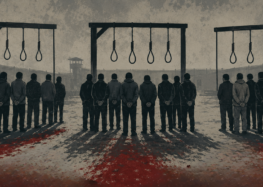
In addition to thousands of people still behind bars for their participation in the January 2026 protests, political executions have been surging to unprecedented levels. At least 42 political executions have taken place just since March 2026, after fast-tracked trials in which due process and access to independent lawyers were denied, and forced confessions extracted under torture were routine. The government’s intensified persecution of independent lawyers, and its refusal to allow them to take on political cases, will mean huge numbers of people in Iran will languish behind bars for years or be sent to the gallows on manufactured, unlawfully prosecuted cases.
CHRI calls on the UN and governments worldwide to immediately:
- Forcefully condemn the Islamic Republic’s attacks on independent lawyers;
- Demand that Iranian authorities immediately drop charges and free all lawyers imprisoned for defending legal rights;
- Call on the Iranian authorities to comply with its obligations under international law, including the UN Basic Principles on the Role of Lawyers, which guarantee the work and independence of legal professionals without intimidation or harassment.
Relentless Pressure, Especially in Iran’s Provincial Cities
The number of independent human rights lawyers in Iran has steadily declined in recent years as authorities have intensified their assault on the legal profession, using arrests, prosecutions, professional suspensions, and imprisonment to silence attorneys who challenge state abuses. Lawyers are routinely subjected to vague and politically motivated charges, including “propaganda against the state” and “publishing falsehoods,” suspended from practicing law, and imprisoned for defending victims of state abuses and challenging misconduct within the judiciary.
According to research by CHRI, judicial pressure against lawyers is often more severe outside major cities, where access to legal proceedings and public scrutiny is significantly limited. Lawyers practicing in smaller cities face heightened risks of arrest, disbarment, and other punitive measures, particularly when handling political or security-related cases.
A human rights lawyer familiar with conditions attorneys face in Iran’s provincial cities told CHRI:
“The key issue is that so-called security cases are generally not handled or adjudicated in smaller cities. These cases are referred to Revolutionary Courts, which are located in provincial capitals; there are no Revolutionary Courts in smaller towns. As a result, access to information about these cases—and even the ability to pursue, present, or review them through local judicial institutions—is severely limited. This creates enormous challenges for lawyers in smaller cities who take on political and security-related cases and, naturally, they are subjected to harsher forms of judicial repression, including arrest and bans on practicing law.”
Lawyers in Tehran face a different form of pressure. According to a Tehran-based human rights lawyer interviewed by CHRI, authorities increasingly rely on summonses, threats, and intimidation rather than formal imprisonment to control independent lawyers.
“The authorities’ methods of threatening and pressuring lawyers in Tehran increasingly resemble a form of ‘soft repression.’ The objective is to manage and control the legal community through measures that do not necessarily result in arrest or imprisonment.
“Following the Woman, Life, Freedom movement, a large number of independent lawyers were summoned by judicial authorities and warned that continued involvement in political and security-related cases would have consequences. Some were even required to sign written commitments. After the January 2026 protests, and again following the outbreak of war, these practices resumed. Most recently, two lawyers were summoned simply for informing the public about the case of a prisoner sentenced to death.”
A Systematic Targeting of Lawyers
CHRI has found that between January 8 and June 11, 2026, at least 32 lawyers in Iran were arrested, summoned, prosecuted, convicted, or imprisoned by judicial authorities. These cases underscore the continuing erosion of the independence of the legal profession in Iran and the growing risks faced by lawyers who represent political prisoners, protesters, and victims of human rights violations.
Among those targeted were lawyers representing defendants from the Woman, Life, Freedom movement, including Fatemeh Rohandeh, who was arrested in Kerman in late May 2026 after authorities accused her of violating judicial restrictions.
Lawyers Amir Raisian and Milad Panahipour were summoned to Tehran’s Security Prosecutor’s Office after speaking publicly about the case of Ehsan Hosseinipour, a protester sentenced to death in connection with the January 2026 protests.
Several lawyers were detained without publicly disclosed charges, including Elham Zeraatpisheh, Setareh Ansari, Jafar Keshavarz, Jafar Zarei, Sepideh Taheri, Amir Bahadorifar, and Teymour Salari. Others faced prosecution for activities connected to their legal work or public advocacy.
At least three lawyers in Shiraz—Nazanin Salari, Mahmoud Taravat-Rouy, and Masoud Ahmadian—were sentenced by Branch 1 of the Shiraz Revolutionary Court to three years in prison each. The court convicted them on charges of “assembly and collusion to commit crimes against national security” and “propaganda against the state.” All three were additionally banned from leaving the country for two years and had their passports revoked.
While human rights lawyers have long been persecuted in the Islamic Republic, after the Woman, Life, Freedom protests that erupted across Iran in 2022, the Iranian government intensified its repression of dissent and its campaign against independent lawyers. Amid the nationwide demonstrations, at least 66 lawyers were arrested for defending protesters, leading to the imprisonment of 11 lawyers and forcing others to flee the country to evade persecution, according to the Law Society of England and Wales. Alarmingly, the deaths of at least three female lawyers under suspicious circumstances after being released from detention underscore the dangerous environment faced by legal professionals in Iran who challenge state abuses.
Lawyers Targeted Since January 2026 (Additional Unreported Cases Are Likely)
- Fatemeh Rohandeh, a lawyer based in Kerman who represented several detainees from the 2022 Woman, Life, Freedom protests, was arrested on May 19, 2026, after authorities accused her of violating a judicial supervision order due to her membership in a domestic social media platform. Rohandeh had previously been arrested in March for expressing support for detained protesters and faced charges of “publishing falsehoods.” She was subsequently subjected to a one-year suspension from practicing law, a ban on online activity, and a one-month temporary detention.
- Elham Zeraatpisheh, a member of the Fars Bar Association, was arrested in Shiraz on May 4, 2026. Authorities have not disclosed the charges against her, the reason for her arrest, or her place of detention.
- Astareh Ansari, a member of the Fars Bar Association, was arrested in Shiraz on May 3, 2026. No information has been made public regarding the charges against her, the grounds for her arrest, or her whereabouts. She has represented numerous defendants in political and security-related cases and was previously arrested during the Woman, Life, Freedom protests.
- Bahar Sahraeian was arrested on May 17, 2026, and charged at the Shiraz Prosecutor’s Office with “assembly and collusion with the intent to act against national security,” “propaganda against the regime,” and “spreading falsehoods.” She was transferred to Adelabad prison. She has previously faced arrest due to her work.
- Nazanin Baradaran, a member of the Fars Bar Association, was reportedly arrested in January 2026. However, the exact date of her arrest and the details surrounding the case remain unclear.
- Jafar Keshavarz, a member of the Fars Bar Association, was arrested on January 28, 2026. Authorities have not disclosed the charges against him or his place of detention.
- Mehran Ansari, a lawyer in Shiraz, was arrested during the January 2026 protests and was later sentenced to one year in prison on charges of “propaganda against the state.”
- Mohammad Tarighat Esfanjani, a member of the Azerbaijan Bar Association, was sentenced by a Revolutionary Court to three years’ imprisonment in May 2025 on charges of “propaganda against the regime,” and the “insulting the Supreme Leader.”
- Nasrin Sotoudeh, the prominent human rights lawyer, was arrested in Tehran on May 2, 2026, and was later released on bail.
- Seyed Mohammadreza Razavi-Fard appeared before Branch 1 of the Revolutionary Court in Qom on June 5, 2026, to face charges that include “propaganda against the state.” He reported on June 17 that he was sentenced to 10 years in prison by the Qom Revolutionary Court.
- Amir Raisian was summoned to Tehran’s Security Prosecutor’s Office after publicly discussing the case of Ehsan Hosseinipour, a protester sentenced to death in connection with the January 2026 protests. He was subsequently released on bail.
- Milad Panahipour was also summoned for publicly commenting on Hosseinipour’s case and was later released on bail.
- Shima Ghosheh, a member of the Tehran Bar Association, was arrested in Tehran on January 17, 2026, and later released on bail.
- Enayatollah Karamati, a member of the Judiciary Lawyers’ Center in Mashhad, was placed in temporary detention beginning January 10, 2026.
- Hamid Norouzi, a member of the Fars Bar Association, was arrested in Shiraz on February 14, 2026, and later released on bail.
- Hadi Sharifzadeh, a member of the Tehran Bar Association, was arrested in Shiraz on February 16, 2026, and later released on bail.
- Mehdi Ansari, a member of the Fars Bar Association, was arrested on January 28, 2026, and later sentenced to five years in prison and a two-year travel ban on charges of “assembly and collusion to act against national security.”
- Jafar Zarei, a member of the Fars Bar Association, was arrested on January 28, 2026. Authorities have not disclosed the charges against him or his place of detention.
- Zohreh Javani, a member of the Tehran Bar Association, was arrested during the January 2026 protests and later released on bail.
- Hossein Shokri, a member of the Judiciary Lawyers’ Center in Ilam Province, was arrested on January 25, 2026, and later released on bail.
- Omid Darabi, a member of the Tehran Bar Association, was arrested in Tehran on January 29, 2026.
- Sepideh Taheri, a member of the Hormozgan Bar Association, was detained after being summoned to the Shiraz Prosecutor’s Office. Authorities have not disclosed the charges against her or her place of detention.
- Mohammad Hadi Jafarpour, a member of the Fars Bar Association, was arrested in Shiraz on January 18, 2026, and later released on bail.
- Alireza Farzaneh Jajromi, a member of the Khuzestan Bar Association, was arrested in Ahvaz on January 9, 2026, and later released on bail.
- Masoud Shirmardi Shahghasemi, a member of the Tehran Bar Association, was arrested in Tehran on January 9, 2026, and remains imprisoned in Evin Prison.
- Teymour Salari, a member of the Hormozgan Bar Association, was arrested in Jiroft, Kerman Province, on January 11, 2026, and remains imprisoned. Authorities have not disclosed the charges against him.
- Amir Bahadorifar\, a member of the Khorasan Bar Association, was arrested in Mashhad on January 10, 2026. The charges against him remain unknown.
- Masoud Darginnejad, also a member of the Khorasan Bar Association, was arrested in Mashhad on January 10, 2026, and later released on bail.
- Babak Eslami Farsani, who represented the family of Mehrshad Shahidi, a protester killed during the 2022 protests in Arak, was summoned to Branch 4 of the Tehran Public and Revolutionary Prosecutor’s Office.
- Nazanin Salari, Mahmoud Taravat-Rouy, and Masoud Ahmadian, three lawyers and prominent women’s and children’s rights advocates based in Shiraz, were each sentenced to three years in prison by Branch 1 of the Shiraz Revolutionary Court. The court convicted them of “assembly and collusion to commit crimes against national security” and “propaganda against the state.” All three were also banned from leaving the country for two years and had their passports revoked.
This report was made possible by donations from readers like you. Help us continue our mission by making a tax-deductible donation.