Iran’s Baha’i Community Under Intensified State Attack Amid Escalating Domestic Repression
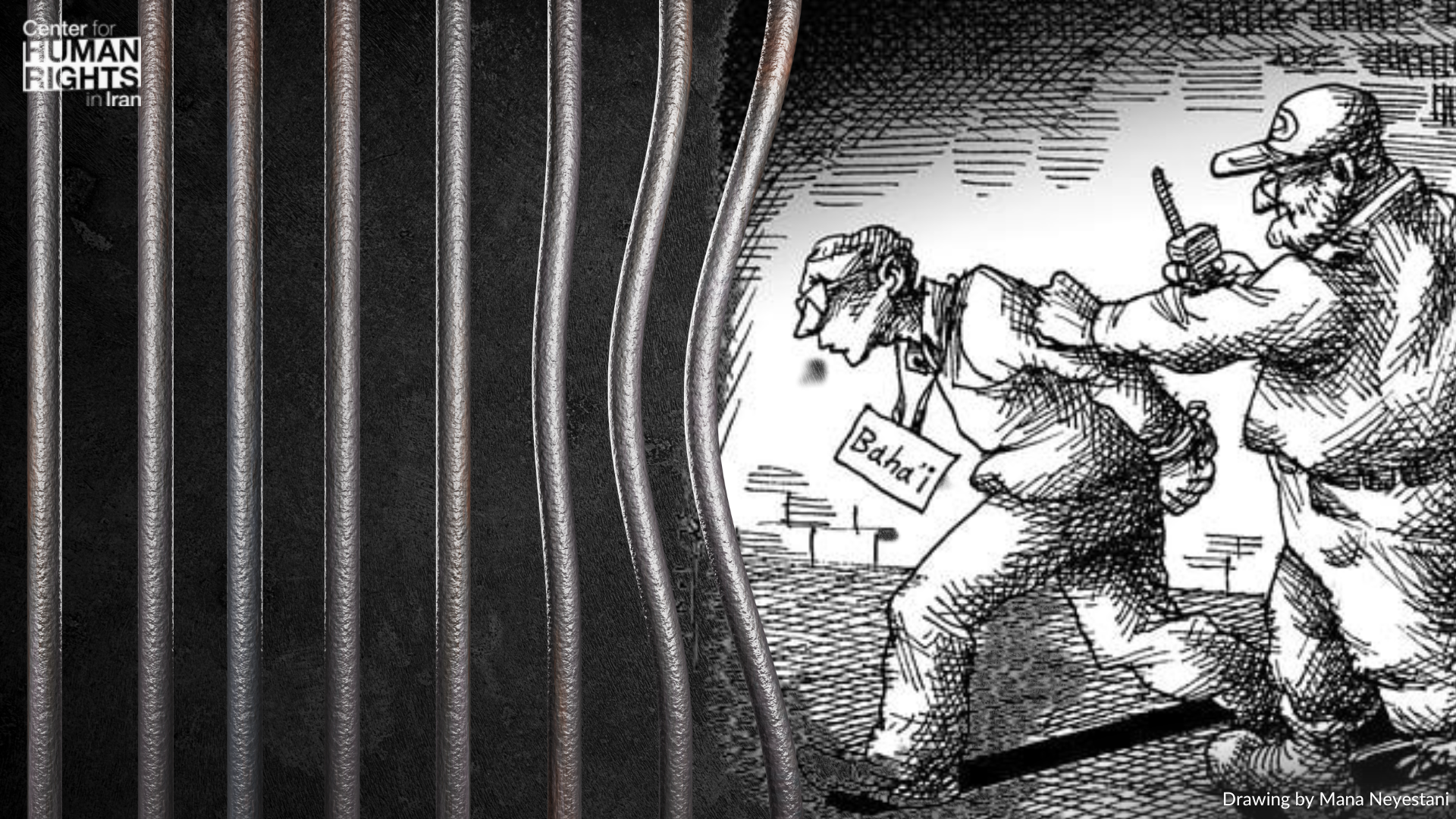
State Campaign of Arrests, Raids, Torture, and Enforced Disappearances in Cities Across Iran
Judge: “You Must Pay the Price for Being Baha’i”
May 19, 2026 — As Iranian authorities intensify their nationwide repression campaign, they have sharply escalated the persecution of the country’s Baha’i community through a sweeping wave of arbitrary arrests, violent home raids, enforced disappearances, and property seizures targeting dozens of families across the country.
The coordinated crackdown—marked by incommunicado detentions, torture, forced confessions, intimidation of children and elderly relatives, and prosecutions explicitly tied to individuals’ religious identity—is an effort aimed at terrorizing and collectively punishing members of Iran’s largest non-Muslim religious minority.
According to research by the Center for Human Rights in Iran (CHRI):
- Many of those arrested have been denied access to lawyers, held incommunicado, or subjected to prolonged arbitrary detention without charge.
- Security agents have routinely raided homes in violent searches, confiscating phones, computers, religious books, gold, cash, and other personal belongings.
- In several cases, children and elderly family members were interrogated, threatened, or traumatized during the raids.
“For decades, Iran’s Baha’i community has faced severe state persecution, but since the January 2026 protests and subsequent February 2026 war, the authorities have dramatically intensified their campaign of repression,” said Bahar Ghandehari, CHRI’s Director of Advocacy. “The scale and coordination of arrests and home raids targeting Baha’i citizens in recent months point to a systematic pattern of persecution rather than isolated incidents.”
“Baha’is are increasingly being treated as internal enemies of the state—subjected to mass arrests, enforced disappearances, violent home raids, torture, and collective punishment in an effort to instill fear and crush a vulnerable religious minority already denied the most basic rights,” Ghandehari said.
“These cases reflect a long-standing and deeply entrenched system of discrimination against the Baha’i community in Iran. Baha’i citizens are being targeted not for any criminal conduct, but solely for their beliefs, in clear violation of Iran’s obligations under international human rights law,” Ghandehari added.
Key Findings
Based on interviews with sources and information gathered by CHRI:
- Sharp increase in arrests and raids: Since January 2026, and even more so after February 28, dozens of Baha’i citizens in cities including Shiraz, Kerman, Mashhad, Yazd, Sari, Karaj, Isfahan, Tabriz, Semnan, Borujerd, and Aligudarz have been arrested or targeted in coordinated security operations.
- Widespread enforced disappearances: Many detainees were taken to undisclosed locations, with families denied information on their whereabouts, legal status, or well-being for weeks or months.
- Torture and forced confessions: Some detainees were reportedly subjected to torture, mock executions, electric shocks, prolonged solitary confinement, and coercion aimed at extracting forced “confessions,” including in cases carrying charges that could potentially lead to death sentences.
- Denial of due process: Many detainees have been denied access to independent lawyers, bail, family contact, or clear information about charges against them. Most remain in prolonged legal limbo without trial.
- Targeting of vulnerable individuals: Elderly Baha’is, mothers of young children, a pregnant woman, former political prisoners, minor children, and teenagers have all been swept up in the crackdown. Children were present during multiple violent raids and arrests.
- Collective punishment and intimidation tactics: Authorities repeatedly targeted entire families, including parents, siblings, spouses, and children. Homes of extended family members were also searched, while relatives and guests present during raids were interrogated and had phones confiscated.
- Arbitrary searches and property seizures: Security agents frequently carried out raids without warrants or, rarely, using handwritten warrants. Agents confiscated religious materials, electronic devices, identity documents, cash, gold, and other valuables, often without receipts.
- Targeting based on religious identity: Multiple cases indicate that individuals were prosecuted explicitly because they are Baha’i. In one case, an appellate judge reportedly told three Baha’i women: “You are Baha’i, and in an Islamic country you must pay the price for being Baha’i.”
CHRI calls on the UN and governments worldwide to demand that the Iranian authorities immediately:
- Release all Baha’i citizens imprisoned or detained solely because of their faith or peaceful activities.
- End arbitrary arrests, enforced disappearances, warrantless raids, and the targeting of Baha’i homes and businesses.
- Ensure all detainees have access to lawyers, family contact, and medical care.
- Return or provide compensation for all confiscated or destroyed businesses and properties.
- Investigate allegations of torture, forced confessions, and unlawful confiscation of property.
Iran’s constitution does not recognize the Baha’i faith as an official religion. For decades, Baha’is in Iran have faced arbitrary arrests and lengthy prison terms on bogus charges after grossly unfair trials—simply for practicing their faith.
They have been denied access to education and employment opportunities, systematically subjected to the confiscation or destruction of their business and properties, and subjected to the destruction of their gravesites. This persecution violates numerous international conventions, including the International Covenant on Civil and Political Rights (ICCPR), to which Iran is a signatory.
Confiscation of Personal Property
In recent cases, CHRI has documented security forces routinely confiscating personal property during raids on Baha’i homes, often without warrants, legal justification, or issuance of receipts. Seized items include mobile phones, laptops, computers, identity documents, passports, bank cards, cash, gold, jewelry, religious books and images, and other personal belongings.
In many cases, these seizures go beyond evidentiary needs and function as punitive measures, leaving families without access to essential financial resources, documentation, or communication tools. In some cases, CHRI has found property belonging to guests, relatives, and neighbors present during raids was also confiscated.
A source told CHRI:
“When they seize phones and things like that—say an iPhone—they sometimes don’t return them. Simpler items might be returned, but the iPhone, for instance, is not. And they say it’s ‘at our discretion.’”
“Another friend who was previously arrested…had his laptop, phone, and other belongings taken. He later followed up to get them back. They returned his laptop, but when he requested his iPhone again, they said it’s none of his business and that they only return whatever they deem appropriate.”
Arrests and Home Raids
- May 11, 2026 — Anisa Fanaeian, a former political prisoner and Baha’i resident of Semnan, was arrested on May 11 and transferred to Semnan Central Prison to serve an eight-year prison sentence. She previously served eight months in prison and was released on bail in October 2025 after the Supreme Court order suspended the implementation of her sentence. However, Branch 10 of the Semnan Province Court of Appeals once again sentenced her to eight years in prison.
Before the Supreme Court suspended her initial prison term, she wrote a letter to her children in 2025 that has once again become reality. These are some excerpts from her letter:
“Seven years is a terribly long time. Seven years when you are not in my life, and when I am not in yours. You will be adults when I am finally free. Shakib – you will be twenty-two! Setare – you will be twenty-six! Soon, I can’t be your mommy anymore.
“You may ask why we – and so many others – have been punished like this? It is because we are Baha’i, and we believe that God created all people equal, regardless of their race or sex, or background. For this, the Iranian government seeks to deny our right to exist.
“Let me share with you what led to my arrest.
“For a couple of months, a friend and I visited Afghan children, refugees, in a village not all that far from our home. They live and work in very bad conditions, almost modern slavery, as do their family members, children, and adults. They have to go into these very, very hot structures built partly underground, where they make bricks. It’s an unhealthy and unsafe situation. Most of them don’t have enough food, clothes, or shoes. It can be dangerous for a child to walk a long way in the desert, so my friend and I picked them up at their homes in our car and drove them to school. We would also bring them books and help them with their studies.
“And then all of a sudden, government intelligence officers came to our houses and arrested me and my friend.
“Because I cared for these children in need – and clearly because I am a Baha’i – I was convicted by the Semnan Revolutionary Court of ‘forming groups to act against national security, educational activities and propagating against Sharia Islam,’ and ‘propaganda against the regime.’”
- May 9, 2026 — Romina Goli, a Baha’i citizen, was arrested on May 9 in Sari and interrogated the following day at the city’s prosecutor’s office, where authorities charged her with “propaganda against the regime” and “propaganda activities contrary to Islamic law” and issued a one-month temporary detention order against her. Security forces searched her home, confiscating personal electronic devices and Baha’i religious books.
- May 7, 2026 — Security forces raided the home of Faramarz Nedafian and Parivash Nedafian, a Baha’i couple in Shiraz, presenting a handwritten warrant before conducting a hours-long search. Agents confiscated personal belongings, including phones, a computer case, books, and, reportedly, the family’s gold and jewelry.
- May 6, 2026 — Security agents raided the home of Afsaneh Jazabi, also known as Afsaneh Rasekhi, a 66-year-old Baha’i woman in Shiraz. The agents presented a warrant citing allegations of “collaboration with Israel,” and searched the home and seized books, religious images, a mobile phone, and gold items without providing a legal receipt.
- May 6, 2026 — Riyaz Behrad, a Baha’i citizen residing in Karaj, was summoned to the Karaj Revolutionary Prosecutor’s Office after agents raided his home on May 4 and searched his residence. On May 6, after appearing at the prosecutor’s office, he was arrested outside after leaving the office without a warrant and held incommunicado. According to information gathered by CHRI, earlier agents had violently raided his home and unlawfully searched the house with a warrant on the charge of “propaganda against the state,” which also included the names and photographs of his sister and father.
A knowledgeable source told CHRI:
“When Riyaz asked to see a warrant, he was beaten, mainly on the head and face. He was taken into a room and subjected to violence and threats, including warnings of serious consequences if he did not cooperate.
“Because another group of agents who had gone to Riyaz’s father’s home had failed to break in, two agents forced Riyaz to accompany them so that he could use his keys to open his father’s house, where his sister, Rejan, was alone at the time.
“Riyaz’s wife remained at the house with four male agents and no female officer present. During this time, the agents searched the home and confiscated all electronic devices, including computers, laptops, phones, as well as national ID cards and passports. They also gathered and took books, religious images, and framed photographs.
“Agents also conducted a full search of Riyaz’s father’s house while using insulting language. They also confiscated all religious images, framed photographs, dozens of religious books, along with all mobile phones, laptops, and other electronic devices. During the search, one of the agents again assaulted Riyaz, repeatedly striking him in the head and face.
“On May 5, Riyaz received a phone call instructing him to report to the Ministry of Intelligence’s central office in Karaj the following day.
“On May 6, 2026, Riyaz went to the office. After several hours of questioning, he was apparently released and exited the building, returning to the companions who had been waiting for him. At that point, agents arrived in a dark-colored vehicle and, without presenting any warrant, arrested him on the street, forced him into the vehicle, and took him to an unknown location.
“Subsequent inquiries at the intelligence office, including expressions of concern that Riyaz might even have been abducted, were met with the response that he had been detained by agents from the ‘Operational Headquarters.’”
The source told CHRI that the family visited the Revolutionary Court’s office several times to locate Riyaz and obtain information about his case; however, authorities refused to provide any information.
“They kept going, speaking with the investigator every day, and eventually, after all that effort, he only managed a very brief phone call saying he is fine. That was all.
“They kept going back and forth, and we looked into it and realized they needed to submit a request to convert the detention order to bail.
“It is a very difficult situation, not only because of the fear of what may happen to him, but also the uncertainty of what to do.”
- May 3, 2026 — Flora Samadani, a Baha’i citizen, was arrested on May 3 in Yazd and subjected to enforced disappearance.
- April 25, 2026 — Boshra Mostafavi, Elna (Nahid) Naeimi, and Didar Ahmadi were detained after being summoned to the sentence enforcement office in Rafsanjan, then transferred to Kerman Central Prison. They had previously been sentenced to four months in prison each on charges of “propaganda against the state.” Boshra Mostafavi is pregnant.
The three women had initially been acquitted due to insufficient evidence, but the ruling was overturned on appeal. According to Hengaw, the appellate judge told them: “You are Baha’i, and in an Islamic country you must pay the price for being Baha’i.”
- April 21, 2026 — Vafa Kashefi, a Baha’i resident of Mashhad previously arrested during the January 2026 protests, was detained again on April 21 after being summoned to a court in Mashhad. He was transferred to Vakilabad Prison for pretrial detention and released on bail one week later pending further proceedings.
- April 9, 2026 — Sara Sepehri, a Baha’i resident of Shiraz, was arrested on April 9 and taken to an undisclosed location. Her residence and her mother’s home were searched, and her electronic devices were confiscated.
- April 7, 2026 — Faranak Zabihi, a Bahá’í resident of Qaemshahr, was arrested by security agents on the streets and taken to Tir Kola Prison in Sari. Officers also searched her home and confiscated personal belongings and electronic devices belonging to her, her son, and her husband. She was released on April 8 after posting bail of 1 billion tomans.
A knowledgeable source told CHRI:
“They followed her in the street. She had no idea. Someone called out to her from behind, a few people surrounded her, and guided her into a car. She wanted to call his family to inform them, but they took her phone from her and didn’t show her any warrant.
“They forced him to get into the car. Only inside the car did they show her the warrant. It was issued in her own name, and they forced her to go with them to her house.
“They made her unlock the door. They entered the house and started searching everything in detail—taking even unrelated items, like, for example, her son’s volleyball.
“They took everything, even items unrelated to the case. Although the warrant was for this individual, they confiscated her son’s laptop, her son’s phone, her husband’s phone, and her own phone, and took them away.
“She was already under significant psychological pressure, had been hospitalized, and had other health issues, yet they still took her.
“The alleged charges included things like her Instagram profile or Bahá’í writings. Even handwritten notes from her child’s childhood were treated as evidence of a crime.
“She was not formally informed of any charges before the interrogation began immediately. Because of her physical condition and the high risk of a heart attack, they made some accommodations and allowed her access to medication.”
- April 7, 2026 — Angha Siavashi, a 19-year-old Baha’i resident of Shiraz, was arrested on the evening of April 7 by agents of the Ministry of Intelligence. Agents searched his home, confiscating personal belongings, including electronic items, photo albums, books, religious images, and gold. At the time of the arrest, the family was reportedly hosting guests, who were also searched by agents, and their personal belongings, including phones and jewelry, were confiscated. He was released on bail from Adelabad Prison on May 11.
- April 1, 2026 — Behzad Basiri and Mandana Sotoudeh, a Baha’i couple living in Shiraz, were arrested by IRGC agents in their home on April 1 and subjected to enforced disappearance. The agents did not present a judicial warrant and searched their home, confiscating their electronic devices.
Roya Basiri, the sister of Behzad Basiri, told CHRI:
“My brother, Behzad Basiri, was arrested on April 1st in Shiraz along with his wife, Mandana Sotoudeh.
“Several intelligence officers entered their building around 11:00 a.m. without presenting an arrest warrant or providing any explanation for the arrest. They broke their door and searched the house in a highly aggressive and disrespectful manner, tearing religious books and pictures, confiscating personal belongings, and then taking my brother away.
“After fully searching the neighboring units, officers reportedly threatened nearby residents with arrest. It is important to note that Behzad was at home when the officers arrived, while Mandana was at her mother’s house. After arresting Behzad, security forces went to her mother’s residence, searched that home as well, and then arrested Mandana.
“Three days earlier, on March 29th, Mahsa Sotoudeh, Mandana’s sister, had also been arrested by security forces. Officers had already searched the home at that time, yet during the most recent arrests, the property was searched again. In the end, authorities mockingly told the family that just as they had informed news outlets about Mahsa’s case, they could now also publicize the situations of Mandana and Behzad.
“Since then, the family has received no information about why they were detained. Despite repeated efforts by the families, no clear information has been provided regarding the reasons for the arrests or the conditions in which they are being held. The family remains in complete uncertainty, and concern for their safety and well-being continues to grow. To this day, no information has been given about whether they have access to legal representation.
“Over the past 12 years, several of our relatives have faced persecution and imprisonment because of their beliefs. However, this is the first time that Behzad, Mandana, and Mahsa themselves have been arrested.”
- March 31, 2026 — Minou Andakhs, a Baha’i citizen, was arrested by security forces who entered her home in Sari without presenting a judicial warrant and transferred to an undisclosed location. Her mobile phone was confiscated. Her home was also searched on December 28, 2025, by security forces while she was not present, and her religious books and personal belongings were confiscated.
- March 29, 2026 — Mahsa Sotoudeh, a 25-year-old Baha’i citizen, was arrested on March 29 by IRGC intelligence forces at her family home in Shiraz without any judicial warrant and subjected to enforced disappearance. Agents searched the family’s home during the arrest and confiscated electronic devices belonging to all family members.
A knowledgeable source told CHRI:
“Since that day, no official information has been provided regarding the reason for her arrest, any charges against her, her condition, or her place of detention. Mahsa has not been allowed any contact with her family and has had no access to legal representation. The family has also been denied the right to appoint a lawyer.
“Three days later, on April 1, 2026, agents of the Islamic Revolutionary Guard Corps violently raided the home of Mahsa’s sister, Mandana Sotoudeh, and her husband, Behzad Basiri, again without a warrant. At the time, only Behzad was at home, and he was arrested there. Mandana, who was at her mother’s house, was later pursued by the same agents. They returned to [their] house—despite having searched it just three days earlier—and searched it again before arresting her.”
- March 28-29, 2026 — Behzad Yazdani and Romina Khazali, a Baha’i couple from Shiraz and parents of two teenage children, were arrested by IRGC intelligence agents on March 28 and 29, respectively.
Mr. Yazdani was transferred to Adelabad Prison. According to HRANA, during his arrest, agents gained entry by falsely telling Ms. Khazali’s elderly parents, who live in the same building, that they were police officers responding to a “thief on the rooftop,” then pressured them to call Mr. Yazdani’s home. The agents confiscated the couple’s electronic devices during the raid.
During Ms. Khazali’s arrest, agents reportedly interrogated the couple’s 14-year-old daughter and searched the apartment of her parents, seizing religious books, images, and computer storage devices. Several relatives and visitors present at the home were also interrogated, and their mobile phones were confiscated. Their teenage son, who has a respiratory condition, reportedly suffered an anxiety attack following the arrests.
- March 23, 2026 — Shayan Abadi, a Baha’i resident of Kerman, was arrested on March 23 by the Ministry of Intelligence agents and subjected to enforced disappearance.
- March 21, 2026 — Yasmin Rahmordeh, a Baha’i resident of Yazd and a mother of two, was arrested on March 21. She was initially held in Yazd Prison, but was later transferred to an undisclosed location.
- March 15, 2026 — Pejman Zare, a Baha’i resident of Shiraz and father of a 9-month-old baby, was arrested at his home by IRGC agents without any judicial warrant on March 15 and subjected to enforced disappearance. A source told CHRI that agents searched his house and confiscated all electronic devices belonging to Mr. Zare and his wife. The agents also searched his parents’ home, located directly across from Mr. Zare’s residence.
The source told CHRI:
“At the time of the arrest, Pejman was alone at home. Had several family members not arrived by chance, his arrest might have gone completely unnoticed. On the same day, agents also raided Pejman’s workplace and confiscated all electronic equipment there.
“Despite continuous follow-ups by the family, no official information has been provided regarding the reason for his arrest, any charges against him, his condition, or his place of detention. He has been denied visitation and access to legal representation.
“Since his arrest, Pejman has had only one very brief phone call, on March 20, 2026, during which he only expressed his wish to hear his child’s voice. He is the father of a 9-month-old baby. During the family’s attempts to seek information, they have also been threatened by authorities and warned not to pursue the matter, or they themselves would face arrest.”
- March 5, 2026 — Nita Babannejad and her son, Parsa Emadi, two Baha’i citizens residing in Isfahan, were arrested by the Ministry of Intelligence on March 5. They are reportedly facing the charge of “propaganda against the regime.”
- March 1, 2026 — Borna Naimi, a 29-year-old Bahá’í from Kerman and father of a three-year-old child, was arrested by security forces on March 1 and held in solitary confinement in Kerman Prison. According to reports, he has been subjected to at least two mock executions, electric shocks that caused severe burns to his feet, and other forms of torture and ill-treatment. Authorities reportedly pressured him with threats against his wife and young daughter, including threats that his child would be sent to a state orphanage. He was forced under torture to sign a “confession” implicating himself and his cousin, Peyvand Naimi, who was arrested earlier in January, in the killing of a Basij officer during the January 8 protests.
The Baha’i International Community reported:
“No evidence exists for this charge, and neither Borna nor Peyvand could have committed these crimes, as they occurred after Peyvand had been detained and while Borna was surrounded by family at home. The text of his forced confession had been prepared beforehand and handed to him to read. No trial has been held for either prisoner.”
The two cousins have been denied access to independent lawyers, and no trial has been held, nor has any verdict been issued. However, the allegations against the two cousins could result in death sentences.
- February 22, 2026 — Payam Faridian, a Baha’i resident of Mashhad, was arrested at his pottery workshop on February 22, by security forces and transferred to an undisclosed location. Faridian is a photographer and ceramic artist. As of March 13, it was reported that authorities have repeatedly blocked efforts to secure his release, leaving him in prolonged legal limbo.
- February 18, 2026 — Hamed Mehrabkhani, a Baha’i citizen, was arrested by security forces at his sister’s home in Tabriz. Agents searched his sister’s home, confiscating several electronic devices.
- February 12, 2026 — Mahsa Golzar, a Baha’i resident of Shahrekord, was targeted in a security raid on February 12, when agents forcibly entered her home by breaking down the front door and confiscated several personal belongings. She was later summoned to a security institution through an official notice following the raid.
- February 10, 2026 — Pouyan Gholami, a Baha’i citizen residing in Kerman, was arrested at his workplace by security forces on February 10 and transferred to an undisclosed location. Agents also searched his home.
- February 7, 2026 — Parva Behdad, a Baha’i resident of Isfahan, was transferred to Dolatabad Prison on February 7 to begin serving a three-year prison sentence after being summoned to the Enforcement Branch of the Revolutionary Court. Behdad was first arrested in November 2022 in connection with managing a Baha’i-related online channel. She was held in solitary confinement for 21 days and sentenced in March 2023 by the Isfahan Revolutionary Court to three years in prison, a two-year travel ban, and additional penalties. The verdict was later upheld by the provincial appeals court.
- February 2, 2026 — Shakila Ghasemi, a 26-year-old Baha’i citizen and graphic designer residing in Kerman, was arrested without a judicial warrant on February 2. Her home was searched prior to her arrest, and all electronic devices belonging to her and her family were confiscated. After weeks of being subjected to enforced disappearance, she was reportedly moved to the Central Prison of Kerman after the war began, and placed in solitary confinement. A source told IranWire:
“Shakila spent her free time at a center for children on the autism spectrum, teaching them how to paint. Her last activity before her arrest was making bags with these children, painting on them, and selling them at a charity market.”
“During the 20-minute visit, her mother noticed Shakila’s dire physical and mental state. She had severe body tremors that had led to a week-long stay in the prison infirmary. The family does not know what medications she has been given. She was in perfect health before her arrest but is now under immense psychological pressure.”
- February 2, 2026 — Security agents searched the homes of six Baha’i families in Borujerd and sealed the businesses of three residents. Simultaneously, agents searched five Baha’i homes in Aligudarz and sealed two workplaces, including a business owned by a non-Baha’i employer of one of the targeted individuals.
Agents confiscated religious materials and personal belongings, including phones, laptops, passports, bank cards, cash, gold, and other digital devices. Baha’i residents in Aligudarz were reportedly threatened with further raids, judicial action, and property confiscation. One home in Borujerd was searched in the residents’ absence after agents broke down the door.
- January 24, 2026 — Rojin Hossein-Nejad, a 19-year-old Baha’i citizen, was arrested by security forces in Kerman on January 24 and transferred to an undisclosed location. Agents confiscated her family’s personal belongings, including mobile phones and laptops.
- January 22, 2026 — 12 Baha’i citizens, including five children under the age of 18, were arrested by IRGC intelligence agents during a birthday gathering at a family home in Mashhad on January 22. Masked agents, some armed, raided and searched the home and confiscated personal belongings.
Those arrested included Borsa Maleki, Parsa Navazi, Behrad Barati, Bashir Amri, Taraneh Tabrizi, Setareh Azadi, Artin Rezaei, and five minors: Sarvar Tabrizi, Rosha Shahidi, Farham Rezaei, Marjan Baloch Gharai, and Rakhshan Rouhi. They were later released on bail.
- January 22, 2026 — Setareh Azadi, a 22-year-old Baha’i resident of Mashhad, was arrested on January 22 by security agents.
- January 19, 2026 — Artin Ghazanfari, a Baha’i citizen and photojournalist, was arrested at his home in Tehran on January 19 and transferred to an unknown location. His home and workplace were searched, and security agents confiscated electronic devices, books, and other equipment. He previously served a prison sentence along with nine other Baha’i citizens.
- January 16, 2026 — Navid Zarehbin, a well-known photographer from Khorasan, was arrested on January 16, at his home in Mashhad in front of his young child, during which security forces also confiscated his photography equipment. He was later transferred, following an extended period of interrogation at the Intelligence Ministry office in Mashhad, to the quarantine ward of Vakilabad Prison. His temporary detention was reportedly extended on April 15, 2026. According to IranWire, Zarehbin has not been informed of the charges against him and has been denied access to legal counsel.
- January 15, 2026 — Venus Hosseinnezhad, a 28-year-old Baha’i citizen residing in Kerman, was arrested at her workplace by security forces on January 15.
- January 15, 2025 — Navid Irani, a Baha’i citizen from Mashhad, was arrested by security forces on the evening of January 15 at his private residence and transferred to an undisclosed location.
- January 2026 — Ghazaleh Ra’yat, a Baha’i citizen residing in Mashhad, was arrested at her workplace in mid-January and transferred to Vakilabad Prison. Her home was also searched.
- January 11, 2026 — Sepehr Koushkbaghi, a 31-year-old Baha’i resident of Mashhad, was arrested on January 11 at a friend’s home in Mashhad and later transferred to Vakilabad Prison after interrogation. As of March 13, it was reported that authorities have repeatedly blocked efforts to secure his release, leaving him in prolonged legal limbo.
- January 10, 2026 — Afrin Bashash, a 45-year-old Baha’i woman from Mashhad, was arrested by Ministry of Intelligence agents at her workplace on January 10 and later transferred to Vakilabad Prison. Authorities have reportedly blocked her temporary release on bail, even after the expiration of her initial one-month detention order.
- January 9, 2026 — Baha’i parents Arshad Afshar, Bahareh Afshar, and their son Arshia Afshar were arrested in Shahin Shahr, Isfahan, on January 9. Arshad and Arshia Afshar are in Dastgerd Prison, and Bahareh Afshar is in Dowlatabad Prison. They were released on bail on March 18.
- January 8-9, 2026 — Erfan Tabatabaei and Rabie Maleki, two Baha’i citizens, were arrested during protests on January 8–9, 2026, in Mashhad. As of March 13, it was reported that authorities have repeatedly blocked efforts to secure their release, leaving them in prolonged legal limbo.
- January 8, 2026 — Peyvand Naimi, a Baha’i citizen, was arrested at his workplace on January 8 and subjected to enforced disappearance for weeks. He was later moved to Kerman prison and held in solitary confinement. He has reportedly been subjected to mock executions, prolonged interrogations, and torture aimed at extracting forced “confessions.” On February 1, a video of Naimi’s forced “confessions” was broadcast on state television. Amnesty International reported:
“Peyvand Naimi was subjected to mock executions, beatings, suspension from hands and feet, prolonged solitary confinement, and denied food. Authorities are denying him healthcare for gastrointestinal and other medical conditions he developed in prison.”
Peyvand’s cousin, Borna Naimi, arrested on March 1, was also tortured into signing a pre-written “confession,” implicating himself and Peyvand in the killing of a Basij officer during the January 8 protests. According to information gathered by Amnesty International, authorities have provided no evidence linking them to the killings.
The two cousins have been denied access to independent lawyers, and no trial has been held, nor has any verdict been issued. However, the allegations against the two cousins could result in death sentences.
Authorities had previously targeted Peyvand through the forcible closure of his business due to his faith.
- January 5, 2026 — Moein Mohammadi, a Baha’i citizen residing in Yazd, was arrested at his home on January 5 and transferred to an undisclosed location. The agents searched his residence and confiscated personal items, including electronic devices, books, and documents. HRANA reported that he was arrested in front of his 10-year-old child.
This report was made possible by donations from readers like you. Help us continue our mission by making a tax-deductible donation.