Iran’s Execution Machine: Political Hangings Surge as Dozens Face Imminent Death
At Least 22 Executed in Six Weeks as Secret Trials, Torture, and Forced Confessions Drive a Wave of Death Sentences
Protesters, Women, and Juveniles Swept into a Fast-Tracked System of State Retribution for Dissent
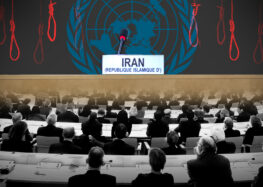
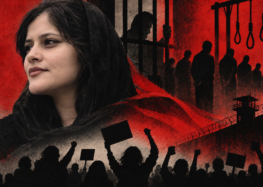
April 30, 2026 — In an extraordinary increase in the use of the death penalty as a political tool of repression, in the last six weeks the Islamic Republic has hanged at least 22 political prisoners, including ten detained during the January 2026 protests— an average of one execution every two days—following secretive proceedings marked by torture, forced confessions, and the complete absence of due process, according to new research by the Center for Human Rights in Iran (CHRI).
Key Findings: A Systematic Campaign of Political Executions
- At least 22 political prisoners were executed between March 17 and April 27, 2026.
- Ten of these executed prisoners were protesters arrested during the January 2026 nationwide protests.
- Most of these executions were carried out in secret and without prior notice to the families or lawyers.
- The executions followed fast-tracked and grossly unfair trials that lacked due process and relied on forced “confessions” extracted under torture.
- Dozens more arrested during the January protests have been sentenced to death following torture, forced “confessions,” and sham trials without independent lawyers.
- At least two women and three 17-year-old juveniles are among those recently sentenced to death in connection with the January protests.
- Hundreds more may be facing charges that can result in a death sentence.
- The continuation of mass arrests across the country—at least 4000 just since the war began on February 28—and the blocking of lawyers from taking cases, ensures that more death sentences will follow.
“These executions are a core part of a systematic state policy aimed at crushing dissent. The death sentences are built on torture, secrecy, and sham trials, and they are designed to send a clear message: dissent in the Islamic Republic will be met with death,” said Esfandiar Aban, Director of Research at CHRI.
“Young people who took to the streets to demand their freedom are now being marched to the gallows. This is retaliatory state violence, carried out methodically, one life at a time, in the hope that the world is too distracted to act,” Aban said.
CHRI calls on governments, multilateral institutions, and UN bodies to take urgent, concrete action:
- Demand an immediate moratorium on all executions in Iran, with clear consequences for non-compliance.
- Condition diplomatic engagement on measurable human rights benchmarks, including halting executions and the release of political prisoners.
- Demand the immediate release of all individuals detained for peaceful protest or political expression.
- Support secure communication tools and internet access for Iranians, so Iranians—and the world—can know the true magnitude of what is happening in Iran.
- Pursue evidence collection for future prosecutions under universal jurisdiction and crimes against humanity frameworks.
True Numbers Higher, Arbitrary Arrests Continue, Lawyers Blocked from Taking Cases
The true number of individuals sentenced to death or facing charges that can carry the death penalty is undoubtedly higher than what is currently known, perhaps significantly so. The government’s internet shutdown, the hundreds of people who were forcibly disappeared after the January protests, and the Islamic Republic’s routine practice of carrying out executions in secret have made it impossible to obtain comprehensive information from inside Iran.
Meanwhile, arbitrary arrests continue to take place across the country, which means more individuals will continue to be rounded up, tortured, forced to “confess,” and face manufactured national security charges (routinely used against protesters and political prisoners) and sham trials that will result in more death sentences. CHRI estimates that at least 4,000 arrests have taken place across the country just since the outbreak of the war on February 28.
Investigations by CHRI also indicate that, following the January protests, during which thousands were killed by state security forces, as well as since the outbreak of the war, access by independent lawyers to defendants’ case files has become impossible or even more severely restricted than was previously the case. In many instances, lawyers have even been prevented from entering prosecutors’ offices.
CHRI’s findings further show that in a number of cases, judicial authorities—including the presiding judge—have simply refused to allow independent and human rights lawyers to participate in the proceedings.
On April 29, 2026, the news outlet Emtedad reported that the Iranian Judiciary had opened a case against two human rights lawyers, Amir Raeisian and Milad Panahipour. The charges stem from their public reporting on the case of Ehsan Hosseinipour, a detainee from the January protests, as well as their signing of a statement protesting the handling of recent protest-related cases. The two lawyers were summoned to the Security Prosecutor’s Office and were temporarily released on bail.
At Least 22 Political Prisoners Hanged Since the War
Between March 17 and April 27, 2026, at least 22 political prisoners, including ten detained during the January protests, are known to have been executed, according to CHRI. There may well have been additional (secret) executions, a standard practice in the Islamic Republic. The breakdown of these political executions is as follows:
Protesters Hanged Who Were Arrested in January 2026:
- Sasan Azadvar Junaqani, hanged on April 30
- Erfan Kiani, hanged on April 25
- Amirali Mirjafari, hanged on April 21
- Ali Fahim, hanged on April 6
- Shahin Vahedparast, hanged on April 5
- Mohammad Amin Biglari, hanged on April 5
- Amirhossein Hatami, hanged on April 2
- Mehdi Ghasemi, hanged on March 19
- Saleh Mohammadi, hanged on March 19
- Saeed Davoudi, hanged on March 19
Political Prisoners Hanged for Alleged Membership in the MEK opposition group:
- Mohammad (Nima) Masoumshahi, hanged on April 30
- Hamed Validi, hanged on April 30
- Sultan Ali Shirzadi Fakhr, hanged on April 23
- Abolhassan Montazer, hanged on April 4
- Vahid Bani Amerian, hanged on April 4
- Babak Alipour, hanged on March 31
- Pouya Ghobadi, hanged on March 31
- Ali Akbar Daneshvarkar, hanged on March 30
- Mohammad Taghavi Sangdehi, hanged on March 30
Baluch Political Prisoner Hanged for Alleged Membership in an Opposition Group:
- Amer Ramesh, age 18, hanged on April 26
Individuals Hanged for Alleged Espionage-Related Charges:
- Mehdi Farid, hanged on April 22
- Kourosh Kivani, Iranian-Swedish citizen, hanged on March 18
A source familiar with the case of Mehdi Farid told CHRI:
“Prison officials informed Mehdi’s family—an elderly couple—the day before the execution to come to the prison for a visit. However, neither they nor Mehdi himself were told that he was scheduled to be executed the next day. After carrying out the execution, authorities notified his family but did not hand over his body, stating that they would handle the burial themselves and would later inform the family of the burial site.”
“The use of the death penalty as a political tool on this scale has not been seen since the 1980s in Iran,” said Aban. “The number of political prisoners executed during this 6-week period since the war actually exceeds nonpolitical executions—even though the Islamic Republic executes more people per capita for a variety of “criminal” offenses than any other country in the world,” he added.
Death Penalty Cases
Due to the severe lack of accessible information on prisoners and their cases, the actual number of death penalty cases is undoubtedly higher than reported here, and the status of many prisoners remains difficult to assess. Moreover, the blurring of the boundaries between these cases creates further opacity.
For example, cases that have not been upheld by Iran’s Supreme Court, and thus could ostensibly still be appealed, would normally not be considered “imminent risk” cases. Yet these individuals may still be at imminent risk of execution because the fast-tracked prosecutions undertaken by the Judiciary since the war have resulted in executions carried out for cases that only had an initial ruling, and had not even gone through the appeal process yet.
CHRI has categorized the death penalty cases into four groups.
- The first includes individuals who were handed death sentences in 2026, most of whom are protesters arrested in January.
- The second includes individuals whose death sentences (most issued in 2026, but including some cases in which the initial death sentences were issued earlier) were upheld by Iran’s Supreme Court in 2026, placing them at heightened risk of execution.
- The third includes individuals whose death sentences were already upheld by Iran’s Supreme Court in previous years, meaning their executions could be carried out at any moment.
- The fourth group includes individuals who have been charged with capital offenses, meaning they are at risk of receiving death sentences.
1. Individuals Sentenced to Death Since Start of 2026
The following list includes some of the political prisoners and protesters who have been sentenced to death since the start of 2026. It includes individuals arrested during the January protests, among them two women and three 17-year-old minors. The actual number is believed to be higher.
Additionally, Iran Human Rights has reported that at least 16 protesters held in Isfahan’s Dastgerd Central Prison have been sentenced to death. The individuals include Mansour Jafari (17), Shahin Soleimani, Hossein Ghaleh Beigi, Reza Moazeni, Yaser Mokhtari, Moslem Heidari, Ramezan Asadi, Abolfazl Hashemian, Javad Talebpour, Daniel Harouni, Mehdi Eskanadari, Navid Shirani, Seyed Reza Hassanlu, Davoud Aminzadeh, Mobin Soltani, and Pejman Haghighan. One individual held at the same prison, Sasan Azadvar Junaqani, was hanged on April 30.
A Married Couple and Two Brothers Sentenced to Death Over 2026 Protests
- Mohammadreza Majidi-Asl
- Bita Hemmati
- Behrouz Zamani-Nejad
- Kourosh Zamani-Nejad
These four individuals were arrested during the January 2026 protests and sentenced to death by Branch 26 of the Tehran Revolutionary Court in early April, presided over by Judge Iman Afshari.
Another defendant in this case, Amir Hemmati, was sentenced to five years and eight months in prison. Majidi-Asl and Hemmati are a married couple, Amir Hemmati is their relative, and the Zamaninejads are brothers. They were arrested in the same residential building.
According to the ruling obtained by CHRI, these four individuals were sentenced to death on charges of “operational collaboration with the hostile government of the United States and hostile groups.” They were also each sentenced to five years in prison for “assembly and collusion against national security.” Confiscation of all their property was also ordered as a supplementary punishment.
The text of the ruling, which claims they injured hundreds of people, raises serious concerns that the verdict was based on a fabricated case. If they had injured this number of people, there would be many private complainants, yet there are none. The ruling also states these individuals were under state surveillance and that items related to their activities were seized, but it never specifies what those items were. It also emphasizes they were being monitored by intelligence forces, which suggests a case was constructed against them.
Hemmati’s forced “confession” was aired on state television on January 15 in the presence of Mohseni Ejei, Iran’s Head of Judiciary, raising serious due process concerns. Such confessions are routinely extracted under torture and ill treatment and are often used as the primary evidence against the defendants.
Father of 9-year-old Among Three Sentenced to Death Over 2026 Protests
- Majid Nasiri
- Shahab Dadkhah
- A third individual’s identity remains unknown
These three individuals were arrested in connection with the January 2026 protests and sentenced to death in a joint case by a Revolutionary Court in Shiraz, Fars Province, on charges of “arson of a military base and killing of a special unit officer.”
Shahab Dadkhah is a 34-year-old car mechanic from Shiraz and the father of a 9-year-old daughter. Throughout the court proceedings, he repeatedly denied the charges and even denied attending the protests. He told the authorities he was working at his repair shop on the night of the incident, but the court ignored these claims, according to Iran Human Rights.
Majid Nasiri is 29 years old and from Jahrom, Fars province. There is no information available about the third defendant.
Kurdish Teen Arrested at 16 Sentenced to Death Over 2022 Protests
- Mohsen Eslamkhah
Mohsen Eslamkhah, who was a 16-year-old child at the time of his alleged offense, was sentenced to death by Branch One of the Mahabad Revolutionary Court.
According to a source speaking to Iran Human Rights, Eslamkhah was accused of involvement in protests in Bukan and the killing of a Basij member. He fled to Iraqi Kurdistan but returned to Iran in August 2025 under assurances of safety; however, he was immediately arrested.
He was transferred to the Urmia Intelligence detention facility, where he was subjected to severe torture over 40 days to extract forced “confessions,” the source said.
He was briefly released on bail before the Mahabad Revolutionary Court issued his death sentence, and he was re-arrested on February 22.
Two Kurdish Protesters Sentenced to Death Over 2022 Protests
- Raouf Sheikh-Ahmadi
- Mohammad Faraji
Raouf Sheikh Ahmadi, 25, and Mohammad Faraji, 24, were sentenced to death by the Mahabad Revolutionary Court on charges of “enmity against God” and “corruption on earth.
An informed source told CHRI:
“Both defendants were subjected to severe torture in order to extract forced ‘confessions, which the formed the primary basis for their death sentences.”
Sheikh Ahmadi was arrested at his home in Bukan on December 26, 2022, and transferred to an intelligence detention facility in Urmia, where he was held incommunicado for over five months and subjected to torture to extract forced “confessions.”
Faraji, a car mechanic, was arrested in Bukan on January 11, 2023, and similarly detained in an Urmia Intelligence detention facility for three months, during which he was held incommunicado and reportedly tortured to extract forced “confessions.”
Both men were tried separately in November 2025 and informed on February 24, 2026, that they had been sentenced to death.
Mother of Two Sentenced to Death Over 2026 Protests
- Maryam Hadavand
Maryam Hodavand, a 45-year-old mother of two, was arrested during the January 2026 protests and sentenced to death by the Branch 26 Revolutionary Court in Tehran by Judge Iman Afshari.
Her three co-defendants—Ehsan Hosseinipour Hesarlou, 18; Matin Mohammadi, 17; and Erfan Amiri, 17—have reportedly had their death sentences upheld by the Supreme Court and sent for implementation despite clear violations of due process and lack of evidence. (Read more on their cases below.)
The alleged charges against them include “participation in the killing of two Basij members,” “intentional arson of a religious site,” “destruction of public property,” and “assembly and collusion against national security.”
Hodavand is being held in the women’s ward of Evin Prison and was denied access to an independent lawyer during proceedings. Her case has been referred to Branch Nine of the Supreme Court following an appeal.
Supreme Court Rejects Appeal for Kurdish Man Sentenced to Death Over 2022 Protests
- Mehrab Abdollahzadeh
Mehrab Abdollahzadeh, a 29-year-old Kurdish political prisoner, is at imminent risk of execution after Branch 39 of Iran’s Supreme Court rejected his appeal on February 16, 2026.
According to his lawyer, Sidad Shirzad, an appeal filed on December 20, 2025, was dismissed on January 27, 2026. A subsequent appeal submitted on February 16, 2026, was also rejected, and the court refused to issue a stay of execution.
Shirzad said the case is marred by serious procedural and evidentiary flaws and that the court disregarded substantial concerns documented in the seven-volume case file. He added that he is at serious risk of execution.
Abdollahzadeh, a barber, was arrested on October 22, 2022, during the nationwide Woman, Life, Freedom protests. For weeks, he was subjected to physical and psychological torture to extract forced “confessions.” In court, Abdollahzadeh denied the charges and said his confession had been obtained under torture, but the judge dismissed his claims.
On September 19, 2024, Branch 1 of the Urmia Revolutionary Court presided over by Judge Najafzadeh sentenced him to death on charges of “corruption on earth,” through “complicity in the premeditated murder” of a Basij member.
An informed source told HRANA:
“A review of CCTV footage shows that Mehrab was not present at the scene of the killing. The camera footage is in the possession of security forces, and there is no evidence indicating that he was present at that time and place.”
On April 28, 2026, after nearly three months without visitation, political prisoners in Urmia Central Prison met with their families. During the visit, a guard verbally abused prisoners’ families, prompting a protest from Abdollahzadeh, resulting in him being sent to solitary confinement on the orders of prison warden Peyman Khanzadeh.
Young Man Sentenced to Death Over 2022 Protests
- Armin Nourmohammadi
Armin Nourmohammadi, 27, was arrested during Iran’s 2022 nationwide protests and is currently held in Evin Prison.
He was sentenced to death on January 19, 2026, by Branch 15 of the Tehran Revolutionary Court, presided over by Judge Salavati.
In an interview with the Shargh newspaper, his lawyer, Ali Sharifzadeh Ardekani, provided details about the case, stating that Nourmohammadi was arrested in 2023, after the 2022 protests, along with eight others in Eslamshahr. They were accused of setting fire to two ATMs belonging to Bank Sepah. The lawyer said the damage was minor and had been officially confirmed as such. He also emphasized that no clear legal evidence had been presented regarding other charges against his client.
According to the lawyer, Nourmohammadi’s father secured the consent of Bank Sepah and fully compensated the damages, with the payment deposited into the bank’s account. Despite this, a death sentence was ultimately issued.
The lawyer added that the other defendants in the case received long-term prison sentences. Nourmohammadi is the only defendant who has remained in pretrial detention since 2023; the others were released on bail. The verdict is subject to appeal.
50-Year-Old Protester Sentenced to Death Over 2026 Protests
- Mohammadreza Tabari
Mohammadreza Tabari, a 50-year-old carpenter, was sentenced to death by Branch 26 of the Revolutionary Court by Judge Iman Afshari. The case has been referred to the Supreme Court for appeal.
Tabari voluntarily surrendered to authorities after participating in the protests in Baharestan, Tehran, on January 8, and his trial was broadcast on state television by the Tehran Revolutionary Court on February 7. During the hearing, he expressed remorse, at times in tears, but he was reprimanded by the judge.
He was sentenced to death on the charge of “enmity against God,” through allegations of “drawing a firearm with the intent to intimidate the public and security forces, carrying out operational actions in support of monarchist groups affiliated with the accursed Zionist regime, and creating public fear and terror by firing at security forces.”
He was denied access to an independent lawyer. Footage from CCTV cameras shown during the trial does not clearly identify the individual depicted as Tabari, raising concerns about the evidence used against him.
Sources close to his family told IranWire:
“He is a poor man, and the fact that he appeared in protests in such a small town—without a mask or any attempt to conceal his identity, where everyone knows him—shows he had no experience or understanding of the situation.”
The source also told IranWire that the individual presented by the prosecutor is unrelated to the case and was brought into court to stage the scene. They added that the Basij member who was initially claimed to have been injured by Tabari has since granted his forgiveness/consent.
Young Man Sentenced to Death Over 2026 Protests
- Mohammad (Babak) Naqizadeh
Mohammad (Babak) Naqizadeh, a young man born in 2002 who was arrested on January 3 during protests in Shahriar, has been sentenced to death by Branch 26 of the Revolutionary Court, presided over by Judge Iman Afshar, according to reports received by the Committee on the Situation of Detainees.
Sources told the Committee that Naqizadeh was detained solely for chanting slogans and did not take part in any violent activity or clashes. He was reportedly beaten after his arrest before being transferred to Greater Tehran Central Prison.
According to the report, a private phone conversation with a friend was later used as the basis for his prosecution. In that exchange, an alleged insulting remark about one of the Imams was identified, leading to a charge of “sabb al-nabi” (insulting the Prophet).
Naqizadeh reportedly expressed remorse during judicial proceedings and submitted a repentance letter. Despite this, he was sentenced to death.
The case was initially heard in Shahriar court by Judge Sina Ghorbani and later referred to the Revolutionary Court. In the first proceedings, his silence, reportedly due to fear and lack of legal counsel, was interpreted as non-cooperation.
2. Death Sentences Upheld by the Supreme Court Since Start of 2026
The following list includes individuals whose death sentences have been upheld by the Supreme Court in 2026, meaning they may be at imminent risk of execution.
Kurdish Political Prisoner: “My first crime is being Kurdish. My second is being Sunni”
- Naser Bakarzadeh
Iran’s Supreme Court has upheld the death sentence of Naser Bakrzadeh, a 27-year-old political prisoner held in Urmia Prison, marking the third time the ruling has been confirmed despite earlier reversals.
According to the Kurdish news outlet Kurdpa, the decision was formally communicated to Bakrzadeh on April 25 at the sentence enforcement office in Urmia Prison.
In a recent audio message from prison, he said:
“At 23, when I was full of hopes and a desire to live, I was arrested… Just days before my arrest, my family and I were planning to do a marriage proposal, and now, for four years, that girl has been waiting for me. Even now, just hours after hearing that my sentence has been upheld, I don’t know how to call her and tell her that I am going to be executed.
“I was arrested on January 2, 2024, and spent three months in solitary confinement in an IRGC intelligence detention facility, where I was subjected to severe psychological torture.
“This sentence has destroyed me. I feel my death every moment, and it has devastated my family.
“Today it is my turn. Tomorrow it will be someone else’s. Urmia is different from the rest of Iran—I say this from the bottom of my heart. My first “crime” is being Kurdish. My second is being Sunni.
“Help me. I am not the first, and I will not be the last.”
Bakrzadeh, who was arrested in January 2024 and first sentenced to death in November 2024 by Branch 3 of the Revolutionary Court of Urmia on charges of “espionage for Israel and cooperation with Israel’s Mossad intelligence agency.” The Supreme Court overturned that ruling in April 2025 and sent the case to a parallel branch for review.
In September 2025, Branch 2 of the same court again sentenced him to death on “espionage” charges. That verdict was also overturned by the Supreme Court in November 2025.
Bakrzadeh was sentenced to death for a third time on February 3, 2026, by Branch 2 of the Revolutionary Court of Urmia, presided over by Judge Shahini. The Supreme Court has now upheld that sentence.
Death Sentences of Three Teenagers Upheld by Supreme Court Over 2026 Protests
- Ehsan Hosseinipour Hesarloo – 18 years old
- Matin Mohammadi – 17 years old
- Erfan Amiri – 17 years old
Ehsan Hosseinipour Hesarlou, Matin Mohammadi, and Erfan Amiri were arrested during the January 2026 protests and sentenced to death by the Branch 26 Revolutionary Court in Tehran by Judge Iman Afshari.
The three teens’ death sentences have been reportedly upheld by the Supreme Court and sent for implementation, placing them at imminent risk of execution.
The alleged charges against them include “participation in the killing of two Basij members,” “intentional arson of a religious site,” “destruction of public property,” and “assembly and collusion against national security.”
Reports indicate that Hesarloo was subjected to severe torture and pressure in detention, denied the right to defense, and forced under threat and violence, including agents putting a gun in his mouth, to confess to alleged involvement in the mosque fire—an allegation he denies.
Amnesty International reported that Basij agents had arrested the teenagers before the fire occurred, which directly contradicts officials’ claims of their involvement. Additionally, the judge refused to recognize at least three lawyers chosen by Hesarloo’s family, threatened them, and instead imposed a state-appointed lawyer who failed to mount an effective defense.
Two of the other defendants are minors, making any death sentences against them a grave violation of international law, including the International Covenant on Civil and Political Rights (ICCPR) (Article 6), which Iran is a signatory to and which strictly prohibits the execution of individuals under 18 for any reason.
Death Sentence of Political Prisoner Upheld by Supreme Court
- Mansour Jamali
Jamali, a 55-year-old father of two and a sports coach, was arrested in October 2023 in Buin Zahra in Qazvin province and sentenced to death by Branch One of the Revolutionary Court of Qazvin, presided over by Judge Esmail Asadi, on charges of “enmity against God” (moharebeh) for alleged membership in the Mojahedin-e Khalq Organization (MEK).
Authorities formally notified him on March 30, 2026, that the Supreme Court had upheld the death sentence. He is currently held in Choobindar Prison in Qazvin.
His case was reportedly referred to court after 15 months, and he was denied access to a lawyer of his choosing throughout his detention and trial.
Father’s Death Sentence Upheld by Supreme Court Alongside 25 Years in Prison for Daughter Over 2026 Protests
- Mohammad Abbasi
The Supreme Court has upheld the death sentence of Mohammad Abbasi, who was arrested during the January 2026 nationwide protests and is currently held in Ghezel Hesar Prison.
Abbasi, 55, was sentenced to death by Branch 15 of the Tehran Revolutionary Court on the charge of “enmity against God” in connection with the alleged killing of a police colonel during protests. His daughter, Fatemeh Abbasi, received a 25-year prison sentence from the same court.
The sentences were issued by Judge Abolghasem Salavati, known as the “judge of death” and the “hanging judge” for his long record of sentencing political prisoners and protesters to death.
Attorney Ali Sharifzadeh Ardakani had previously told Emtedad News that the case had been referred to Branch 39 of the Supreme Court and the court had barred him and another independent lawyer from representing the defendants and reviewing the case, further undermining their right to a fair trial.
Death Sentence of Turkish Political Prisoner Upheld by Supreme Court
- Yaghoub Karimpour
The death sentence of Yaghoub Karimpour, a law graduate and Yarsan follower imprisoned in Urmia Central Prison, has been upheld by Branch 9 of the Supreme Court.
The ruling was formally communicated to Karimpour on February 10, 2026. He had previously been sentenced to death in December 2025 by Branch 1 of the Revolutionary Court in Urmia, presided over by Judge Sajjad Doosti, on charges of “corruption on earth” for alleged “espionage for Israel” in a trial conducted by video conference.
Karimpour was arrested in June 2025 and transferred to a Ministry of Intelligence detention facility in Urmia. He was reportedly held under intense pressure for approximately two months to extract forced confessions, according to HRANA.
He was denied access to legal counsel from the time of his arrest until his case was referred to court, and was also barred from family visits throughout his detention.
An informed source told the Kurdistan Human Rights Network:
“After the death sentence was confirmed, this prisoner’s lawyer submitted a request for retrial to the relevant authorities, but the Supreme Court has so far refused to provide a clear response to this request. Despite the wartime conditions, his family traveled in recent weeks from Miandoab to the Supreme Court to seek clarification on the status of the case, but they were told that although the retrial request has been registered, no branch has yet been assigned to review it.”
Three More at Risk After Four Co-Defendants Executed Over 2026 Protests
- Abolfazl Salehi Siavoshani
- Shahab Zohdi
- Yaser Rajaifar
Abolfazl Salehi Siavashani, Shahab Zohdi, and Yaser Rajaifar are the three remaining defendants at risk of execution after four of their co-defendants were recently hanged, raising fears that their executions may be imminent.
The sentence was upheld by Branch 9 of the Supreme Court, and the subsequent appeal was rejected, according to Iran Human Rights. The four other co-defendants—Mohammad-Amin Biglari, Shahin Vahedparast Kaloor, Amirhossein Hatami, and Ali Fahim—were executed during the war.
Siavashani, 51, was among the four executed co-defendants and several others, who were transferred to solitary confinement in Ghezel Hesar Prison during the war, raising fears for Siavashani’s condition.
There is not much information available about Zohdi and Rajaifar.
They were sentenced to death on February 7, 2026, by Branch 15 of the Tehran Revolutionary Court, presided over by the notorious Judge Abolqasem Salavati, in a case tied to the alleged burning of a Basij base during protests.
A private defense lawyer for the executed defendant Biglari had raised serious concerns about the case, citing an unclear and disputed “confession” obtained during the investigation and attributed to his client.
Reports indicate the defendants were accused based largely on forced “confessions.” However, lawyers say video evidence shows that the defendants were forcibly pushed into the building where the alleged incident took place and did not have a role in starting the fire.
3. Political Prisoners with Death Sentences Upheld by the Supreme Court Prior to 2026:
These individuals were sentenced to death prior to 2026, and their sentences were upheld by the Supreme Court prior to this year. The confirmation of their sentences places them at serious risk of execution.
It is important to note that the total number of political prisoners facing the death penalty is significantly higher than those listed here; this list includes only known individuals whose death sentences have been upheld.
- Peyman Farahavar – poet; death sentence upheld by the Supreme Court in September 2025.
- Pakhshan Azizi – Kurdish woman and humanitarian worker; death sentence upheld by the Supreme Court in January 2025.
- Hatem Ozdemir – Kurdish citizen of Turkey; death sentence upheld by the Supreme Court in September 2024.
- Yousef Ahmadi – Kurdish; death sentence upheld by the Supreme Court in 2024.
- Manouchehr Fallah – Tattoo artist; death sentence upheld by the Supreme Court after his first appeal was rejected in October 2025. The Supreme Court overturned the sentence after the second appeal and ordered a retrial in February 2026.
- Ehsan Faridi – Engineering student at Tabriz University; death sentence upheld by the Supreme Court in early October 2025; appeal rejected on October 14.
- Isa Eidmohammadi – Sunni citizen; sentenced to death and at extreme risk after five of his co-defendants were hanged in April 2025.
- Reza Abdali – Ahwazi Arab; death sentence upheld by the Supreme Court in November 2025
4. Individuals facing charges that may lead to the death penalty:
The following individuals do not currently have a death sentence; however, they are facing charges that could potentially result in a death sentence. These are only some of the individuals, and the actual number is believed to be much higher.
- Peyvand Naeimi, 30, Baha’i citizen
- Borna Naeimi, 29, Baha’i citizen
The two cousins were arrested separately, Borna on March 1 and Peyvand on January 8, and subjected to weeks of enforced disappearance. They were subjected to severe physical and psychological torture, including mock executions, electric shocks, beatings, and threats against their families, to extract forced “confessions,” according to Amnesty. They have been denied access to lawyers and medical care.
- Ilya Ben-Rashid, 22, arrested during the January 2026 protests
- Abolfazl Karimi, 35, was arrested during the January protests after trying to help two injured women.
- Shervin Bagherian Jabali, 18, arrested during the January 2026 protests
- Danial Niazi,18, arrested during the January 2026 protests
- Amirhossein Azarpira, 24, arrested during the January 2026 protests
- Heshmatollah Tabarzadi, imprisoned political activist, recently charged with new offenses
Official and Systematic State Policy Driving Fast-Tracked Executions
The use of the death penalty as a tool of state retribution for protest or dissent against the Islamic Republic has been actively and explicitly advanced by Islamic Republic officials.
Ever since the nationwide anti-government protests that erupted across the country in January 2026, and again after the war with the U.S. and Israel erupted in February 2026, judicial authorities have been determined to squash all domestic dissent. They have equated dissent or protest with treason and repeatedly called for harsh and expedited punishment of detainees related to the war and the January 2026 protests.
On March 5, 2026, Salar Abnoush, a member of Parliament’s National Security Commission, said on IRIB News: “Anyone in Iran today whose voice echoes in line with the enemy, the ground beneath their feet is Tel Aviv and their head is Netanyahu. Their execution order has been issued.”
Ahmadreza Radan, Chief of Police, said on March 10, 2025: “If someone comes out [to protest] at the enemy’s behest, we do not consider them a protester—we consider them an enemy.”
On March 17, 2026, Judiciary Chief Gholamhossein Mohseni Ejei announced that judicial orders had been issued to seize and confiscate assets linked to what he described as “elements cooperating with the enemy inside and outside the country.”
He also stated, “One of the prescribed punishments in this regard is the death penalty, and following review, one of the legal punishments will be applied to those concerned.” On April 19, 2026, Ejei called for accelerating executions and property confiscations, describing detainees as “foot soldiers of the enemy.” He also instructed that cases be referred to court within a single day and that interrogations and charge notifications be conducted inside prisons.
This report was made possible by donations from readers like you. Help us continue our mission by making a tax-deductible donation.