DONATE
فارسی | ENGLISH
Center for Human Rights in Iran Center for Human Rights in Iran
DONATE
  • Home
  • Press Releases
  • Issues
    • Right to Protest
    • Right to Health
    • Internet Freedom
    • Dual and Foreign Nationals
    • Disability Rights
    • Women’s Rights
    • Children’s Rights
    • Labor Rights
    • Right to Education
    • Art, Culture, Society
    • Prisoners / Arrests
    • Free Expression
    • Religious Freedom
    • Human Rights Defenders
    • Ethnic Discrimination
    • Assembly / Association
    • The U.N. and Iran
    • Executions / Life
    • Torture
    • Unfair Trials
  • Publications
  • Multimedia
    • Videos
    • Fact Sheets
    • Posters
    • GIFs & Graphics
    • Illustrations
    • Editorial Cartoons
    • Interactive
  • About Us
    • Donate to CHRI
    • Press Kit
    • Who We Are
    • What We Do
    • Frequently Asked Questions
    • Sign Up
  • Careers
Go to...
September 9, 2026

Ten Civil Society Groups Inside Iran Vow to Continue the Struggle for Freedom Ahead of Fourth Anniversary of Mahsa Amini’s Killing
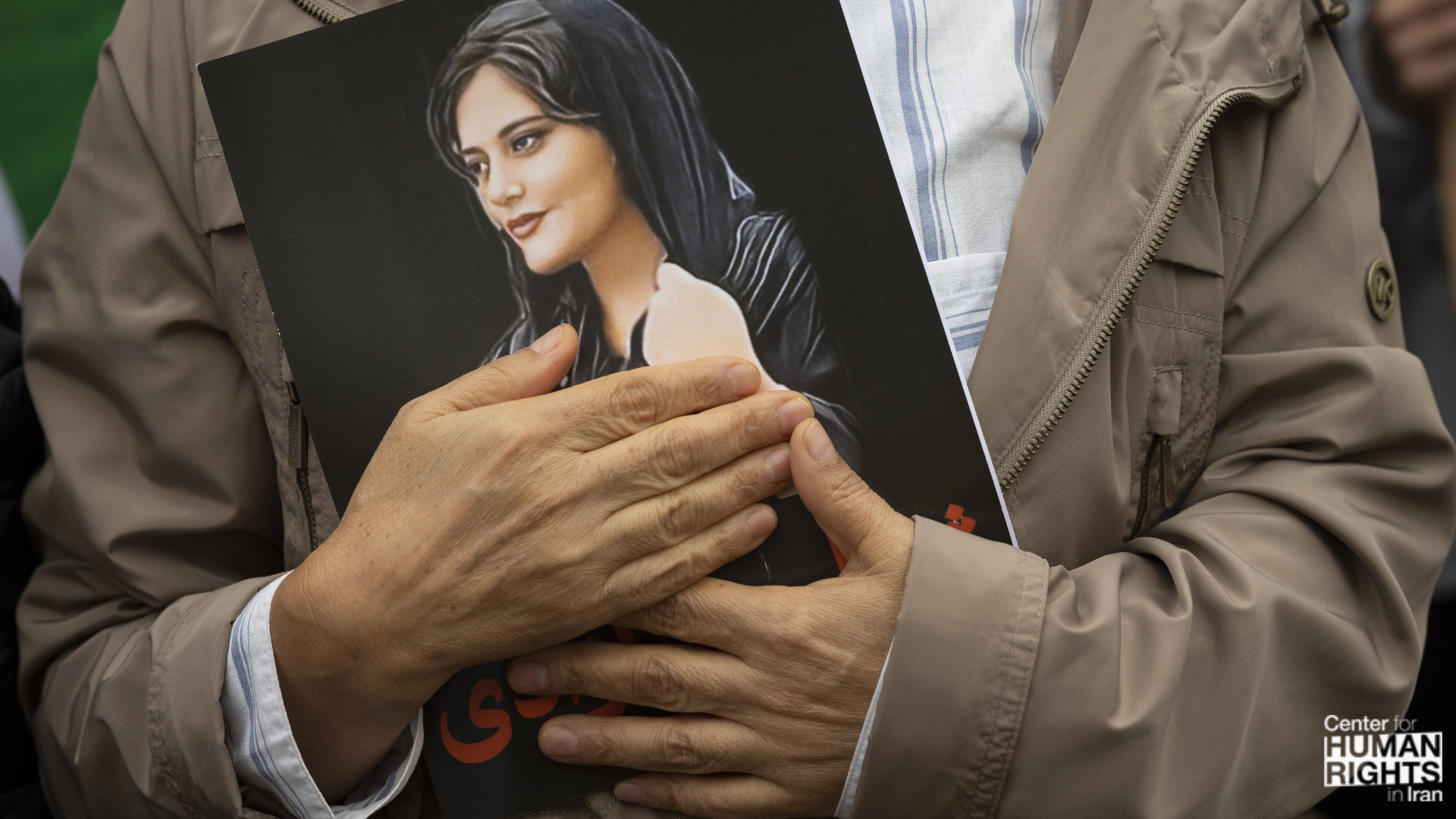
September 9, 2026 — As Iran approaches the fourth anniversary of the Woman, Life, Freedom uprising, a diverse group of labor and civil society groups has issued a joint statement reaffirming the movement’s demands for freedom, equality, economic security, and an end to repression and executions.

The statement is notable for bringing together 10 groups representing different sectors of Iranian society, including oil workers, nurses, retirees, women’s rights activists, and anti-execution campaigners. Their collective call underscores the continued breadth of opposition to state repression and the persistence of the movement’s core demands beyond the 2022 mass protests.

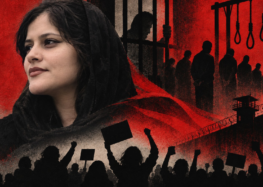
In September 2022, a mass anti-government uprising swept across Iran following the death of 22-year-old Mahsa Jina Amini in state custody after her arrest for “improper” hijab. The uprising was ultimately crushed by a brutal state response that led to over 500 protesters being gunned down in the streets by security forces, countless protesters maimed and injured, hundreds intentionally blinded by gunshots, and tens of thousands arrested.

This new statement from voices inside Iran comes amid an escalating crackdown in the country, including widespread arrests, executions, restrictions on civil society, and intensified pressure on activists and protesters. In such an environment, publicly speaking out against state policies and repression can carry significant risks for those who sign such statements.

The signatories also link the Woman, Life, Freedom movement to the January 2026 protests, which were met with a deadly state massacre leading to the killing of thousands of protesters, arguing that the movement has continued to evolve despite repeated efforts by the authorities to suppress it. Their statement further rejects the use of war and a heightened security environment as a justification for intensified repression, warning that continued crackdowns have failed to silence popular demands.

Read the full text of their statement below.


Statement by Social and Labor Organizations in Iran

On the Fourth Anniversary of the Continuing “Woman, Life, Freedom” Revolution

Four years ago, [22]-year-old Mahsa (Jina) Amini, from Saqqez in Kurdistan, was arrested in Tehran for not wearing the mandatory hijab and killed by the government’s morality police.

Mahsa’s killing ignited a fire against more than four decades of oppression, discrimination and corruption. Once again, protesters resolved to put an end to poverty, inequality, discrimination and repression, and to fight for welfare, equality and freedom.

Mahsa became the code name of a movement that quickly captured the hearts of millions of people and the civilized world around the globe. The cry of “Woman, Life, Freedom” was heard in different languages across the world.

The eight months of unprecedented struggle and solidarity among protesters in 2022-2023, which began with breaking through the barrier of the mandatory hijab, went on to produce some of the most glorious moments of struggle in the contemporary history of Iran and, in another sense, the first women-led revolution.

The magnitude of the Mahsa Revolution was so profound and overwhelming that the regime’s machinery of repression had no choice but to resort to the killing and arrest of thousands of protesters.

With the occurrence of this historic turning point, nothing ever returned to the way it was before.

Protests and confrontations between the people and the government continued, with their own ups and downs. Eventually, in another wave [starting in December 2025], protests against poverty, inflation, corruption and repression led to the streets being occupied, from the most remote parts of the country to Tehran and across cities large and small.

People in Abdanan, Ilam, and elsewhere showed that they have no red lines when it comes to securing their livelihoods and well-being, and that no justification, propaganda, or excuse can any longer disguise their poverty with deceptive rhetoric.

Following the 12 days of street demonstrations and the eruption of nationwide protests in January 2026, the Islamic regime put its previously prepared plan into action. Using heavy machine guns, live ammunition and targeted shootings—including inside hospitals—it subjected the people to one of the most horrific street massacres, leaving thousands dead over the course of two days, on January 8 and 9, with utter brutality and ruthlessness.

But once again, the response delivered another shock to the government. Instead of being intimidated, the mourning and defiance of bereaved families seeking justice and an enraged public demonstrated that all the prevailing traditions, doctrines and culture of submission, along with the reactionary rituals and laws imposed upon society, must be buried. Mourning itself thus became another arena of confrontation and resistance.

Despite this bloody repression, the Mahsa Revolution, under the banner of “Woman, Life, Freedom,” and the dynamic and profound continuation of the movement, demonstrated that progress and victory are possible even in the face of the most brutal dictatorships. For the first time in Iran’s history, the demand to “End Executions” became a central slogan of progressive movements.

Through its warmongering regional policies, and by taking advantage of the flames of war and the benefits it has derived from the wartime environment and sanctions, the Islamic Republic has imposed the most severe and widespread levels of poverty, deprivation and repression on society, along with greater suppression and daily executions. Yet even this degree of violence and deprivation has failed to force society into submission or push it backward. According to warnings from the regime’s own security sources, the government has reached a point where it could face the most powerful waves of popular protest at any moment.

While protesters in the streets are shouting, “Enough warmongering, our tables are empty,” the authorities, instead of responding to the people’s legitimate demands, have chosen to intensify the climate of war and warmongering—continually and periodically reproducing it—as a way to escape their crises, avoid confronting popular anger and prepare to suppress it.

There is no doubt that the revolution’s determined steps toward reclaiming and transforming every dimension of life and freedom have continued forward, and that resistance against right-wing fascist forces—whether dressed in the guise of monarchy and patriotism or operating under the banner of a reformed religion and faith, as arms of capital and exploitation—will become increasingly organized.

We will remove the obstacles standing in the way of gaining power and exercising our will over all aspects of life, and we will not stop moving forward until we build a modern, joyful and prosperous world for all human beings, regardless of gender, race or intellectual beliefs.

We, the undersigned organizations and individuals, call on all activists, organizations and honorable people to commemorate the anniversary of the Mahsa Revolution as magnificently as possible and to honor the memory of all those who lost their lives on the path to freedom.

Signatories:

  1. Kermanshah Electrical and Metal Workers Association
  2. No to Executions
  3. Justice-Seeking Families
  4. Council of Iranian Retirees
  5. Coordinating Council of Contract Oil Workers’ Protests
  6. Coordinating Council of Informal Oil Workers’ Protests (Third-Party/Non-Permanent Workers)
  7. Coordinating Council of Nurses’ Protests
  8. Voice of Iranian Women
  9. Street Protest Demands Movement of Gilan
  10. Sunday Protest Demands Movement of Kermanshah
 

Share :
  • Facebook
  • Twitter
  • Pinterest
  • Linkedin
  • Email

Related Posts

  • October 19, 2026

    23-Year-Old Iranian Student Sentenced to Death Over Social Media Post

    23-Year-Old Iranian Student Sentenced to Death Over Social Media Post
    October 6, 2026

    Iranian Authorities Target Artists, Writers, and Poets in Escalating Crackdown

    Iranian Authorities Target Artists, Writers, and Poets in Escalating Crackdown
    October 1, 2026

    46 States Condemn Iran’s Escalating Use of the Death Penalty

    46 States Condemn Iran’s Escalating Use of the Death Penalty at UN Human Rights Council
  • September 24, 2026

    UN: Iranian Authorities Committed Crimes Against Humanity in January 2026

    UN: Iranian Authorities Committed Crimes Against Humanity in January 2026 Suppression of Nationwide Protests
    September 16, 2026

    The Cost of Impunity: Four Years After Jina Mahsa Amini’s

    The Cost of Impunity: Four Years After Jina Mahsa Amini’s Death, Thousands More Are Victims of Iran’s Brutal Repression
    September 15, 2026

    Iran's Sweeping New Bill Threatens to Isolate Its People From

    Iran’s Sweeping New Bill Threatens to Isolate Its People From the World
Read more
  • 2022
  • 2021
  • 2020
  • 2019
  • 2018
  • 2017
  • 2016
  • 2015
  • 2014
  • 2013
  • 2012
  • 2011
  • 2010
  • 2009
  • 2008

CONTACT US

General Inquiries:
Email: info(at)iranhumanrights.org


Media Inquiries:
Email: media(at)iranhumanrights.org


Like CHRI on Facebook
Follow CHRI on Twitter @ICHRI

RECENT PUBLICATIONS

  • Iran Wages War Against Women with Draconian New Hijab Law

    ...

  • CHRI’s Full English Translation of Iran’s New Hijab Law
    CHRI’s Full English Translation of Iran’s New Hijab Law
  • The Death Penalty in the Islamic Republic of Iran – December 2023
    The Death Penalty in the Islamic Republic of Iran - December 2023

Press Releases

  • 23-Year-Old Iranian Student Sentenced to Death Over Social Media Post
    October 19, 2026
  • Iranian Authorities Target Artists, Writers, and Poets in Escalating Crackdown
    October 6, 2026
  • 46 States Condemn Iran’s Escalating Use of the Death Penalty at UN Human Rights Council
    October 1, 2026
  • UN: Iranian Authorities Committed Crimes Against Humanity in January 2026 Suppression of Nationwide Protests
    September 24, 2026
  • The Cost of Impunity: Four Years After Jina Mahsa Amini’s Death, Thousands More Are Victims of Iran’s Brutal Repression
    September 16, 2026
  • Iran's Sweeping New Bill Threatens to Isolate Its People From the World
    September 15, 2026
  • Ten Civil Society Groups Inside Iran Vow to Continue the Struggle for Freedom Ahead of Fourth Anniversary of Mahsa Amini’s
    September 9, 2026
  • UN Fact-Finding Mission Urges Iran to Withdraw Bill Criminalizing Contact With Foreign Entities
    September 3, 2026
  • The Court of History Film Broadcast to Millions in Iran, Envisioning Justice and Accountability in a Future Iran
    August 25, 2026
  • Iran’s New Weapon: Group Prosecutions of Protesters Send Dozens Toward the Gallows
    August 12, 2026
  • UN Experts Urge Iran to End Escalating Targeting of Ethnic Minorities
    August 10, 2026
  • Iran Intensifies Nationwide Crackdown on Teachers and Union Activists
    July 28, 2026
  • UN Fact-Finding Mission Urgently Calls on Iran to Immediately Halt Executions
    July 27, 2026
  • Authorities Escalate Crackdown on Iranian Students Amid Post-War Repression
    July 16, 2026
  • Civilians Must Be Protected At All Times During War
    July 15, 2026
  • Iran Intensifies Assault on Independent Lawyers Amid Expanding Post-War Crackdown
    June 18, 2026
  • As Executions Surge in Iran, Prisoners Risk Their Lives to Protest the State's Killings
    June 8, 2026
  • A Collective Call from Inside Iran for Free and Equal Internet Access
    May 28, 2026
  • Iran’s Baha’i Community Under Intensified State Attack Amid Escalating Domestic Repression
    May 19, 2026
  • Iran’s Execution Machine: Political Hangings Surge as Dozens Face Imminent Death
    April 30, 2026
  • UN Rights Chief Urges Halt to Executions, Warns of Escalating Repression Iran
    April 29, 2026
  • 30 Legal Groups Call for Immediate Release of Detained Iranian Human Rights Lawyer Nasrin Sotoudeh and Her Husband Reza Khandan
    April 14, 2026
  • Attacks on Essential Infrastructure Will Have Catastrophic Consequences for Millions of Civilians Across the Region
    April 6, 2026
  • At least 1,500 Arrested in Iran as State Intensifies Domestic Crackdown
    March 31, 2026
  • Opinion: Iran is already ramping up its next war. Guess who the ‘enemy’ is.
    March 25, 2026
  • Three Protesters Publicly Hanged in Iran; Dozens More At Imminent Risk of Execution
    March 19, 2026
  • Civilians Must Be Protected Across the Middle East
    March 5, 2026
  • Grave Concerns for the Safety of Political Prisoners and Detainees in Iran
    March 2, 2026
  • Iran’s Machinery of Repression Escalates: Arbitrary Arrests, Torture, Enforced Disappearances, and Death Sentences After Protest Massacre
    February 25, 2026
  • UN Experts Demand Iran Reveal Fate of Detainees, Halt Executions
    February 20, 2026

FEATURED REPORTS

Contents

  • Introduction
    • Rouhani’s Remarks on Human Rights
  • President Hassan Rouhani
  • Ministry of Intelligence
  • Ministry of Culture and Islamic Guidance
  • Ministry of Foreign Affairs
  • Ministry of Communications and Information Technology
  • Ministry of Science, Research, and Technology
  • Ministry of Labor, Cooperatives, and Social Welfare
  • Ministry of the Interior
  • Ministry of Education
  • Ministry of Oil

Guards at the Gate

  • Executive Summary
  • Recommendations
  • Methodology
  • Introduction
  • Institutional developments
    • Khamenei consolidates control over internet policy
    • Security and intelligence agencies
    • Rouhani’s influence
  • Iran’s National Information Network
    • Background
    • Implementation phases
    • Speed and Bandwidth
      • Implications
    • Network access
      • Network security
    • User security
      • User authentication
      • Servers and websites hosted inside Iran
      • SSL security certificates
      • Implications
    • Services and tools of the NIN
      • National Electronic Mail Services
      • Data Centers
      • National Search Engines
      • National Operating System
  • Cyber Attacks
    • Tactics and Methods
      • DDoS
      • Phishing
      • Malware
      • Message Tapping
      • Fake Applications
      • Implications
  • Filtering
    • Blocking under Rouhani
  • Implications
  • Conclusion
×

Stay
Informed

Get updates on the latest
human rights issues in Iran

Sign up for CHRI's newsletter.


Get the latest Iran updates. Sign up for our newsletter.

Lists*

© 2019 Center for Human Rights in Iran (formerly known as International Campaign for Human Rights in Iran)