Authorities Escalate Crackdown on Iranian Students Amid Post-War Repression
More Than a Hundred Students Arrested, Expelled, or Jailed in Expanding Assault on Dissent at Universities
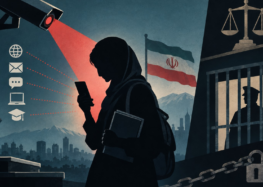
July 16, 2026 — Iranian authorities have launched a sweeping crackdown on university campuses, subjecting students to arbitrary arrests, imprisonment, expulsions, suspensions, and politically motivated disciplinary proceedings since the outbreak of the February 2026 war.
The escalating campaign reflects a broader effort by authorities to suppress dissent on campuses and prevent the revival of organized student activism in the wake of still smoldering anti-government sentiment and anger over the government’s violent crushing of the January 2026 protests.
Findings by the Center for Human Rights in Iran (CHRI) indicate that students have been targeted for exercising basic rights, including peaceful expression, participation in campus protests, supporting anti-government protests, and criticism of the government. They have faced vague security-related charges and punitive measures imposed through opaque disciplinary processes lacking fundamental due process protections.
“The Iranian authorities know the grievances driving the January 2026 protests remain unresolved, and the anger generated by the regime’s killing of thousands of people during those protests has not disappeared,” said Esfandiar Aban, Director of Research at CHRI.
“They fear the revival of student activism and are determined to stamp out any embers of dissent lest it ignite into the resumption of broader protests against the regime,” said Aban.
Key Findings: Universities Treated as Security Battlegrounds
- Students are being suspended and expelled without due process, public scrutiny or access to legal representation by independent lawyers;
- State security forces are arresting students across the country, often without disclosing their whereabouts or the reasons for their detention, raising grave concerns of enforced disappearances and incommunicado detentions;
- Students are prosecuted under vaguely worded national security charges in Revolutionary Courts that allow prosecutors to transform ordinary acts of peaceful expression into criminal offenses that carry years of imprisonment;
- There are serious concerns regarding the treatment and health conditions of imprisoned students, with families receiving little or no information about their well-being.
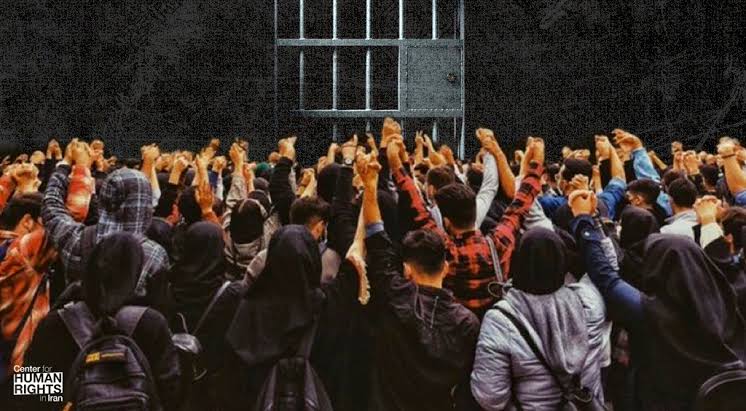
Many students have been targeted for their alleged participation in the nationwide January 2026 anti-government protests, or in the campus demonstrations that followed in February, when universities became important centers of protest. Demonstrations erupted across multiple universities on February 21, 2026, the first day campuses reopened for in-person classes after the January protests (which coincided with 40th-day commemorations for the thousands killed by state security forces during the January protests), with thousands of students protesting across numerous campuses, including major universities such as Sharif University of Technology, Amirkabir University, and Shahid Beheshti University.
The protests quickly spread to other universities across the country, reaching their peak on February 23–24, 2026. Themes included demands for the release of detained students, an end to security force and Basij interventions on campuses and to arrests and dormitory raids, memorializing those killed, anti-government slogans, and solidarity with the broader nationwide uprising that was violently crushed in January. The protests continued until the start of U.S. and Israeli attacks on Iran on February 28, 2026.
After the February 2026 war, intensified security measures, exhaustion following the regime’s bloody January crackdown, extensive arrests and surveillance of activists, and intense economic hardships combined to largely extinguish the mass student protests (although local protests over examinations, administration and educational policies, and student welfare have continued in several cities).
Yet the Iranian authorities clearly fear the potential for the resumption of larger protests on campuses across the country, and have recently escalated their crackdown against students. This wave of student repression marks one of the most serious assaults on Iran’s university community since the 2022 Woman, Life, Freedom movement, underscoring authorities’ determination to silence student voices, eliminate dissent on university campuses, and tighten control over campuses ahead of the new academic year.
The campaign has affected students at leading universities, including Sharif University of Technology, the University of Tehran, Amirkabir University of Technology, Khajeh Nasir University of Technology, Iran University of Science and Technology, Sooreh University, Sajjad University, Arak University, the University of Rasht, and Islamic Azad University.
“The authorities did not have enough capacity to carry out this crackdown on universities during the war, but now they are doubling down and making up for it,” said Aban. “They aim not only to punish students for past activism, but also to prevent the next protest movement from taking shape,” he added.
The International Community Must Defend Students in Iran
CHRI calls on all relevant UN bodies, including the Special Rapporteur on Iran, the SR on the Right to Education, the SR on Freedom of Expression, the SR on Freedom of Assembly and Association, and the Working Group on Arbitrary Detention to publicly condemn the escalating repression of university students, investigate cases of arbitrary arrest and politically motivated prosecutions and expulsions, and include attacks on students and academic freedom in future reports to the Human Rights Council and General Assembly.
CHRI calls on UNESCO to publicly affirm that universities must remain spaces for free inquiry and peaceful expression and to condemn politically motivated expulsions and prosecutions of students.
CHRI also calls on universities around the world, university presidents, and faculty senates, as well as the International Association of Universities (IAU), Scholars at Risk, the International Federation of University Professors, and the Global Student Forum, to publicly condemn the persecution of Iranian students and reaffirm that academic freedom includes the right of students to engage in peaceful expression and assembly without fear of imprisonment or expulsion.
CHRI urges governments worldwide, especially those who frequently speak on Iran and academic freedom, such as EU member governments, the UK, Canada, Australia, Norway, and Switzerland, to make public statements condemning these actions, impose targeted human rights sanctions on responsible officials, raise cases bilaterally, and vigorously support UN mechanisms.
Academic Suspensions and Expulsions
Since June, universities across Iran have imposed an unprecedented wave of disciplinary measures targeting students for their alleged involvement in protests, online expression, and other forms of peaceful activism. Many of the cases stem from student-led demonstrations held at several universities in February 2026 in solidarity with victims of the January nationwide protests.
“University disciplinary committees no longer function as academic oversight bodies; they have become extensions of the state’s security apparatus,” said CHRI’s Aban.
“Students are being expelled without due process, imprisoned on politically motivated charges, and punished for exercising their rights to peaceful expression and assembly, while universities coordinate with security institutions to remove voices of dissent from campuses. Iranian authorities are treating universities as security battlegrounds rather than places of learning,” Aban added.
The security pressure on students extends well beyond the courts and judicial proceedings. A significant portion of summonses, fabricated cases, intimidation, and disciplinary measures takes place through university disciplinary committees, where proceedings are typically conducted with little or no public scrutiny. As a result, many students are also denied access to legal advice and meaningful representation by independent lawyers during these processes.
An Iran-based human rights lawyer told CHRI about the cases of detained students:
“Following the nationwide protests in January, the combination of an overwhelming number of ongoing prosecutions and arrests, together with intensified security pressure and threats against lawyers, has effectively deprived many students of access to legal representation and their right to choose their own attorney.”
Sajjad University (Mashhad)
On June 10, 2026, the United Students group, an independent student group that covers news related to universities in Iran, reported that at least 10 students had been suspended at Sajjad University for periods that ranged between two and four semesters.
A source familiar with the situation of students at Sajjad University in Mashhad told CHRI:
“In early February, when student protests began at many universities across the country, Sajjad University also became a major site of demonstrations. From that point on, the university’s disciplinary committee began threatening students, and there was a widespread belief among students that university officials would eventually retaliate against them. The students who have now been suspended are no different from the many others who participated in those protests. They have all been accused of offenses such as ‘disrupting university classes and programs’ or ‘creating unrest on campus.’”
The source added that the university has also counted the current academic semester as part of the students’ disciplinary punishment, calling the measure “highly unusual and virtually unprecedented.”
A copy of the disciplinary ruling reviewed by CHRI states that, pursuant to a decision by university administrators and the Office of the Supreme Leader’s Representative at the province’s universities, students who express remorse or repentance will have their suspension for the current semester enforced, while the suspension imposed for the fall semester will itself be suspended.
According to the source:
“These measures appear to be aimed not only at retaliating against students for last year’s protests, but also at sending a clear warning ahead of the new academic year. The authorities want to remind students that any form of protest or dissent on campus will be met with severe consequences.”
Khajeh Nasir University of Technology (Tehran)
On July 2, 2026, at the Khajeh Nasir University of Technology’s Appeals Disciplinary Committee, following instructions from the university president, upheld a two-semester suspension against three students: Alireza Jafari-Asar, an undergraduate physics student; Seyed Mohammad Seyedaboudi, an undergraduate electrical engineering student; and Hossein Mohammadi, an undergraduate mathematics student.
Earlier, on June 24, 2026, reports indicated that disciplinary proceedings had been initiated against 22 students at Khajeh Nasir University, which may lead to suspension or expulsion. The United Students group reported:
“According to received reports, the summonses are no longer limited to students previously targeted over the January protests. Students who participated in demonstrations in February are now also being widely summoned, formally charged, and subjected to disciplinary proceedings. The simultaneous expansion of these cases suggests that the university’s disciplinary crackdown has entered a broader and more systematic phase.”
University of Tehran (Tehran)
At the University of Tehran, at least 40 students have been reportedly summoned before disciplinary committees since March 2026. They face accusations including “creating unrest,” “being a principal organizer of an illegal gathering,” “insulting national and religious values,” “chanting anti-establishment slogans,” and “disrupting university operations.”
Among those targeted are Mahyar Eftekhari and Amir Mohammad Karimi, both polymer engineering students. Karimi received a preliminary expulsion order while being held in detention. The disciplinary ruling was issued without allowing him to attend the hearing or present a defense.
The report alleges that Telegram channels affiliated with the Basij, which have been involved in building cases against students, played a significant role in securing the harsher penalties.
According to the University of Tehran’s student channel, the latest wave of repression at the university began following anti-government student protests in February 2026 and intensified after the outbreak of war, despite the university operating remotely.
Students reportedly received phone calls and text messages accusing them of misconduct without evidence presented, and were instructed to submit written defenses by email before any hearing—a procedure the report says violates the university’s disciplinary regulations, which require that charges, evidence, and defenses be addressed during in-person hearings.
According to the student group, disciplinary hearings that began on June 17, 2026, have been marred by repeated due process violations and breaches of legal and disciplinary regulations. University authorities are also accused of relying on unverified content from pro-government Telegram channels as evidence against students, without conducting independent investigations.
Amirkabir University of Technology (Tehran)
On June 24, 2026, at Amirkabir University of Technology, the disciplinary committee reportedly issued a preliminary expulsion order against Amir Mohammad Sourmeh, a master’s student in business administration, on the charge of “insulting the flag of the Islamic Republic.”
The same allegation had previously been used to seek the expulsion of Amir Mohammad Karimi and Mahyar Eftekhari, students at the University of Tehran.
Sharif University of Technology (Tehran)
At Sharif University of Technology, seven students received preliminary expulsion orders on June 18, 2026, over social media posts and cases linked to the January 2026 protests. The students include Fariborz Kohanzad, Parnian Khodabakhshi, Sepanta Saeidi, Hossein Shadman, Fatemeh Akbarpour, Masiha Bagheri, and Ariana Kouchaki.
Separately, on June 9, 2026, the Islamic Association of Sharif University Students reported that the Disciplinary Council of Sharif University of Technology had upheld its first expulsion ruling and forwarded it to the Ministry of Science, Research and Technology for final approval.
The ruling orders the expulsion of Reza Dalman, a master’s student in computer engineering, and bars him from studying at any university in Iran for four years. His original five-year ban was reduced by only one year on appeal, despite repeated calls from students and the University Council for the Appeals Committee to exercise “maximum Islamic leniency.”
Dalman, who was arrested on March 18, 2026, during the war, had already been acquitted by the judiciary before the disciplinary ruling was issued, undermining university officials’ claims that disciplinary measures were intended as a less punitive alternative to judicial action.
Soore University (Tehran)
At Sooreh University, 22 students received severe disciplinary sanctions on June 11, 2026. Four students were expelled, while the remaining students were suspended for periods that ranged between one and two semesters.
Iran University of Science and Technology (Tehran)
According to the Student Rights Defense Working Group, at least six students were suspended for one semester on June 1, 2026. None were granted disciplinary hearings or the opportunity to defend themselves before the rulings were issued, and their access to the university’s academic system was blocked before written decisions were delivered. In many cases, students were not informed of the charges or contents of their case files.
Criminal Prosecutions, Harsh Prison Sentences
The crackdown on students has extended far beyond university disciplinary proceedings, with judicial authorities continuing to prosecute students through Iran’s Revolutionary Courts.
“Students who organize demonstrations, express political opinions, or attend campus gatherings are increasingly prosecuted under national security laws in Revolutionary Courts that have become a central pillar of the campaign against students,” said Aban.
“Vaguely worded national security charges allow prosecutors to transform ordinary acts of peaceful expression into criminal offenses that carry years of imprisonment,” he added.
The cases below represent only documented cases, as many students remain in legal limbo with unresolved charges and pending judicial proceedings. Most of the students listed were arrested and sentenced in connection with the nationwide protests in January 2026.
These cases highlight the authorities’ continued use of broadly defined national security charges, including “propaganda against the state” and “assembly and collusion against national security,” to criminalize peaceful student activism.
Ali Taherikia, a master’s student in film directing at the University of Tehran’s Faculty of Fine Arts, was arrested on January 3, 2026. He was sentenced by Branch 7 of the Tehran Revolutionary Court to two years of discretionary imprisonment on charges of “assembly and collusion against national security” in a court session that lasted less than ten minutes. On June 13, 2026, the Tehran Court of Appeals upheld the two-year prison sentence.
At the time of his trial, student organizations and the Student Council of the University of Tehran’s Faculty of Fine Arts said Ali Taherikia had been arrested near the university dormitory, not at the site of the protests, and was being held in Greater Tehran Penitentiary without legal justification. The statement also criticized the authorities for failing to present sufficient evidence to support the charges against him.
Ilya Bakhshaei, a sports sciences student at Yazd University who was arrested during the nationwide protests in January 2026, was sentenced to five years’ imprisonment by the Tehran Revolutionary Court on the charge of “assembly and collusion to act against national security.” The sentence was upheld in full by Branch 21 of the Tehran Court of Appeals. He is currently held in Evin Prison.
Raheleh Moeini, a biomedical engineering graduate of Amirkabir University and master’s student at the Polytechnic University of Milan, was arrested during the January protests and was sentenced on June 13, 2026, to two years and six months in prison and banned from leaving Iran for two years on charges such as “propaganda against the state” and “assembly and collusion against national security.” She was temporarily released on bail one week after the verdict.
Majid Jamshidzadeh, an industrial design student at the Iran University of Science and Technology, was arrested during the protest on January 2, 2026, and sentenced to five years in prison by Branch 15 of Tehran’s Revolutionary Court, presided over by Judge Salavati, in March 2026, on charges such as “assembly and collusion with the intent to disrupt national security” and “disrupting public order.”
Erfan Arabi, a 20-year-old computer engineering student at the Islamic Azad University of Birjand, was notified on May 12, 2026, that he had been sentenced to 8 years in prison by the Revolutionary Court on charges including “assembly and collusion against national security” and “propaganda against the regime.” Arabi was arrested in February 2026 in connection with the nationwide protests and eventually released on bail in April.
Shayan Houshyar, a researcher and PhD student of Iranian history, was sentenced to three years and eight months in prison by Branch 1 of the Revolutionary Court of Urmia on charges such as “propaganda against the regime.” His lawyer also described the evidence against his client as “political analysis, criticism of performance, and expressing differing views.” Houshyar was arrested in October 2025 and later released.
Serious Concerns Over Conditions of Imprisoned Students Held Incommunicado
Serious concerns also remain regarding the treatment and health conditions of imprisoned students, particularly as many are held incommunicado, with families receiving little to no information about their whereabouts, legal status, or well-being.
Mahshad Keshani, a 22-year-old student, attempted to cut her wrist due to psychological pressure on June 8, 2026, following her transfer to solitary confinement. She was subsequently transferred to Modarres Psychiatric Hospital.
A source familiar with the case told IranWire that Keshani, who has been detained since January 2026, was transferred to solitary confinement at Dowlatabad Prison in Isfahan, despite having completed her six-month prison sentence imposed by the Revolutionary Court in Isfahan. No further information about her condition has been made public.
Given the Iranian authorities’ documented history of using psychiatric institutions to hold political prisoners against their will, Keshani’s transfer has heightened concerns regarding her physical and psychological well-being.
Arbitrary Arrests
Since the January protests and more increasingly after the outbreak of the war on February 28, 2026, security forces have continued arresting students across the country, often without disclosing their whereabouts or the reasons for their detention, raising serious concerns about enforced disappearance, incommunicado detention, and the denial of due process.
“The authorities are relying on arrests not to investigate alleged crimes but to spread fear throughout the university community,” said Aban.
The following are some of the names of students who have been arrested since the start of the war. While some have been released on bail, others remain in detention. This is not an exhaustive list, as widespread internet restrictions and the heightened security environment have made it increasingly difficult to obtain reliable information about arrests.
Dasta Farrokhi, a drama literature student at Sooreh University in Tehran, was arrested on March 10, 2026, after security forces raided her parents’ home in Arak.
A source close to Dasta Farrokhi told CHRI:
“Dasta was released on bail of 2 billion tomans about 10 days after being arrested. The final interrogation session has been held, an indictment has been issued against them, and they are now awaiting a court date. Dasta is facing charges including ‘insulting the Supreme Leader’ and ‘propaganda against the state.’
“Authorities confiscated Dasta’s laptop and mobile phone. About a month ago, they returned the laptop but said the court would make the final decision regarding the phone.
“During the interrogation sessions, as well as in the indictment, investigators repeatedly cited Dasta’s student activities. For example, they claimed that during campus gatherings, Dasta filmed other students and sent the footage to media outlets. They also accused Dasta’s theater group of engaging in activities against the state simply because Dasta is a theater student.”
The source also told CHRI that the alleged charges stem from Dasta’s online activities and student activism:
“The allegations against Dasta are based both on student activism and personal activity on social media—even very minor actions, such as family members chanting slogans from their window. While Dasta’s arrest may have appeared to stem from an Instagram story about Ali Khamenei’s death, it is clear the authorities had been monitoring Dasta’s activities for some time.
“Several years ago, at the age of just 17, Dasta was briefly detained for activism related to women’s rights and gender equality. Following this latest arrest and throughout the interrogation process, Dasta has faced a wide range of accusations, from alleged participation in street protests to online activism and student activities.”
Ariana Koochaki, a 22-year-old industrial engineering student at Sharif University of Technology, was arrested by security forces in Tehran on June 1, 2026, and taken to an undisclosed location. He was released on bail after approximately one month. The charges against him remain unknown.
Amirhossein Bagheri Alavijeh, a master’s student in psychology at Arak University and a former member of the Student Council at the University of Tehran’s Faculty of Fine Arts, was arrested at his home in Alavijeh, Isfahan Province, on June 1, 2026, by security forces. He was transferred to an undisclosed location, and authorities have not disclosed the reasons for his arrest or his whereabouts. Bagheri Alavijeh was previously arrested on April 2, 2025, and sentenced by the Revolutionary Court of Najafabad to a one-year suspended prison sentence. His family has expressed concern over his health and his lack of access to essential medication.
Abolfazl Chamani, a mathematics student at the University of Tehran, was arrested on June 1, 2026. His whereabouts and condition remain unknown.
Amirhossein Sheikh-Mohammadi, a veterinary medicine student at Islamic Azad University in Karaj, was arrested on May 18, 2026. He was transferred to Choobindar Prison in Qazvin in late June.
Erfan Khadem, a 21-year-old electrical engineering student at Sharif University of Technology, was arrested on May 7, 2026. Authorities have not disclosed his whereabouts or the charges against him.
Matin Zamanian, an undergraduate political science student at Islamic Azad University, Tehran Central Branch, has been held at the Greater Tehran Penitentiary (Fashafouyeh Prison) since his arrest in April 2026. He has reportedly been denied access to an independent lawyer and deprived of a fair judicial process throughout his detention.
Mostafa Mohammadhasan, a master’s student in the philosophy of science at Sharif University of Technology, has been imprisoned since February 22, 2026.
Nima Hemmati, a master’s student in ethnomusicology at the University of Rasht, and his 17-year-old brother Mahan Hemmati, an 11th-grade student, were arrested in Isfahan on March 18, 2026
Sima Chambari, an undergraduate chemistry student at the University of Rasht, was arrested by security forces at her home on March 12, 2026.
Arman Hajmohammadi, a master’s student in civil engineering at Sharif University of Technology, was arrested at his private residence in Yazd in March 2026.
Amir Mohammad Karimi, a polymer engineering student at the University of Tehran, was arrested in Tehran in late April 2026. He received a preliminary expulsion order while being held in detention.
Vahid Rostami, a statistics student at the University of Tehran, was arrested by security forces in early March 2026.
Amirhossein Rezaei, a political science student at the University of Tehran and former journalist at the newspaper Donya-e Eqtesad, was arrested by security forces in Arak on May 6, 2026.
Ali Alirezaei, an undergraduate student of mathematical sciences at Sharif University of Technology, was arrested by security forces on April 29, 2026, and taken to an undisclosed location.
Mohammad-Parsa Golchin, a University of Tehran student and winner of a gold medal in the National Literature Olympiad, was arrested along with several other students on April 11, 2026, during a gathering in Mashhad. He was reportedly charged with “assembly and collusion against national security” and “propaganda against the state.” He was released on bail on April 22.
Mohammadhassan Khoshchehreh, a law student at the University of Tehran, was arrested on April 11, 2026, during a gathering in Mashhad. He was reportedly charged with “assembly and collusion against national security” and “propaganda against the state.” He was released on bail on April 12.
Ilya Sabourinasab, a social sciences student at the University of Tehran, was arrested on April 11, 2026, during a gathering in Mashhad. He was reportedly charged with “assembly and collusion against national security” and “propaganda against the state.” He was released on bail on April 12.
Hossein Mahdipanah, an electrical engineering student at Sharif University of Technology, was arrested on April 11, 2026, during a gathering in Mashhad. He was reportedly charged with “assembly and collusion against national security” and “propaganda against the state.” He was released on bail on April 12.
Reza Dalman, a student at Sharif University of Technology, was arrested during Nowruz Eve events on charges of hanging a mouse doll (a reference to Supreme Leader Ali Khamenei) from a tree on March 20, 2026. He was later released on bail, expelled from university, and banned from all universities for four years.
“The Iranian government is attempting to extinguish the next generation of civic leaders before they can emerge,” said Aban. “Every arrest, expulsion, and politically motivated prosecution sends the same message: independent thought will be punished. The international community should recognize this campaign for what it is—a coordinated assault on the peaceful exercise of fundamental rights.”
This report was made possible by donations from readers like you. Help us continue our mission by making a tax-deductible donation.