UN Human Rights Council Extends Iran Fact-Finding Mission, Condemns ‘Deadliest Crackdown against Iranian People Since 1979 Revolution’
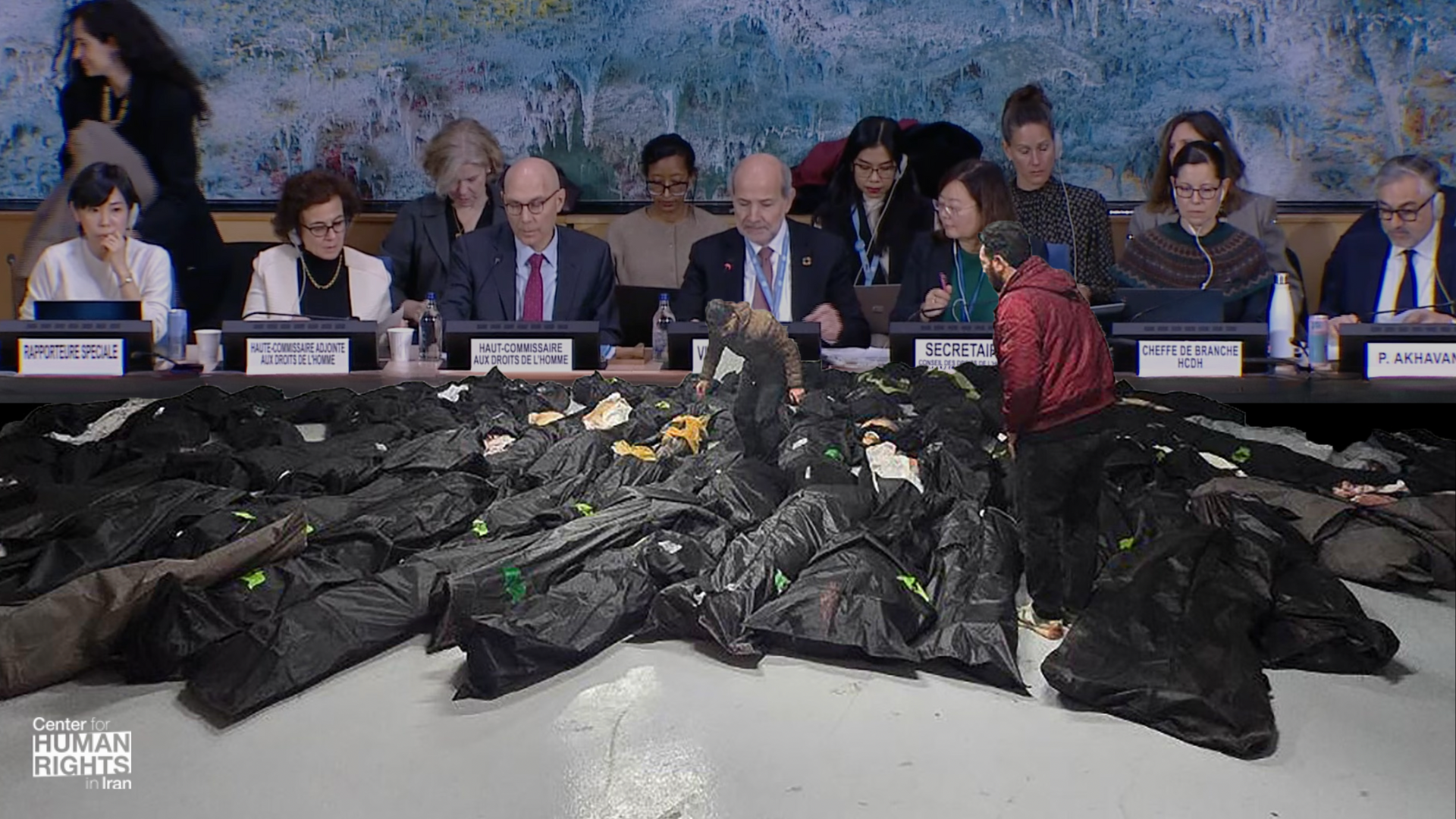
Expert: “This is the worst mass murder in the contemporary history of Iran.”
January 26, 2026 — The Center for Human Rights in Iran (CHRI) welcomes the adoption of a resolution by the UN Human Rights Council extending international investigations into atrocities committed by the Islamic Republic, following what UN officials described as an unprecedentedly violent crackdown on the recent nationwide protests.
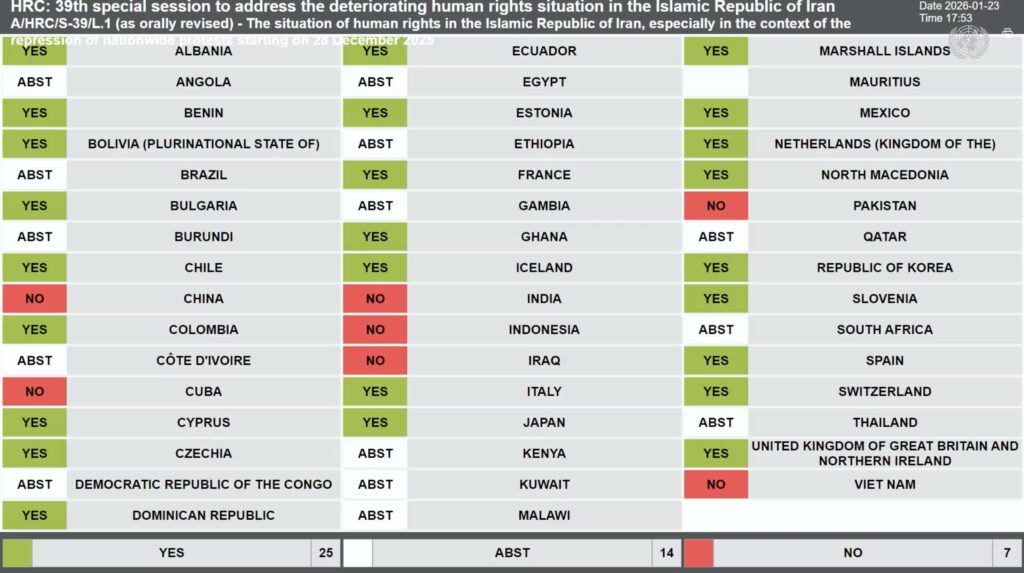
At a special session held in Geneva on January 23, 2026, the Council voted to extend the mandate of the UN Special Rapporteur on Iran for one year and the Independent International Fact-Finding Mission on Iran for an additional two years. The resolution passed with 25 votes in favor, 14 abstentions, and 7 votes against.
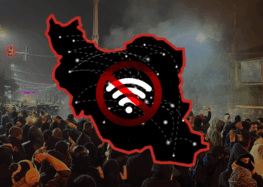
The resolution adopted by the Council condemns Iran’s human rights violations and calls for an end to extrajudicial killings, enforced disappearances, torture, sexual violence, arbitrary arrests, and internet shutdowns, while demanding accountability for perpetrators.
Senior UN officials and independent experts said that Iranian authorities responded to the January protests with extrajudicial killings, the lethal and disproportionate use of force, mass arrests, torture, forced confessions, and nationwide internet shutdowns.
UN Special Rapporteur on Iran Mai Sato said:
“The rhetoric of labeling peaceful protesters as ‘terrorists,’ ‘rioters,’ or ‘mercenaries’— the same narrative deployed during the 2022 protests—seeks to justify brutal crackdowns and deliberately ignores the uprising’s domestic, organic nature. The Supreme Leader and the President have called for harsh action, while the head of the judiciary has demanded swift prosecutions without leniency. Now is the time for the international community to respond and to support the people of Iran in their pursuit of fundamental rights and accountability.”
Sara Hossain, Chair of the Fact-Finding Mission, described recent events as likely “the deadliest crackdown against the Iranian people since the 1979 revolution,” citing evidence of arbitrary killings, sexual violence, and widespread abuse in detention.
UN High Commissioner for Human Rights Volker Türk said:
“The killing on the streets of Iran may have subsided, but the brutality continues. The violent repression of the Iranian people does not solve the country’s problems; on the contrary, it creates conditions for further human rights violations, instability, and bloodshed.
Former UN prosecutor Payam Akhavan called for a “Nuremberg moment,” referring to the international criminal trials of Nazi leaders following World War Two.
“This is the worst mass murder in the contemporary history of Iran… The Islamic Republic is not a party to the Rome Statute of the International Criminal Court. Nevertheless, the Security Council should be urged to make a Chapter VII referral, even if cynical political considerations make such action unlikely.”
Breakdown of the Vote:
- 25 votes in favor: Albania, Benin, Bolivia (Plurinational State of), Bulgaria, Chile, Colombia, Cyprus, Czechia, Dominican Republic, Ecuador, Estonia, France, Ghana, Iceland, Italy, Japan, Marshall Islands, Mexico, the Netherlands (Kingdom of the), North Macedonia, the Republic of Korea, Slovenia, Spain, Switzerland, and the United Kingdom of Great Britain and Northern Ireland.
- 14 abstentions: Angola, Brazil, Burundi, Côte d’Ivoire, the Democratic Republic of the Congo, Egypt, Ethiopia, Gambia, Kenya, Kuwait, Malawi, Mauritius, South Africa, Qatar, and Thailand.
- 7 votes: China, Cuba, India, Indonesia, Iraq, Pakistan, and Vietnam.
This report was made possible by donations from readers like you. Help us continue our mission by making a tax-deductible donation.