Unreported Atrocities: Eyewitnesses Detail Massive and Deadly State Crackdown Against Protesters in Iran’s Provincial Cities
Arrests Skyrocketing After Mass Killings, Detainees Held in Hidden Warehouses, Violent Nighttime House Raids, Trials Conducted En Masse Without Lawyers, Protesters Being Charged with Capital Crimes
“Forces charged into the crowd and assaulted people using knives, machetes, pistols…”
January 30, 2026 — The geographic scale, intensity, and rate of the mass killings carried out by Iranian security forces during the nationwide protests of January 2026 are unprecedented in the Islamic Republic’s history of violently suppressing dissent, and amount to crimes against humanity, the Center for Human Rights in Iran (CHRI) said today.
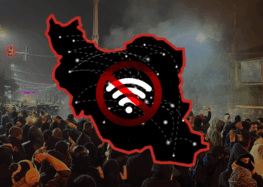
While confirmed deaths are now put at 6,479, with an additional 17,091 deaths under review, these reports have been largely based on limited reports coming out of Iran’s major cities, where the existence of Starlink connections has been able to bypass the government’s internet shutdown. Limited access to Starlink in many smaller cities has left the massive scale of violent repression in large parts of the country almost completely undocumented.
CHRI has conducted in-depth interviews with eyewitnesses in smaller and lesser-known cities across Iran, in the provinces of Kerman, Lorestan, Khuzestan, Kurdistan, Razavi Khorasan, Golestan, Kermanshah, and Markazi, where very few images or firsthand accounts have emerged. They have described to CHRI an unrestrained campaign of deadly force and extreme state violence, and killings carried out by state forces with an unprecedented level of brutality. The killings have been followed by mass arrests and entire communities terrorized into silence.
“What we are documenting in Iran’s smaller cities is a coordinated campaign of mass killing and enforced disappearance, deliberately carried out in places where the world cannot see,” said Esfandiar Aban, CHRI’s senior researcher. “Entire cities have been turned into killing fields and secret prisons. People are shot in the streets, taken from their homes at night, and then erased—no names, no records, no answers for their families,” Aban said.
“The pattern of mass killings, secret detentions, and mass trials without lawyers shows clear intent at the highest levels of the state,” Aban stressed. “These are crimes against humanity unfolding in real time.”
Key Findings Based on Eyewitness Reports:
- Issuance of mass shoot-to-kill orders starting on January 8, between 8 and 9 p.m.
- Systematic use of laser targeting to identify protesters and snipers to shoot them
- Deployment of heavy military-grade weapons, including DShK machine guns
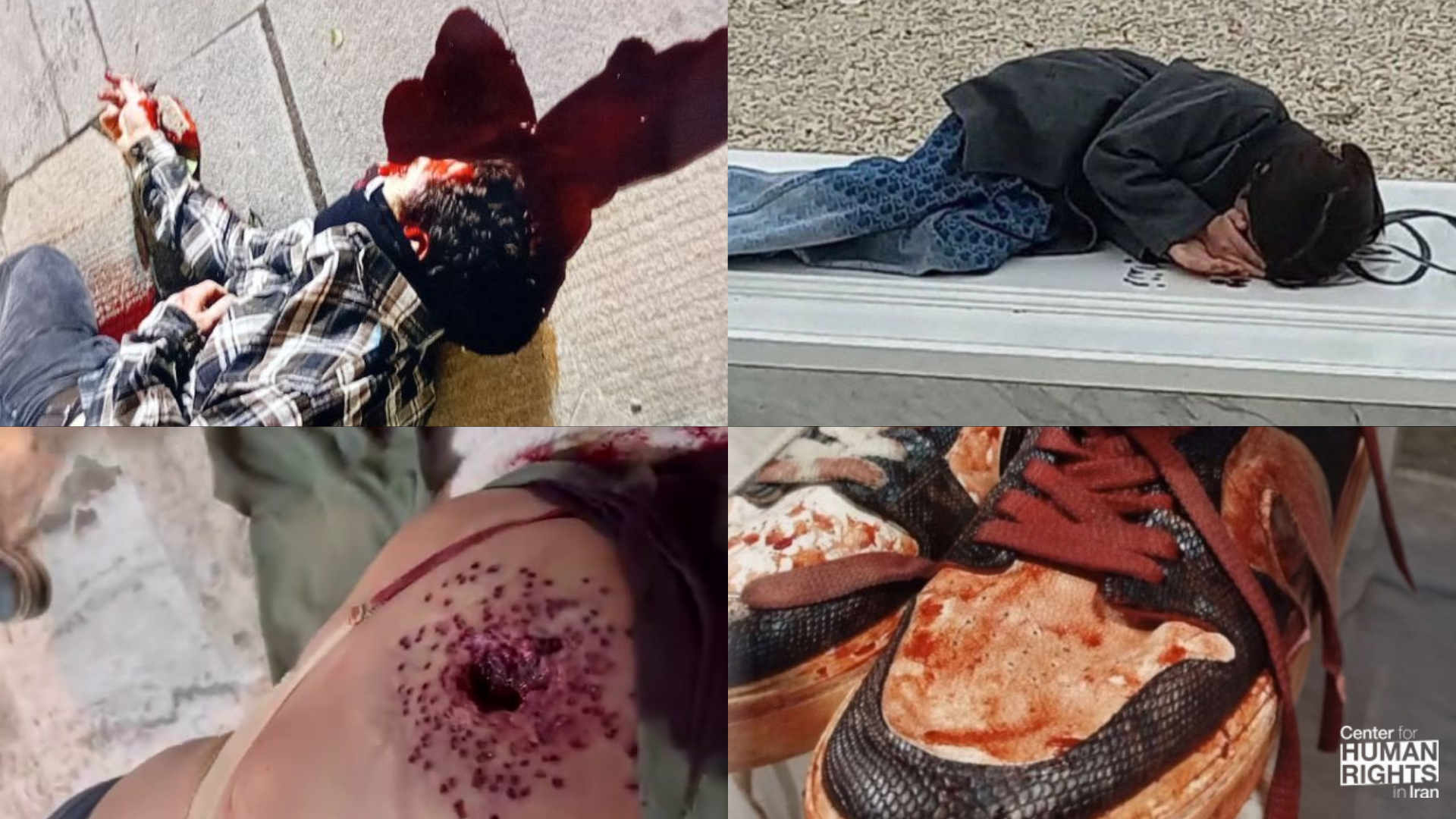
- Use of high-impact pellet shotgun rounds, causing catastrophic injuries
- Widespread killings of bystanders who were not participating in the protests
- People shot while assisting the wounded or trying to retrieve bodies
- Basij and IRGC forces played the primary role in the killings on January 8-9.
- Mass arbitrary arrests continue; martial law in effect in numerous cities
- Violent nighttime house-to-house raids to find protesters
- Arrests and prosecutions of doctors and medical staff treating injured protesters
- Hospitals used to identify and arrest protesters
- Trials being conducted en masse; access to lawyers not allowed
- Protesters are being charged with capital crimes
- Families threatened, warned to stay silent, forced to pay for bodies, forced to say their dead were Basij members to inflate numbers of state casualties
Key Areas of Grave and Immediate Concern:
- The primary concern now in small cities is the unknown fate of detainees, including their whereabouts, their condition, and the status of their cases. Arrests carried out using brutal, extrajudicial methods may amount to kidnapping and enforced disappearance.
- The use of unofficial facilities operating outside the regular prison system to hold detainees raises the risk of enforced disappearance, torture, and death in custody.
- Denial of detainees’ access to family and legal counsel, and threats against families to keep them silent, raise grave concerns regarding mass death sentences.
- The lack of information on a huge number of detainees and their detention conditions, especially in small cities, raises grave concerns for torture and sexual abuse.
- Many injured protesters have been forced to flee their cities to avoid arrest, disrupting medical treatment and heightening risks to their lives.
CHRI calls on governments worldwide to:
- Sever all diplomatic and economic relations with the Islamic Republic of Iran.
- Urgently marshal resources and technological solutions to provide free, safe, and uncensored internet access to the people of Iran.
- Activate universal jurisdiction mechanisms to pursue criminal accountability against Islamic Republic perpetrators.
- Strengthen and expand targeted sanctions and freeze assets of Iranian officials, judges, IRGC commanders, Basij leaders, and security agencies responsible for ordering or carrying out killings, mass arrests, torture, and enforced disappearances.
- Provide emergency protection pathways, including humanitarian visas and asylum, for wounded protesters, threatened families, journalists, medical workers, and human rights defenders.
- Support documentation, evidence preservation, and survivor testimony efforts to ensure these crimes cannot be erased or denied.
Interviews
Between January 22 and January 27, CHRI spoke with multiple citizens in these smaller cities that have received little, if any, media coverage. The relative ease with which heavily armed security forces can control smaller cities, the fact that small-population cities make residents identifiable, and the relative lack of Starlink in these areas have increased both the vulnerability of these communities and their greater difficulties in reporting information.
As elsewhere across Iran, the state’s violence increased dramatically on January 8 in these areas, and security forces, including Islamic Revolutionary Guard Corps (IRGC), Basij, and plainclothes agents, were given explicit orders to indiscriminately shoot, using live ammunition, close-range handgun fire, and military-grade weapons, and to also attack with knives and machetes. Eyewitnesses in the Kurdish cities of Mahabad and Saandaj told CHRI that foreign militia fighters from Iraq were brought in by the Islamic Republic to help crush the protests.
Eyewitness testimonies indicate that the atmosphere of mass arrests, violent state retribution, and de facto martial law remains firmly in place. The high number of arrests, violent treatment of detainees, and judicial authorities’ statements regarding expedited prosecutions without leniency have significantly increased the risk of death sentences being issued and carried out.
Kerman: Detainees Held in Unofficial Sites Under IRGC Supervision
Kerman – Kerman Province – Population ~550,000
Kerman’s central hub is Azadi Square, where several major streets converge. A statue of notorious IRGC commander Qassem Soleimani stands at the center of the square.
On January 8, despite a deadly and violent crackdown by security forces, protesters marched through these streets and reached Azadi Square. Some attempted to climb the statue of Soleimani and set it on fire. According to eyewitnesses, security forces responded with lethal force, killing an estimated 300 to 400 people in Azadi Square alone. Security forces took the bodies from the scene, based on information received by CHRI.
Arrests in the city have been widespread, and the number of detainees is very high, including at least one 14-year-old boy.
According to information received by CHRI, detainees whose names do not appear in official prison records have reportedly been transferred to warehouses and container units along Zangiabad Road and the Mahan Road—facilities under the supervision of the IRGC.
These same unofficial detention sites were used during the Woman, Life, Freedom uprising. Conditions inside these unregistered detention facilities—absent even from the IRGC’s official detention lists—are described as extremely harsh and inhumane.
The use of these unofficial facilities, operating outside the regular prison system and under direct IRGC supervision, puts detainees at extreme risk of abduction, enforced disappearance, torture, and death in custody.
According to information received by CHRI, the families of those killed are under intense pressure to remain silent and to hold small, private burials. Eye injuries are widespread, affecting an estimated 800 to 900 people, many of whom are also facing intimidation by security agencies, including threats of arrest, prosecution, and heavy sentences. Mehrgan Hospital, Kerman’s most advanced medical facility and a government-affiliated institution, has reportedly cooperated with security forces; hospital security has handed injured protesters over to intelligence and security agencies.
The city remains under heavy security. No official information is available regarding detainees. Families gather daily outside the Kerman Revolutionary Court seeking news of their loved ones, but they receive no answers. Families have been explicitly threatened with arrest if they speak to the media or share information.
Many wounded individuals have been detained, yet their names appear neither among detainees nor among the dead, raising serious concerns about enforced disappearance. Little information has emerged from Kerman overall, as the city is effectively under the control of the IRGC Khatam al-Anbiya Headquarters and sealed off.
Videos of the funerals of Amin Rezaei and Danial Bayani were released by relatives; following their publication, the families were subjected to severe security pressure and threats of arrest if they continued to speak publicly or hold further public mourning ceremonies.
Numerous families, unable to pay the large sums demanded for the release of bodies, were coerced into consenting to their children being officially declared Basij militia members or “martyrs,” in order to inflate the number of state casualties.
Most detainees are believed to be between 14 and 30 years old, and no information is available regarding their whereabouts.
Khorramabad: Mass Carnage, Door-to-Door Raids, Hospitals Taken Over by Military, Security Forces Shooting from Mosque Roofs and Government Buildings
Khorramabad, Lorestan Province, Population ~370,000
Khorramabad was one of the main centers of protests from the outset. Suppression began immediately. On January 1, 2026, reports emerged of arrests and forced confessions being broadcast. As protests expanded, arrests by the Ministry of Intelligence increased, along with the severity of repression, including pellet gun fire, beatings, and detentions.
An eyewitness in the city of Khorramabad told CHRI:
“From the very first days of the protests, when the internet was still working, many people began supporting the protests on social media, and many shopkeepers also went on strike. The entire atmosphere of the city had changed. Many people who had previously been detained for participating in protests were either being threatened, or those who had come out into the streets in the days before were being arrested. One of my friends, who had been arrested during the November 2019 protests, kept posting Instagram stories in support of the protests from the very beginning. But because he knew he might be arrested, he kept constantly changing locations. After a while, someone messaged him on Instagram, pretending to be a client looking to rent a house, and tried to lure him to a meeting so they could arrest him. But my friend realized what was happening and didn’t go.
“Around 9 p.m., it was as if the order to kill had been issued.”
“On January 8 and 9, many people came out—entire families, men, women, and children. All kinds of people were there. We were everywhere across the city. When people reached one of the city’s entrances, many of those who had experienced previous protests—especially November 2019—blocked the entry routes. The same happened in the southern part of the city. People were all over the city, but didn’t know exactly what to do. They were chanting slogans and lighting fires. Law enforcement (police) were present but didn’t really confront people at first. But around 9 p.m., it was as if the order to kill had been issued… The IRGC and Basij entered the scene and opened fire on the people. I know who was in charge of all these forces: Haj Habibollah (Heshmat) Derikvand, the commander of IRGC Brigade 57 in Khorramabad. He personally ordered the attack. Some large, extremely violent forces also charged into the crowd and assaulted people in every way imaginable—using knives, machetes, pistols…
“IRGC forces were stationed on the rooftops of mosques and government buildings and were shooting at people.”
“On Thursday night alone, in just one hospital in the city, 43 people were already dead when they arrived… Seven of them had been shot in the head and face and were completely unrecognizable… It looked like they had been shot from a distance of 50–60 meters… In our neighborhood alone, 11 people were killed. IRGC forces were stationed on the rooftops of mosques and government buildings and were shooting at people. Heavy machine guns (DShK) were also deployed on some streets. Many people were killed on Enghelab Street, Naser Khosrow Street, and Imam Square. Large crowds were there. On Friday night, even more people were in the streets.
“During those same two nights, Thursday and Friday, many people didn’t go to hospitals out of fear of arrest, and it’s completely unclear what happened to them. Armed security forces were present in all major hospitals in the city… Many nurses and medical staff were forced to treat only injured members of the Basij and IRGC.
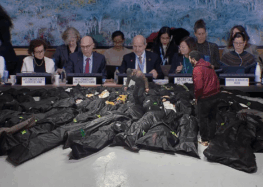
“Scenes exactly like the images released from Kahrizak [Forensic Medical Center in Tehran] also exist in Khorramabad, in the morgue of Ashayer Hospital. The bodies of the slain were wrapped in black body bags and piled on top of each other. I don’t know how many bodies there were, but it was a lot, 300 or 400.
“Many families were forced either to pay 600 million tomans to receive the bodies of their loved ones, or to sign a document stating that the deceased had been a Basij member. Most families refused to sign.
“Agents are going door to door searching for protesters.”
“The arrests began after the massacre. I know many people who, because they were injured during the protests and feared arrest, left the city. Agents are going door to door searching for protesters—from those with prior records or family members with political backgrounds, to those identified during street protests.
“The situation in the city is completely like martial law. Life after dark is almost impossible. On all main streets and squares (all areas where mass protests took place), armed forces are stationed from morning until night. Often, they stop people and force them to show the photos and videos on their phones, and if you have any images or videos of the protests, they make you delete them.
“We have given many martyrs. Despite all this pressure and these threats, I have no doubt that if the internet situation improves, people will return to the streets.”
Andimeshk: Woman Shot 13 Times with Live Bullets, Ongoing Martial Law
Andimeshk, Khuzestan Province, Population ~180,000
Andimeshk city, with a largely Lur population, saw unprecedented mass participation in protests. Based on CHRI’s findings, arrests are carried out violently at night, often staged to terrorize neighborhoods, and protesters are identified by checking for pellet wounds, sometimes forcing entire families to strip during raids.
An eyewitness from Andimeshk told CHRI:
“With the start of the popular protests in Iran, the atmosphere in Andimeshk also changed. Since Lurs played a very prominent role in this year’s protests, people in Andimeshk joined the wave of demonstrations as well. Many people who work in government institutions were also expressing support for the protests on social media. Andimeshk is a very small city, and almost everyone knows each other.
“Plainclothes agents were present in large numbers among the crowd.
“On Thursday, January 8th, many people from all walks of life and all ages came out into the streets. Around 9 p.m. on Thursday, the order was given to open fire and spray the people with bullets. I saw with my own eyes that when the sound of gunfire intensified, a woman opened the door of her house to see what was happening, and she was shot on the spot with a G3 rifle and fell right in front of her home. That same night, a woman was shot 13 times in the street with live ammunition.
“On the city’s main street, many people were shot from behind. Several people would fall to the ground, and when someone tried to go help them, they were also shot at.
“Plainclothes agents were present in large numbers among the crowd. They were firing at people with pistols. I saw a young man shot at close range; I know that he is now in a coma. Some people say that on Thursday and Friday nights, we had up to 40 martyrs.
“Many families still do not know where their children are.”
“Arrests have increased significantly. But it’s not just that people are being detained; the way they raid homes is so violent that the entire neighborhood becomes aware of it—it is meant to instill fear and terror in others as well. Afterwards, families are severely threatened and told not to say anything.
“A few days ago, the 19-year-old son of one of our acquaintances was arrested. At 3 a.m., they raided their home in such a way that all the neighbors were awakened by the noise. They were all in plain clothes. Many people thought they were thieves, but they realized they were agents from their shoes. Our acquaintances didn’t know where their son was for four days. After four days, he was released, but before his release, he was forced to sign a paper without reading it. Since returning, he hasn’t spoken to anyone. Many families whose loved ones have been detained still do not know where their children are.”
“Security forces went to the home of one of those killed, shot and arrested his father.”
“Protesters are being identified based on whether there are wounds or pellet marks on their bodies. They raid homes they consider suspicious and force many people to remove their clothes in front of their family members to check for pellet wounds.
“Just a few days ago, security forces went to the home of one of those killed, shot his father with a Kalashnikov rifle, injured him, and arrested him along with two other brothers of the person who was killed. They were likely taken to the city of Ahvaz, but there is no information available about them.
“There is still martial law in Andimeshk. If you stand in one place for five minutes, they come and warn you; if you don’t move, they either beat you or take you away. If you pay attention, very few videos or images have been released from Andimeshk. The security atmosphere in the city is so intense that even people in the street are afraid to talk to each other about the protests.
“A highly reliable source has said that in recent days, a large number of IRGC members in Andimeshk have submitted their resignations to the commander of Khuzestan Province.”
Qorveh: “Every night you hear screams of neighbors being arrested.”
Qorveh, Kurdistan Province, Population ~ 80,000
The widespread protests in Kurdish cities began with a general strike announced by Kurdish political parties on January 8 and 9. Many Kurdish cities, including smaller towns like Qorveh in Kurdistan Province, joined the strikes, while large crowds took to the streets on Thursday and Friday nights.
An eyewitness told CHRI:
“I still can’t believe that so many people were in a small city like Qorveh. Men, women, children, and the elderly. Many had come from surrounding villages. At first, they were shooting at protesters with pellet guns. On the first day (Thursday), they used very few firearms. But on the second day, they used both firearms and cold weapons, like knives and machetes.
“A 12-year-old child was shot about 30 times in the face with pellets. His left eye is completely blind.”
“On the first day, a 12-year-old child who had come out of a laboratory with his mother was shot about 30 times in the face with pellets. His left eye is completely blind, and he is still hospitalized.
“Eight of those killed in Qorveh were women. Dozens of men were also killed. We have no accurate statistics on the injured.
“The atmosphere in the city after the massacre is unbearable. Every night, you hear the screams of a neighbor who is being arrested. Agents raid homes in the middle of the night and arrest protesters with violence and beatings.
“The number of injured and killed in our city, Qorveh, was truly unprecedented and terrifying. Our city cannot bear this level of crime and slaughter.
“There is a rumor circulating in the city that dozens of unidentified bodies have been stacked in a warehouse in the city.”
Mahabad: “The first person killed was a woman.”
Mahabad, Kurdistan Province, Population ~180,000
Like many other Kurdish cities, Mahabad witnessed protests on January 8 and 9, 2026, during the general strike called by Kurdish parties. These protests were violently suppressed, and dozens of people were shot dead by IRGC forces.
According to a source, Nighttime arrests and martial law conditions persist not only in Mahabad but also in Bukan and Piranshahr.
An eyewitness told CHRI:
“About 5,000 people had taken to the streets. On the first day, they were shooting with pellet guns. But on the second day, they even brought heavy machine guns (DShK). The first person killed in Mahabad was a woman.”
“Many of the suppressing forces were not Iranian—they came from Iraq.”
“Everything felt like a computer game; they were in the crowd, attacking with machetes, knives, cleavers—whatever they had in their hands, they used against people. The city wasn’t destroyed; it didn’t come to that. But the massacre was extremely brutal. Many of the suppressing forces were not Iranian—they came from Iraq.
“When the thousands-strong crowd was hit with the DShK, people scattered into the alleys. I can’t give an exact number of the dead, but at least 50 were killed. Many others died due to infections because they didn’t go to treatment centers or hospitals.
“Martial law is enforced very strictly. Life after dark is almost impossible. Nighttime arrests continue.”
“Starting the Saturday after the massacre, nightly arrests began: they raided people’s homes, took anyone who had participated in the protests, and dragged them away.
“In the days following the massacre, almost every street in the city had more than 20 plainclothes agents. They were very sensitive about filming. If they saw someone recording, they would beat them severely or arrest them.
“In the days after the massacre, they were constantly monitoring everything with drones. At the same time, they kept shutting down government offices, claiming low gas pressure as the reason.
“It’s not only Mahabad—Bukan and Piranshahr are in the same situation.”
“Martial law has been enforced very strictly. Life after dark is almost impossible. Nighttime arrests continue. The arrests are carried out in a way that spreads fear and terror among citizens. Many protesters who were injured and feared arrest and torture left the city. It’s not only Mahabad—Bukan and Piranshahr are in the same situation.”
Chenaran: “Everyone knows who was protesting and who was shooting.”
Chenaran, Razavi Khorasan Province, Population ~55,000
The small city of Chenaran has rarely played a significant role in anti-government protests, as its population is largely considered closely aligned with the government. For example, the Basij, IRGC, and so-called NEPO forces (Counter-terrorism Special Force) hold significant influence there and have been deployed from this city to suppress protests in other cities, including Mashhad. For this reason, the intensity of protests in this small city from the very beginning of the protests was unprecedented.
Before the full internet shutdown, reports indicated that several citizens had been killed in Chenaran during the protests. The internet blackout and the heavy security presence in the city have severely limited information about the situation on January 8 and 9.
A source told CHRI:
“Up to today, we have managed to identify the names of more than 10 of those killed, but due to extreme pressure on the families, we are even afraid to release the names.
“Chenaran is a very small city, and it is generally known that one out of every three households belongs to either the Basij or the IRGC. Therefore, it is very difficult to get accurate information.
“Everyone knows who was protesting and who was shooting.”
“The important issue about a city like Chenaran is that everyone knows each other. Everyone knows who was protesting and who was shooting. This is very worrying because, in reality, revenge begins now. Everyone who has lost a loved one, or was injured or arrested, will not easily forgive those responsible.
“I am certain that many of those who took to the streets in Chenaran are the families of the same Basij and IRGC members. How could anyone in a city like Chenaran be targeted with a gun and not be recognized? How could someone not know who the head of the intelligence office, IRGC, and Basij is, and where their family lives?
“Many of the young people living in this area are from villages, and I am certain they joined the protests from surrounding villages.”
Gorgan: “A motorcycle ran over the head of a 17-year-old boy.”
Gorgan – Golestan Province – Population ~400,000
Due to the internet shutdown, obtaining detailed information from the city of Gorgan has been particularly difficult. CHRI obtained two accounts from Gorgan from January 8 and 9, which give an indication of the intensity of the state’s violence in that city.
An eyewitness who participated in the January 8, 2026, protests told CHRI:
“On Thursday, my niece and I went out together. At first, we thought Gorgan probably wouldn’t get crowded—on previous days, other cities had clashes and people had taken to the streets, but there had been no news from Gorgan. We saw people going in pairs and small groups, wearing masks. We guessed they were like us. Up until near Golshehr Intersection, people kept moving in small groups; there were no security forces. After the Golshehr Intersection, the numbers grew—groups of about a hundred people, and chanting began.
“Orders were given to the forces to drive cars and motorcycles into the crowd.”
“I know that for the second night, written orders were given to the forces in Aliabad to drive cars and motorcycles into the crowd. A motorcycle ran over the head of a 17-year-old boy.
“If the laser stays on you for three seconds, you’re dead.”
“I know how Arnika was killed (referring to Arnika Dabbagh, a 15-year-old swimming champion). Arnika was shot by a sniper from the top of Sarmayeh Tower. Someone from below was directing them upward. Later we realized that people stationed below were identifying those who were chanting loudly and encouraging the crowd, and reporting them to the sniper above. I don’t know who said it, but someone in the crowd shouted, ‘If the laser stays on you for three seconds, you’re dead.’ We could see the laser—we just ran.
“Suddenly, people shouted that someone had been killed in front of Sarmayeh Tower—it was Arnika. Before that, people had been killed closer to us, but we couldn’t see them. The crowd ran toward the other side, toward Arnika, and as we tried to go that way too, they opened fire on us.
“I can count that, aside from Arnika, who was on that side, ten people died right in front of us, because we were among the first hundred people at the front. After the third time we went back, the ground was covered in blood. At first, people could pull some of the wounded back, but after a while, it wasn’t possible anymore. The gunfire was so intense that we were forced to retreat. I know that two friends of our neighbor’s son were killed.
“The ground was covered with pellet casings and tear gas canisters, but there were still no forces directly in front of us—they were shooting from the tops of buildings. People started setting trash bins on fire because of the tear gas.
“Plainclothes forces were dragging a young woman into the mosque. People rushed in and rescued her.”
“The government falsely claims that we set a mosque on fire, but the reality was different: plainclothes forces were dragging a young woman into the mosque. People rushed in and rescued her. Then they tore down the mosque’s wooden door and set it on fire to block the tear gas and direct gunfire. There was no Qur’an there; this is an absolute lie.
“Shots were fired at people from inside the governor’s office.”
“When the crowd tried to move toward the municipality building, suddenly we saw a green laser shining on the crowd from the direction of Shahr Park, and the sound of the gunfire changed. This time, people were retreating while bleeding heavily. Some went toward the governor’s office, and gunfire started from that direction. Shots were fired at people from inside the governor’s office. The first wave of wounded came back from that side—people were carrying their friends on their backs. Most injuries were to the legs and lower back.
“As we were heading toward Shahr Park, they suddenly opened fire on us again. Next to me, a man fell to the ground. The crowd was almost stepping over him—we couldn’t even go back to pick him up. His wife was screaming, ‘They killed my husband,’ but we couldn’t turn back.
“Two people next to me and my niece fell to the ground—one had been shot in the leg, and the other had been shot in the face, the bullet passing through one side of his cheek. The two of us tried to drag the one who’d been shot in the leg back, pulling him along with his help. Two or three young men came and carried him on their shoulders. We found a car and put both of them in the back.
Another eyewitness from Gorgan told CHRI about the situation after the killings on January 8 and 9:
“The city is under complete security control and effectively under martial law. Like many cities in the country, life after dark is practically impossible. Pressure on the families of those killed and detained is extremely intense to prevent them from speaking out.
“Many doctors and medical staff at the city’s main hospitals, including Panj-e Azar Hospital in Gorgan, are under severe security pressure, and one of the hospital’s doctors has even been arrested.”
Eslamabad-e Gharb (Shadabad-e Gharb): “To receive your child’s body, you must say Kurdish parties fired the shots.”
Islamabad-e Gharb (Shadabad-e Gharb), Kermanshah Province, Population ~180,000
Protests in the city of Islamabad-e Gharb in Kermanshah Province were met with severe and bloody repression, particularly on the evening of January 8, 2026. According to multiple reports, dozens of protesters were killed in this city, and many more were injured. At the same time, a widespread wave of arrests still continues.
According to a source familiar with the situation who spoke to the Kurdistan Human Rights Network:
“Security institutions have pressured the families of some of those killed to identify Kurdish opposition parties as responsible for the shooting. In addition, military and security forces have repeatedly—especially on January 8 and 9—raided Islamabad-e Gharb Hospital since the start of the protests in an attempt to abduct and arrest wounded protesters. As a result, many families have secretly removed the injured, or even the bodies of those killed, from the hospital to prevent them from falling into the hands of security forces.”
Another informed source told the Kurdistan Human Rights Network that in most cases, families of those killed were not permitted to bury their loved ones in the Islamabad-e Gharb city cemetery and were forced to transfer the bodies to villages in the county for burial.
Sanandaj: IRGC replaced at night by Iraqi Hashd al-Shaabi forces
Sanandaj – Kurdistan Province – Population ~450,000
Sanandaj is the capital of Kurdistan Province and one of Iran’s major cities. The history of political and labor struggles in this city is very long, and over the past years, political and civil activists here have endured severe repression in all its forms—from the killing of protesting civilians to the continuous arrest of civil and political activists. On January 8, 2026, coinciding with a joint call by Kurdish parties, shopkeepers and merchants in Sanandaj went on strike, closing their shops and businesses. That evening, street protests began across Sanandaj.
A resident of Sanandaj who directly witnessed the events told the Kurdistan Human Rights Network:
“From the very first minutes of the street protests, security forces moved to suppress protesters using live ammunition and pellet guns, resulting in the deaths and injuries of an unknown number of civilians.
“At gatherings that formed on Taj (Ta’rif) Street and in the Ghafoor neighborhood, security forces targeted protesters with live rounds and pellet ammunition. A number of them were wounded and were taken by people to various hospitals.
“One of the wounded individuals who had undergone surgery at Kowsar Hospital in Sanandaj died. He had been shot with a shotgun from a distance of about two meters. The type of pellet weapon used was different and more powerful than those used in previous years; both the plastic casing and the pellets had penetrated the skull, and despite doctors’ efforts, his injuries were so severe that he lost his life.
“Dozens of people were injured on January 8 and 9, but many of them did not go to medical centers to avoid arrest and were treated in private homes. Many others were arrested. So far, at least 140 detainees from the protests have been transferred to the quarantine ward of Sanandaj Central Prison.
“I personally observed the presence of Iraqi Hashd al-Shaabi forces.”
“Large numbers of Islamic Revolutionary Guard Corps and law enforcement forces have been deployed at key points and in some peripheral areas. However, at night, Iraqi Hashd al-Shaabi forces replace them and are stationed in these same areas. The old Sanandaj courthouse building in Azadi Square (currently the Dispute Resolution Council) and the Iran Insurance building have been turned into bases for Hashd al-Shaabi forces.
“I personally observed the presence of Hashd al-Shaabi forces. The government has brought these forces in from Iraq to suppress the people, and they have also been deployed in several other cities. Although they speak some Persian, that level of familiarity is not enough to conceal their true identity.”
According to this eyewitness, a few days after the killings, security forces began collecting satellite dishes. They first identify the locations of dishes through drone surveillance, then use cranes to access rooftops and confiscate them. In addition, amid the continuing security atmosphere, the news units of the Intelligence Ministry and the IRGC Intelligence Organization have been sending threatening text messages to citizens.
Arak: When Even a Shepherd Is Killed by Gunfire
Arak – Capital of Markazi Province – Population: ~ 550,000
Arak quickly joined the nationwide protests, and participation was significant from the outset. Eyewitnesses say on January 8 and 9, the scale of the demonstrations surged, and the protesters started getting killed. What followed, witnesses say, was a city turned into a battlefield, where even bystanders and a young shepherd were not spared.
A source speaking to multiple eyewitnesses told CHRI:
“Security forces fired from the top of the school.”
“It could be said that more than 50 percent of Arak’s population was in the streets. According to those who spoke with me, the entire city—from north to south and east to west—became a scene of protests. Streets such as Malek, Abbas Abad, Shariati, Khomeini, Ghaem Magham, Adabjou, Mohseni, and Sobhani, and even the city’s alleyways, were filled with people.
“Gatherings began around 7 or 8 p.m. [on Thursday], but the killings started around 10 p.m. Two streets—Ghaem Magham and Mokhaberat—lead to Shoora Square, and the heaviest killings took place at this intersection. Imam Ali High School is located there, and images of security forces, motorcycles, and repression vehicles stationed at the school circulated widely online. Protesters set the school, or parts of it, on fire. I don’t know exactly when the school was set ablaze.
“Security forces fired from the top of this school, and most of those killed in Arak were targeted at this very location, in Shoora Square. Protesters were also killed on other streets in Arak. Many people were shot while trying to help the wounded or while removing bodies from the ground.”
According to eyewitnesses, security forces also maintained a heavy and serious presence in hospitals and medical centers across Arak.
“Arak has several hospitals, but two main ones: Sina Hospital, which is private, and Vali-Asr Hospital, which is state-run. Security forces were stationed at both hospitals and either refused to admit the injured or arrested anyone who sought treatment.
“Everyone used the word ‘war’ to describe the situation. Security forces fired live ammunition at protesters. Every family has at least one person who was hit by pellet shots, including my own brother and brother-in-law. The clashes in Arak were extremely widespread and intense.
Although the killing of civilians in Arak occurred on January 8 and 9, the arrest of citizens and protesters had begun from the very first days of demonstrations in the city.
“In the first three or four days alone, without a doubt, around 600 people were arrested. Some were released on bail, but by the third day, around 250 remained in detention. By the tenth or twelfth day of the protests, the number of detainees likely reached several thousand. I don’t know for sure; this is just an estimate.
“Trials are conducted en masse. Lawyers are also denied access.”
“In the county of Shazand, 20–30 kilometers from Arak, a detainee named ‘Karami’ has been sentenced on charges of moharebeh (enmity against God, which is punishable by death sentence). It appears that more such sentences will be issued. Trials are conducted en masse, and absolutely no information is allowed to be released, so we have no precise details. Lawyers are also denied access. The situation is far worse and more severe than ever.
“The main goal was to disperse the bodies and prevent them from being buried in one place or near each other, in order to conceal the massacre.”
“They do not allow the burial of those killed, whose exact number we still do not know, in the city of Arak. Except for a few cases, the rest were buried in surrounding villages.
“Families were asked whether the victim’s father, mother, or grandfather was originally from a particular village. Eventually, they would find a relative from a nearby village and hand over the body on the condition that it be buried in that village. This condition was in addition to other requirements, including payment in exchange for the body and a commitment to bury it quietly, without noise or slogans. The main goal was to disperse the bodies and prevent them from being buried in one place or near each other, in order to conceal the massacre.
“Yaser Majidi was a chemistry student who was killed. His body was buried in the village of Gazaran, 70 kilometers from Arak, and his father was also arrested.
“Many residents of villages surrounding the city were also killed, many of them in Tehran. For example, in a village called Razgerdan, three or four people were killed, and 30 people were shot. This is a small village with a total population of about 300. Four residents of another village called Javersian were also killed. I do not know whether those four were shot in Tehran, in Arak, or perhaps in towns under Arak’s jurisdiction.
“For example, Hassan Ghadari was killed in the city of Shazand, a district of Arak. Hassan Ghadari was a shepherd. On Friday night, January 9, this young man was shot by IRGC forces. While wounded, he managed to reach the doorstep of his home, but unfortunately, he did not survive and died.”
This report was made possible by donations from readers like you. Help us continue our mission by making a tax-deductible donation.