UN Fact-Finding Mission Warns Iran’s Human Rights Crisis Could Worsen Amid Regional Conflict
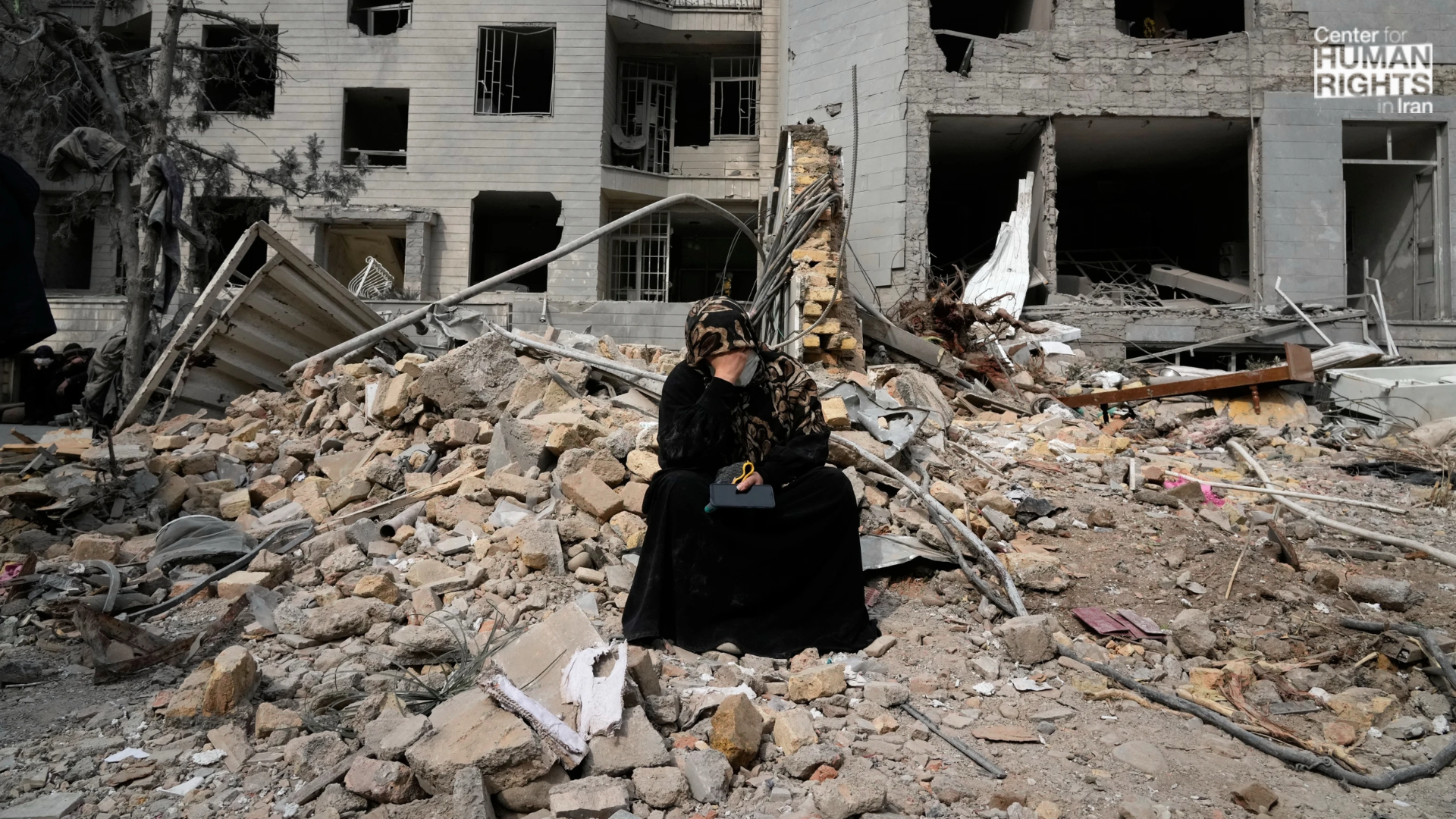
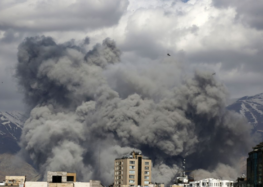
March 11, 2026 — The UN Independent International Fact-Finding Mission on Iran warned in a statement that Iran’s deepening human rights crisis could further deteriorate as military escalation following U.S.–Israeli strikes and Iran’s retaliatory attacks unfolds across the region.
In a new report presented to the UN Human Rights Council covering April 2025 to February 2026, the Mission documented entrenched patterns of state repression—including lethal force against protesters, mass arrests, executions, persecution of women and minorities, and widespread due process violations.
The Mission warned that armed conflict and ongoing internet shutdowns heighten risks for civilians and detainees, noting that authorities have previously used wartime conditions to justify sweeping arrests and intensified crackdowns on dissent. It also raised alarm over the safety of prisoners following past strikes on detention sites, including the 2025 Israeli attack on Evin Prison in Tehran, and called on all parties to strictly adhere to international humanitarian law.
The report further documented a sharp surge in executions, expanding transnational repression against Iranians abroad, and systematic discrimination against groups including Bahá’ís, Kurds, and Ahvazi Arabs. Investigators urged UN member states to pursue accountability for Iranian officials responsible for serious violations under international law and to preserve evidence for future prosecutions.
Read the full statement below.
Iranian civilians caught between ongoing armed hostilities and repression that has reached unprecedented levels, which may amount to crimes against humanity, UN Fact-Finding Mission says
11 March 2026
The Independent International Fact-Finding Mission on the Islamic Republic of Iran warned today that the country’s deepening human rights crisis – already characterized by institutionalized repression on an unprecedented scale, including violations that may amount to crimes against humanity – is likely to worsen in the wake of the US-Israeli attacks on Iran and Iran’s retaliatory strikes across the region.
The warning came as the Mission released its report to the Human Rights Council, which covered the period from April 2025 to 18 February 2026.
The Mission is actively gathering material and evidence as best it can within the current context – in particular the impact on civilians, and the manner in which existing patterns of repression and human rights violations identified by the Mission are now being, or are at risk of being, aggravated by the armed conflict.
It is critical for all parties to the conflict to immediately and strictly adhere to international humanitarian law, including the principles of distinction, proportionality and precaution.
While the Mission is closely monitoring the rapidly evolving situation and its impact on the rights, safety and security of the civilian population, its report shows a clear pattern that is directly relevant to what we are seeing today in Iran: the protection of civilians, including detainees, becomes acutely precarious during armed conflict, and in the aftermath, State repression intensifies, particularly where as now, a connectivity and Internet shutdown is imposed. Just as during hostilities in June 2025, also initiated by US and Israeli airstrikes, and the recent protests since December 2025, the current shutdown has cut off the Iranian people from the outside world, disabling their access to crucial information on nationwide attacks or contact with loved ones inside and outside the country.
The Iranian population has already endured the armed conflict between Iran and Israel for 12 days in June 2025. In that context, and based on information gathered, the Mission found reasonable grounds to believe that the Israeli Defense Forces committed the war crime of intentionally directing attacks against a civilian object by conducting airstrikes on the Evin prison compound on 23 June 2025. Approximately 80 people were killed, including at least one child and eight women.
The Mission also found that Iranian authorities failed to protect detainees before, during and after the strikes. Survivors were transferred under coercive conditions – some beaten at gunpoint – while some families were denied information about them for months, amounting to enforced disappearance. To date, the State has not released detainees from Evin or taken any adequate measures to ensure their safety. It is critical that military attacks – such as those on Evin Prison by the Israeli Military on 23 June 2025 – are not repeated at this time, with obvious risks to detained protestors and other civilians.
The report found that well-established patterns of State-driven repression not only persisted, but evolved and deepened, particularly following the upsurge in nationwide protests that began on 28 December 2025 in response to severely worsening economic conditions for Iranians. Security forces unleashed extensive lethal force – including with assault rifles and heavy machine guns – leading to a staggering number of deaths and injuries, including eye injuries caused by ammunition containing metal pellets. These alleged violations appeared to be widespread and conducted in an organized manner.
During the December protest crackdown, the Government imposed a total internet shutdown for around 20 days. The Mission is deeply concerned that the current shutdown – of over two weeks since 28 February – repeats a pattern used earlier in the December and January protests, which demonstrates how authorities weaponize digital space to conceal violations and suppress dissent at precisely the moment when scrutiny is most needed.
The State crackdown following the end of hostilities further restricted civic space, weakened due process, and undermined respect for the right to life. The Iranian authorities announced that they had arrested 21,000 “suspects” in the context of the June 2025 hostilities, many taken at checkpoints or during house raids without legal cause. Victims included journalists, lawyers, and social media users merely calling for peace.
The report also found that Bahá’ís have been subjected to property confiscations based on their faith; and Ahvazi Arabs and Kurds were arrested and detained arbitrarily under the guise of national security.
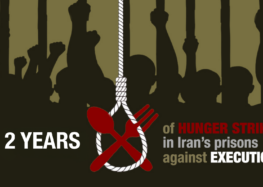
In an unprecedented and appalling surge in the death penalty by the end of 2025, Iran conducted at least 1,639 reported executions. Of these, almost half were for drug-related offences, and many were based on “confessions” extracted through torture. Credible reports indicate that many are at serious risk of torture, ill-treatment and enforced disappearances, while several detainees are reportedly facing expedited death penalty proceedings in violation of international fair trial and due process rights and the right to life.
The persecution of women and girls remains a central pillar of State policy. Women and girls continue to be harassed, and some beaten, for alleged non-compliance with the mandatory hijab. Between March and October 2025, authorities made statements in which they characterized those opposing the mandatory hijab as “enemies,” and referred to women’s denial to wear the mandatory hijab as a sign of “mental disorder” and “harmful behaviour.”
The State continues to fail in its duty to prevent or punish femicide, despite alarming increase of gender-motivated killings, with 176 cases reported in 2025 alone. The Mission also found a pattern of deaths in custody of women detainees reportedly due to denial of medical care, yet no investigations were undertaken.
The report also documented the expanding reach of transnational repression. Iranians and dual nationals abroad have been subjected to assassination attempts, digital threats and the arrest, harassment and interrogation of their families in Iran. These acts, alongside the involuntary deportation of Afghan women, girls and LGBTQ+ persons from Iran to Afghanistan in violation of the principle of non-refoulement, demonstrate a complete disregard for international law.
Based on its findings, the Mission warns that the current security situation may again be used to justify new large-scale arrests, broader restrictions to freedom of expression, and renewed violence against those who express dissent. It has found that these patterns of violations are linked to a legal and security framework used to silence dissent, shield perpetrators from accountability, and deny victims and families their rights to truth, justice, and reparations. The recurrence of these cycles of violence, alongside persistent impunity, indicates that repression in Iran functions as a governing strategy rather than an isolated response to events.
In its report, the Mission urged UN Member States to utilize domestic legal frameworks to investigate and prosecute the Iranian officials responsible for crimes under international law. The priority must be on preserving evidence for use in any independent legal proceedings and ensuring that viable legal pathways, including humanitarian visas, remain open for victims and their families. The Mission recalls its previous recommendations on a roadmap on the establishment of a Victims’ Fund, and medical and psychosocial assistance.
As regards the current armed conflict, the Mission repeats its call that UN Member States should take immediate diplomatic action to halt the military conflict, de-escalate tensions, and resume a credible and good faith dialogue on peace, human rights, justice, and equal participation in political and public affairs. This dialogue must be inclusive of women, youth and minorities in Iran.
ENDS
Read the full report here.
Background: The Independent International Fact-Finding Mission on the Islamic Republic of Iran was established by the UN Human Rights Council on 24 November 2022 to investigate alleged human rights violations in Iran related to the protests that began there on 16 September 2022, especially with respect to women and children. On 23 January 2026, through resolution A/HRC/RES/S-39/1 adopted following the 39th special session of the Council, which concerned the deteriorating human rights situation in the Islamic Republic of Iran, the Council extended the mandate of the Fact-Finding Mission for a further period of two years effective from the end of the 61st session of the Council, mandating it to investigate allegations of recent and ongoing serious human rights violations in the country.