The Cost of Impunity: Four Years After Jina Mahsa Amini’s Death, Thousands More Are Victims of Iran’s Brutal Repression

September 16, 2026 — Four years after the death in police custody of 22-year-old Jina Mahsa Amini, which ignited Iran’s historic Woman, Life, Freedom uprising, those responsible for her death and the grave violations committed against thousands of protesters since then continue to enjoy impunity.
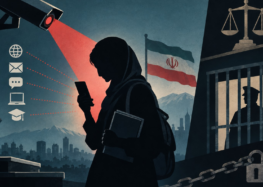
Amini was arrested by the state’s morality police in Tehran on September 13, 2022, for an alleged hijab violation. She was subjected to physical violence in state custody, fell into a coma, and died three days later, on September 16.
Her death sparked nationwide protests, as tens of thousands of Iranians took to the streets to demand an end to decades of repression, discrimination, and the denial of fundamental rights and freedoms. The authorities responded with a brutal crackdown: Over 500 protesters were gunned down in the streets, countless protesters were maimed and injured, hundreds were intentionally blinded by gunshots, tens of thousands were arrested, and an unknown number of women, men, and children were abused and tortured in state custody.
A new investigation by Amnesty International has concluded that Iranian authorities committed crimes against humanity during the suppression of the 2022 Woman, Life, Freedom uprising, including murder, torture, enforced disappearance, imprisonment, and rape. The more than 1,000-page investigation identifies 87 officials Amnesty says should be criminally investigated for their roles in the crackdown, and traces a chain of command linking security forces on the streets to senior officials who directed and facilitated the crackdown.
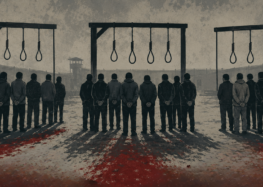
Four years later, there has been no accountability for those responsible. Instead, protesters who took to the streets in 2022 continue to face prosecution, imprisonment and, in some cases, the death penalty. This year alone, two Woman, Life, Freedom protesters, Mehrab Abdollahzade and Aref Khoshkar, were executed, alongside dozens of other political prisoners and protesters who have been sentenced to death and hanged amid the Islamic Republic’s intensified use of the death penalty as a tool of political repression.
Yet the struggle for basic rights and freedoms has not ceased in Iran. As Mai Sato, UN Special Rapporteur on Iran, recently wrote: “Four years on, the resistance Jina’s death gave rise to has not been extinguished. The women and girls who took to the streets in her name still insist on the right to decide what they wear, where they work and how they live — to be treated as equals, in law and in life. Those rights will not stay deniable forever.”
Nevertheless, the absence of accountability has had devastating consequences, culminating in the state’s killing of thousands of protesters during the January 2026 nationwide protests.
The Iranian authorities refuse to investigate and prosecute officials implicated in crimes committed by the state’s own security and judicial institutions. Accountability must therefore be pursued through independent international mechanisms.
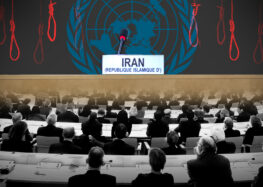
The Center for Human Rights in Iran (CHRI) joins Amnesty International’s call for the UN General Assembly to establish an international criminal justice mechanism for Iran. Governments around the world should also pursue investigations and prosecutions of Iranian officials suspected of responsibility for crimes under international law, under universal jurisdiction.
“Four years after Jina Mahsa Amini’s killing, justice remains out of reach for her family and for tens of thousands of other victims of state repression in Iran,” said Bahar Ghandehari, CHRI’s director of advocacy. “The continued prosecution and execution of protesters demonstrates the devastating cost of impunity. Accountability is not only a matter of justice for victims; it is essential to prevent the next massacre.”