Internal Exile: A Cruel Tool of State Repression in Iran
Banishment to Remote Regions Increasingly Used to Isolate Critics of the State
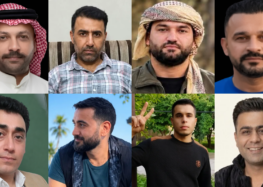
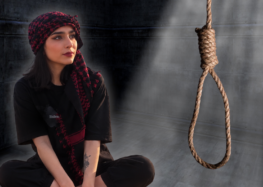
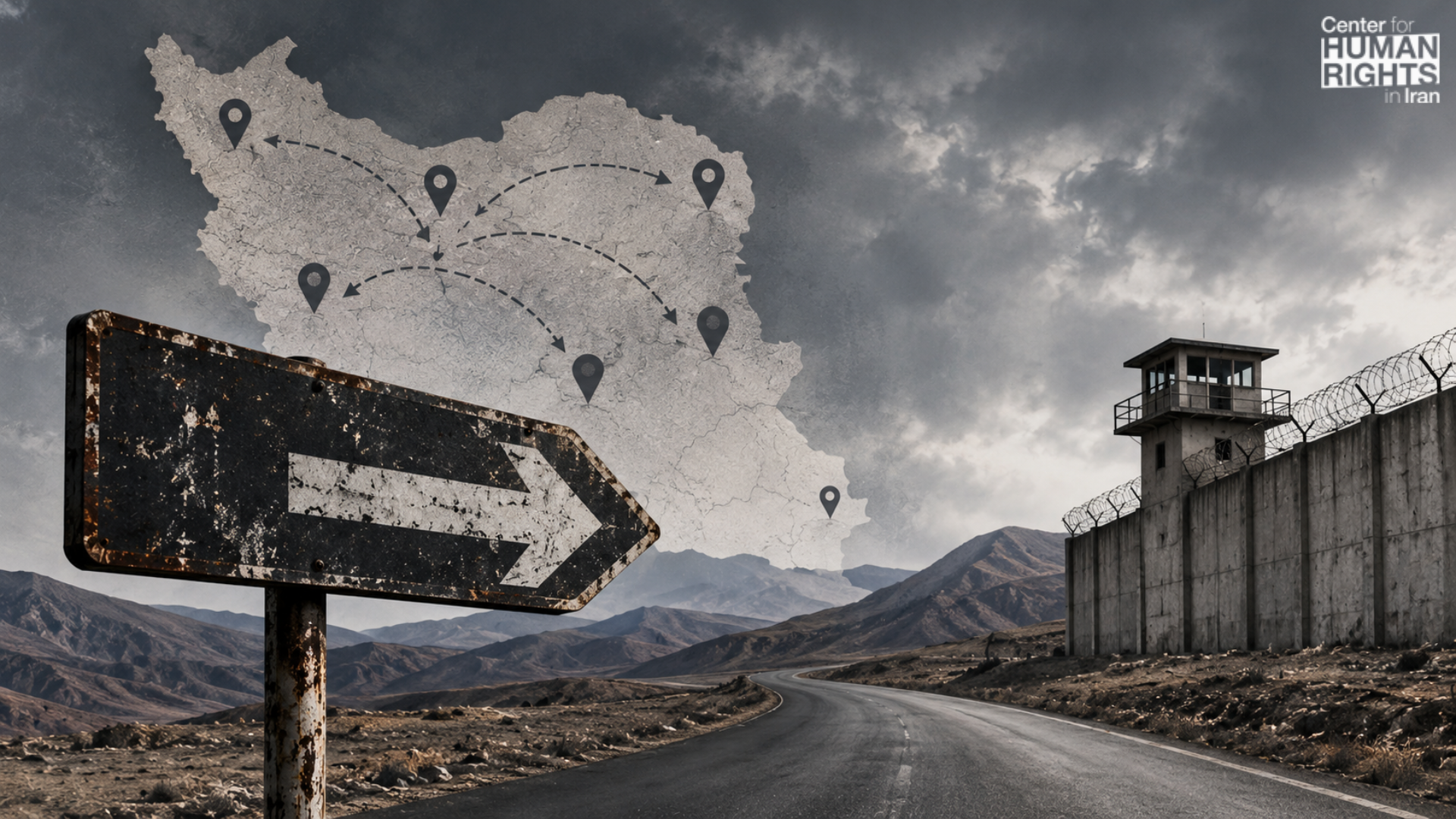
November 25, 2026 — The Iranian judiciary is increasingly using internal exile—a cruel and often unlawful punishment—as a means to isolate and silence critics of the state and suppress political activism. The practice takes two forms: forcibly relocating individuals to distant parts of the country, often after they complete prison sentences, and transferring prisoners to remote facilities far from their homes and families, often following protests or hunger strikes.
Recent cases show that internal exile is being imposed on individuals arrested in connection with the January 2026 protests, as well as members of ethnic and religious minority communities, lawyers, prominent human rights activists, journalists, and other individuals targeted for expressing dissent or publishing content critical of state policies. The sentences range from one to 20 years of internal exile or transfer to remote prisons, including to remote areas such as Zahedan, Zabol, Sarakhs, Khash, Khoy, Nikshahr, and Zehak.
These sentences forcibly remove individuals from their communities and send them to distant parts of the country, away from their homes, families, and professional networks.
“The Islamic Republic is using internal exile to scatter and silence its critics, forcibly removing them from the communities where they live and work. This severs their ties to family and support networks while depriving their communities of their voices and presence. The result is prolonged isolation for those targeted and lasting disruption for the communities they leave behind,” said Hadi Ghaemi, executive director of the Center for Human Rights in Iran (CHRI).
“This is just another reflection of the Iranian authorities’ contempt for even the most basic moral and legal international standards as it seeks to stamp out all dissent,” Ghaemi said.
CHRI calls on the international community, including all relevant UN bodies, to demand that the Iranian authorities cease the use of internal exile as a judicial punishment.
Internal exile (or tab’eed) typically involves banishment to remote areas, often after completing a prison sentence, where convicted individuals are forcibly relocated to often impoverished distant towns or villages for one to two years or longer. They are frequently abandoned in these locations without personal belongings, financial assistance, accommodations, or social support. Exiled individuals may also face travel bans, communication restrictions, and limits on gathering or socializing.
Internal exile can also involve prison transfers, where prisoners are forcibly moved to distant, isolated prisons far from their homes and families (typically ones with extremely harsh conditions) instead of serving time in facilities near their home cities. Detainees or prisoners are sometimes moved to these distant facilities without a formal judicial order. Such transfers often follow protests, hunger strikes, or criticism of authorities and prison conditions.
The aim of internal exile is to isolate and silence individuals by severing a prisoner’s ties to family, local communities, and support networks, thereby suppressing dissent and silencing political activism. It is frequently used against political activists and dissidents, human rights defenders, lawyers who challenge state actions or represent political prisoners, independent journalists who stray from the official line, and ethnic and religious minorities, such as Baha’is, Christian converts, Kurds, Baluchis, and others. Since the January 2026 nationwide protests, authorities have increasingly used it against protesters.
Recent cases of internal exile in Iran in 2026
Narges Mohammadi: 2 years of exile in Khosf, South Khorasan Province.
- Background: Nobel Peace Prize laureate and civil rights activist
- Arrest: Arrested on December 12, 2025, during the memorial ceremony for Khosrow Alikordi.
- Charges:
- “Assembly and collusion”
- “Propaganda activity against the state.”
- Sentence:
- 7+ years in prison
- 2 years of internal exile
Javad Alikordi: 2 years of exile in Saravan, Sistan and Baluchestan Province
- Background: Kurdish lawyer
- Arrest: Arrested on December 12, 2025, during the memorial ceremony for his brother Khosrow Alikordi.
- Charges:
- “Assembly and collusion to act against national security”
- “Propaganda activity contrary to national security” under Article 4 of the Law on Intensifying the Punishment of Espionage.
- Sentence:
- 18 years in prison
- 2 years of internal exile
- Permanent disbarment
- A two-year travel ban
Sima Alipour, Salar Taherafshar, Vahid Abhari Iranagh, Nima Radmanesh and Hossein Esmaeili-Soumeh: 2 years of exile in Zahedan, Sistan and Baluchestan Province
- Background: Five Turkic activists in Tabriz.
- Charges:
- “Propaganda against the state”
- “Disturbing public opinion”
- “Forgery of government/official documents”
- Sentences: Tabriz Revolutionary Court
- 1 year in prison
- 2 years of internal exile
- 2-year ban on accessing electronic services
Khalil Rasouli: 2 years of exile in Khash, Sistan and Baluchestan Province
- Background: Kurdish man from Bojnurd, North Khorasan Province.
- Arrest: Arrested on January 8, 2026, during the nationwide January protests. He was reportedly shot twice in the leg by government forces during the protests. He was arrested hours later while recovering at his family home.
- Charges:
- “Inciting unrest”
- “Propaganda against the state”
- “Destruction of public property”
- Sentence:
- 8 years in prison
- 80 lashes
- 2 years of internal exile
Tara Farhangian: 2 years of exile in Zabol, Sistan and Baluchestan Province
- Background: 21-year-old Kurdish student
- Arrest: Arrested by security forces during the January 2026 protests and later temporarily released on bail.
- Criminal Court:
- “Disturbing public order and peace”
- “Resisting officers in the performance of their duties”
- 1 year in prison
- 31 lashes
- 2 years of internal exile
- Revolutionary Court:
- “Propaganda against the state”
- “Assembly and collusion to commit a crime against internal security”
- 120 million tomans.
Saeed Mohammadyari: 2 years of exile in Khoy, West Azerbaijan Province
- Background: 36-year-old athlete from Kuhdasht, Lorestan Province.
- Arrest: IRGC Intelligence arrested him on February 8, 2026, following the January protests. Held for two days in an IRGC Intelligence detention facility and subjected to severe physical and psychological torture, then transferred to Khorramabad Central Prison, where he remained for 23 days. Arrested again on May 21, 2026, after appearing before the Revolutionary Court in response to an electronic summons.
- Charges:
- “Assembly and collusion to commit crimes against national security”
- “Propaganda against the state”
- “Insulting the Supreme Leader”
- Sentence:
- 8 years in prison
- 2 years of internal exile
- 2-year ban on smartphone and social-media use
- Additional social restrictions
Neda Dadejani: 2 years of exile; in Nikshahr, Sistan and Baluchestan Province
- Background: An award-winning puppeteer and theater artist
- Arrest: Arrested during the January 2026 protests.
- Sentences and charges:
- Qorveh Criminal Court: one year in prison, 31 lashes, and two years of exile to Nikshahr County in Sistan and Baluchestan Province on the charge of “disrupting public order and tranquility.”
- Qorveh Revolutionary Court also sentenced each to two years in prison on the charge of “assembly and collusion to commit a crime against internal security.”
Setayesh (Behnoush) Sarabi: 2 years of exile in Nikshahr, Sistan and Baluchestan Province
- Background: Kurdish woman from Qorveh.
- Arrest: Arrested during the January 2026 protests.
- Sentence and charges:
- Qorveh Criminal Court: one year in prison, 31 lashes, and two years of exile to Nikshahr County in Sistan and Baluchestan Province on the charge of “disrupting public order and tranquility.”
- Qorveh Revolutionary Court also sentenced each to two years in prison on the charge of “assembly and collusion to commit a crime against internal security.”
Yousef Dehghani: 2 years of exile in Zabol, Sistan and Baluchestan Province
- Background: Healthcare worker from Qorveh.
- Arrest: Arrested by Ministry of Intelligence agents at his hospital workplace during the January 2026 protests. He had previously been summoned and interrogated during the Women, Life, Freedom movement.
- Sentence: He received separate sentences from the Revolutionary Court and Criminal Court in Qorveh.
- 1 year in prison
- 2 years of internal exile
- 31 lashes
- Separate 2-year suspended prison sentence and fine
Amir Khaledian: 2 years of exile in Minab, Hormozgan Province
- Background: Kurdish man from Qorveh.
- Arrest: Arrested during the January 2026 protests.
- Sentence:
- Criminal Court: 1 year in prison, 74 lashes, 2 years of internal exile
- Revolutionary Court: four years and six months in prison.
Hossein Anbaz: 2 years of exile in Yazd, Yazd Province
- Background: A Lor rapper and artist from Yasuj.
- Arrest: Arrested in Yasuj on January 22, 2026, during the January protests. He was subsequently transferred to Yazd Central Prison, where he is serving his sentence.
- Sentence:
- 7 months of imprisonment
- 2 years of internal exile in Yazd
- Ban on using social media
Reza Koushkinezhad: 2 years of exile in Birjand, South Khorasan Province
- Background: 36-year-old Lor man from Pol-e Dokhtar.
- Arrest: Initially arrested by Iranian authorities in early October 2025. Had also been arrested and sentenced during the Women, Life, Freedom movement.
- Charges:
- “Propaganda against the state”
- “Inciting people to disrupt public security in cyberspace” through publishing images/content deemed contrary to public morality
- Sentence:
- 1 year in prison
- 2 years of forced internal exile
- Ordered to study documents concerning SAVAK and submit a handwritten report to the court’s enforcement branch.
Amin Masouri: 2 years of exile in Sarakhs, Razavi Khorasan province
- Background: Writer and researcher from Khorramabad.
- Arrest: Arrested by Ministry of Intelligence agents in August 2025.
- Charge:
- “Propaganda activities in favor of groups and organizations opposed to the regime”
- Sentence:
- 1 year of discretionary imprisonment
- 2 years of internal exile
Hamzeh Ahmadi Taraqi: 1 year of internal exile to Zehak County, Sistan and Baluchestan province.
- Background: Born in 1998, Taraqi is from Bojnurd and has a hearing impairment.
- Arrest: Arrested January 5, 2026, at his place of business by officers from the North Khorasan Intelligence Ministry and Public Security Police without a judicial warrant. He was transferred to an Intelligence Ministry detention facility and later released on bail.
- Sentence:
- 5 years, 7 months, 15 days in prison
- 148 lashes
- One year of internal exile
- Bojnurd Criminal Court: Branch 102 sentenced him to 1 year for “disturbing public opinion and promoting violence in cyberspace,” 2 years for “resisting officers in the performance of their duties,” and 2 years plus 74 lashes for “brandishing a knife.”
- Bojnurd Revolutionary Court: Branch 2 sentenced him to 7 months and 15 days in prison and 74 lashes for “propaganda against the regime,” as well as one year of internal exile to Zahak County.
Mehdi Rajabi, Mohammad Kargar and Mohini Makki: 20 years’ imprisonment in exile at Zahedan Central Prison
- Background: Pouya Fakhrabadi, 26, is a taekwondo athlete. The four men are defendants in the same case related to the January 2026 protests in Yazd.
- Arrest: All four were arrested during the crackdown on the January 2026 protests and transferred to Yazd Central Prison, where they have remained detained since their arrests.
- Protest-related charges: The case concerns protests on January 8 and 9, 2026, in Imam Hossein Square in Yazd, as well as the burning of the telecommunications building and several government facilities in the area. One of the main charges against the four protesters is reportedly “participation in setting fire to public property.”
- Sentences:
- Pouya Fakhrabadi was sentenced to death.
- Mehdi Rajabi, Mohammad Kargar and Mohini Makki were each sentenced to 20 years in prison in exile at Zahedan Central Prison
Nima Shiri: 1 year of exile in Zahedan, Sistan and Baluchestan Province
- Background: 21-year-old Kurdish man from Ashkhaneh, North Khorasan province.
- Arrest: Arrested by government forces in Bojnurd on January 4, 2026, during the January protests. Released on bail two days later pending judicial proceedings.
- Sentence:
- 1 year of imprisonment
- 1 year of internal exile in Zahedan
- 74 lashes
- Court: Branch 106 of the Ashkhaneh Criminal Court II, presided over by Judge Moradi.
Internal Exile Under International Law
Internal exile can violate multiple protections under international human rights law. Iran is a state party to the International Covenant on Civil and Political Rights (ICCPR), which prohibits torture and cruel, inhuman or degrading treatment under Article 7, and protects freedom of movement and the right to choose one’s residence under Article 12.
Forcibly banishing individuals to distant regions, separating them from their families and support networks, and imposing conditions that deprive them of basic necessities may amount to cruel, inhuman or degrading treatment. Compulsory residence restrictions must also meet the requirements of legality under Article 12; using them to punish peaceful dissent, political activity, journalism, or minority identity is incompatible with these protections.
Internal exile may also violate other rights protected by the ICCPR when imposed to punish individuals for exercising their fundamental freedoms. These include Article 18, which protects freedom of thought, conscience and religion; Article 19, which protects freedom of expression; and Article 21, which protects the right to peaceful assembly.
Transferring prisoners to facilities far from their homes can also undermine protections set out in the UN Standard Minimum Rules for the Treatment of Prisoners, known as the Nelson Mandela Rules. Rule 59 states that prisoners should, to the extent possible, be held in prisons close to their homes or places of social rehabilitation. Rules 58 and 106 call for regular communication with family and friends and the maintenance of family relationships. Transfers that place prisoners far from their families, making visits and contact difficult or inaccessible, run counter to these standards.
Internal Exile Under Iranian Law
The concept of exile or banishment is rooted in Shia jurisprudence and is referred to as nafye balad (“denial of country”). Yet serving time in remote prisons far from home may violate Iran’s own Code of Criminal Procedure. Note 3 of Article 513 states: “If the place of residence of the person sentenced to imprisonment is outside the jurisdiction of the court issuing the sentence, he/she shall be transferred to the prison of his/her place of residence to serve his/her prison sentence. Unless this causes corruption, in which case, at the discretion of the judge issuing the final verdict, he/she will be transferred to the nearest prison to his place of residence.”
Nevertheless, Iran’s Islamic Penal Code permits banishment for certain offenses. Under Article 282, banishment is one of four possible punishments for moharebeh (enmity against God), as defined in Article 279. Article 283 gives judges discretion to select among these punishments, while Article 284 establishes a minimum banishment period of one year without setting a maximum. Article 285 further requires those sentenced to banishment to remain under supervision and prohibits them from associating or communicating with others.
Documented History of Using Internal Exile in Iran
The Islamic Republic has a documented history of sentencing detainees held on politically motivated charges to “exile.” In 2021, UN experts wrote to the Iranian authorities on the subject, stating their concern regarding:
“[A] pattern of what appears to be transfers of human rights defenders and political prisoners to distant locations. We are concerned that these measures represent an additional form of harassment against human rights defenders and political prisoners, reportedly with the aim of isolating them as well as restricting their interaction with their family, and as such can be considered an additional punishment.”
In 2021, CHRI published a report on the subject, noting the documented history of sentencing detainees held on politically motivated charges to “exile” after the completion of a prison sentence, and that
“[N]ow political prisoners, including peaceful activists, religious minorities, and dissidents, are also being sent to remote, severely under-resourced prisons as a form of additional punishment in the middle of their prison terms.”
A 2024 report by the World Organization Against Torture (OMCT) also examined the Islamic Republic of Iran’s use of internal exile to isolate individuals critical of the regime and prevent them from engaging in further political activism. It noted how exiled individuals frequently experience poverty, unemployment, inadequate housing, restrictions on communication, movement, and social interaction, daily police reporting and constant surveillance, and limited access to healthcare, legal assistance, and family support. It also noted the targeting of religious and ethnic minorities, particularly Bahá’ís, Christian converts, Gonabadi Sufi Dervishes, and Iranian Azerbaijani cultural rights activists. It stated:
“Exiled individuals are often abandoned in remote areas without personal belongings, facing extreme hardship and lacking access to basic necessities, forcing them into dependency on local residents without any financial or social support. Authorities also prohibit meetings and gatherings, making social integration impossible, while restrictions on communication severely limit access to family and legal representation, compounding the psychological strain. Exiling individuals to communities of different ethnic or religious backgrounds further isolates them from local support networks, increasing their vulnerability. Additionally, by relocating individuals to impoverished regions, the IRI makes it difficult for them to find work, perpetuating a cycle of poverty and dependency. Most alarmingly, the disproportionate use of exile against specific groups undermines principles of equality and non-discrimination, demonstrating a clear abuse of state power….”
In 2025, a report by the International Fact Finding Mission on Iran (FFMI) noted:
“Articles 284 and 285 of the Islamic Penal Code additionally stipulate that, when in internal exile, individuals are placed under surveillance and prohibited from socializing, gathering, and contacting others….Witness testimonies and court documents obtained by the Mission showed that, in the context of the September 2022 protests, and for their activism including in relation to the “Woman, Life, Freedom” movement, protesters, journalists, lawyers, women rights activists, and human rights defenders have been sentenced to internal exile, following conviction for national security offenses, including “waging war against God.”…once in internal exile, victims were left at the place of exile with nothing but prison clothes, without any support or financial assistance, and thus reliant on the local community to help them obtain food and shelter. Residents who interact with exiled individuals are reportedly summoned by security forces and prohibited from further interaction.”
This report was made possible by donations from readers like you. Help us continue our mission by making a tax-deductible donation.